


AI writing tools are becoming a common addition to academic life, but for students, more often, it comes at a cost. The fear of suspicion, institutional compliance, or accuracy always hangs over their head.
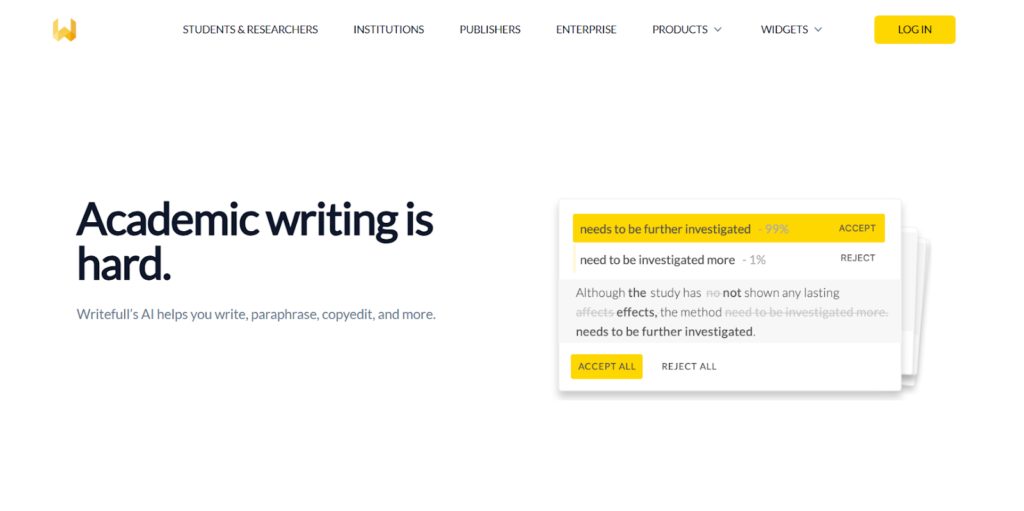
Due to its focus on academic writing and support for Overleaf, Writefull is often mentioned in the same breath. But still, the question remains the same: Is Writefull accurate? Is it actually safe to use for students?
In this Writefull AI Review, we will address many of these questions that will matter most to students. We will be focusing on Writefull’s safety, accuracy, and the risk of plagiarism when students use it.
If Writefull alone is not enough to assist you in the development of your academic writing skills, we will highlight additional tools that can be added to your “study stack” without having to rely solely on guesswork.
Quick Verdict From This Writefull AI Review (Read This Before You Sign Up)
Writeful Works For:
- Students working on a thesis or papers in Overleaf or LaTeX
- Academic Tone Polishing, not generating ideas
- ESL students needing formal language suggestions
Writefull Is Not Good If:
- You heavily rely on Google Docs collaboration
- You work across many disciplines and need consistent accuracy
- You want a single tool for polishing, checking, and rewriting
Beware Of These Risks:
- Using the polishing tool for assignment rewriting
- Over-trusting the AI Detector
- False positives with technical or discipline-specific terms
Consider An Alternative, If:
- You’re looking for a multitasking all-in-one workflow
- There are academic integrity and policy compliance risks
- You need more control over your work and how AI edits it.
Students seeking to have a complete and student-focused workflow also tend to evaluate tools such as an AI humanizer for students, which offer multiple features all in one place, like rewriting, detecting, and editing.
What Writefull Is (and What It Is Not) in 2026
It is primarily an academic language assistant gaining more features over time, which causes a lot of confusion.
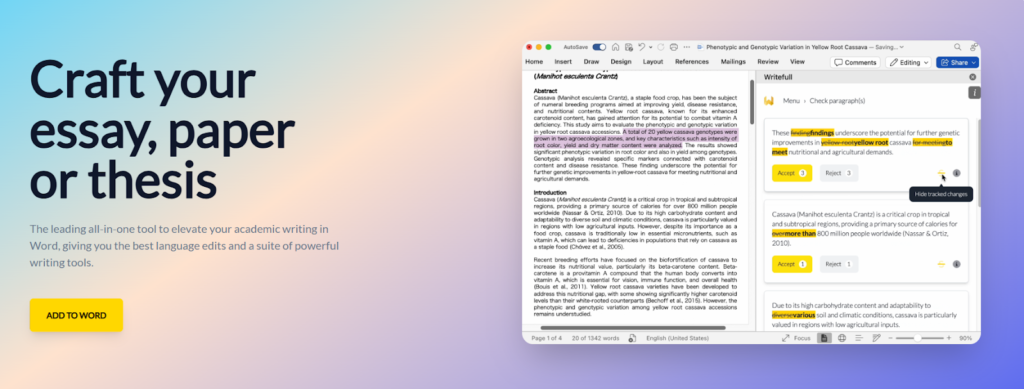
In simple words, Writefull contains:
- Feedback suggestions for academic language and grammatical errors
- Paraphrasing suggestions
- Integrations with MS Word and Overleaf
- An AI detection feature
What Writefull doesn’t contain:
- A complete essay generator
- A plagiarism checker, in a more traditional sense
- A tool to bypass AI detection
- A collaboration-focused writing platform
This Writefull review will analyze its performance across all these parameters with one objective: how safe and accurate is it for students?
Writefull’s Accuracy: How To Judge It Using A Student Rubric
Many review comments on the internet are about how accurately Writefull performs, but they do not explain to students what “accuracy” actually means. Below is a basic evaluation rubric that can be used to assess its performance within 10 minutes.
- Accuracy of Grammar and Style Fixes: Is the tool fixing real grammar and style mistakes, or mislabeling good writing?
- Maintaining Academic Tone: Is the tool maintaining your academic tone, or making all writing sound overly formalized?
- Accuracy of Paraphrase: Is the tool keeping the same ideas as your original, or changing them, or creating new ones?
- Preservation of Citation Reference Integrity: Is the tool preserving reference integrity during editing, or breaking citation formatting?
- How Reliable Is The AI Detection Label? Can you trust the detection label, or does it give you an approximate answer?
Many reviews will discuss the above items, but will rarely relate these points to each other within a system. The above rubric will provide you with a way to assess where Writefull excels and where it is deficient.
Writefull’s Language Feedback: Where It Feels Accurate and Where It Breaks
The language feedback for academic writing is where the tool shines. Many students like it, as, instead of casual writing, the focus remains on formal tone and clarity.
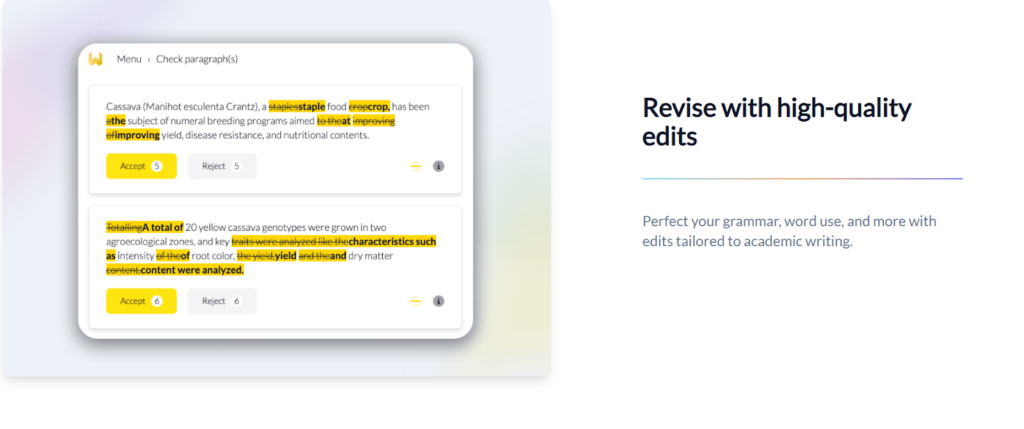
Where Does It Work Well:
- Sentence polishing in research papers
- Clarity improvement for non-native English writers
- Direct working inside LaTeX and Overleaf projects
Where Does It Face Issues:
- Sometimes, technical terms are flagged incorrectly
- Math notation and formulas may trigger unwanted suggestions
- Frequent pop-ups may interrupt working flow
However, there is a persistent issue of false positives, which the students mentioned on forums. The tool’s change suggestions are often grammatically correct but factually wrong. It doesn’t make Writefull bad; it means that you shouldn’t accept its suggestions blindly.
Writefull Paraphrasing: Helpful for Clarity, Risky for Assignments
The important thing to remember is that the feature brings out clarity, not hides AI usage.
Helpful Uses:
- Simplifying hard sentences
- Reduce repetition
- Improve readability while retaining meaning
Risky Uses:
- Rewriting entire assignment sections
- Making AI text look human
- Changing phrasing without understanding the content
Some competitors portray Writefull as unable to bypass AI detectors, and its paraphrasing does not consistently reduce detection scores.
If you need help in refining your essays, there are tools specifically developed for student workflows, like an AI humanizer for essays focused on helping students in refinement, rewriting, and detection.
Can Writefull Detect AI-Generated Content? And How Much Should You Trust It?
The tool contains an AI detection feature, but it should be used carefully.
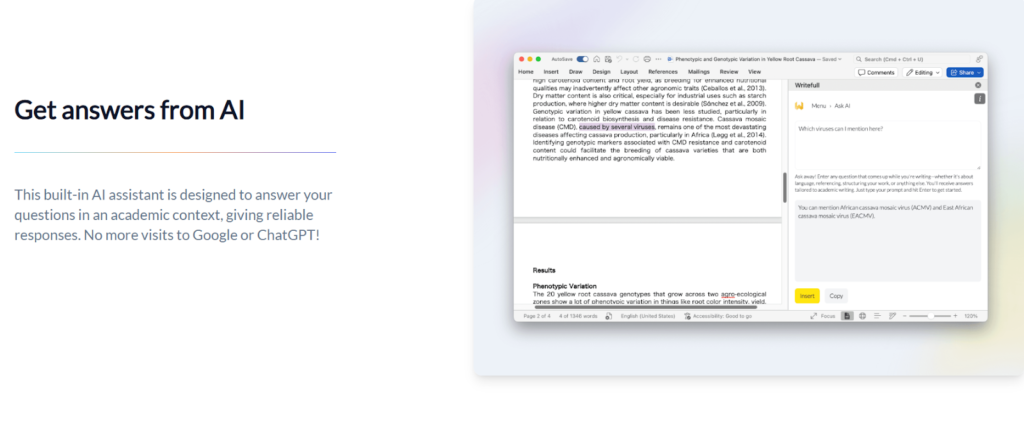
A useful way to think about detectors:
- A Signal: A rough hint or indication that the text may appear to be AI-generated.
- A Proof: Something more definitive that the universities may rely on.
The detector should be treated as a signal and not a proof, cause like many other detectors, it can produce false positives and false negatives.
The safe way to use AI detection is:
- Do checks on drafts and not final submissions.
- Revise the fields that appear inconsistent or unnatural
- Keep notes and drafts to show your writing process.
Is Writefull Safe for Academic Writing? Privacy, Integrity, and Policy Risk
Beyond the functionality of a tool, there are three other factors that impact student safety: privacy, integrity, and policy concerns.
Data Safety
You’re giving away your data every time you paste something into a tool. Be careful, as the data should never include any unpublished research or sensitive information. Read all the permission requests before adding any extension to your browser.
Academic Integrity
All universities permit some form of grammar correction. However, heavy rewriting or generating content is usually considered risky. Writefull is closer to editing than content generation, but it could be misused.
Policy Risk
Products that claim to be undetectable can lead to a higher level of scrutiny from instructors who are concerned with the quality of citations rather than the name of the tool used.
According to discussions found on Reddit, many students fear violating unknown policies much more than being detected by software. Thus, understanding what risks exist is more important than trying to score high on detection ratings.
For a broader view of fairness and bias, resources on AI bias in writing tools can prove to be really useful for students.
Writefull AI Review: Does Writefull Check for Plagiarism?
Writefull doesn’t work like traditional plagiarism checkers.
It is important to differentiate between:
- Plagiarism detection: Comparing content to available sources
- Citation/ Reference assistance: Helping format or manage references
- Rewriting risk: Changing text in ways that remove proper attribution
You are still responsible for citations even if the tool helps you rephrase the content. Students should always verify sources and references manually.
The following guides can be really useful for you if you want a deeper understanding of citations and plagiarism in your academic work:
Is Writefull Worth It for Students? Pricing and Value Reality
This would depend on the nature and style of your work.
It is worth it if:
- You spend more time in Overleaf
- You need academic tone refinement
- You are giving the final polish to long research documents
It’s not suitable if:
- You collaborate heavily on Google Docs
- You want a platform for rewriting, checking, and polishing
- You expect detector features to be definitive
Writefull Pricing (Student-Relevant Plans)
| Plan | Monthly Price | Best For |
| Free | $0 | Light use, quick checks, limited queries |
| Premium Individual | ~$7 / month | Regular academic drafts, essays, and thesis polishing |
| Premium Group | ~$2.50 / month (per user) | Teams/study groups (if available) |
| Institutional / University | Custom | Full access via campus license |
Unfortunately, the free trial versions of this are very limited in scope. Ensure checking current pricing details before committing.
Writefull vs Grammarly: What Students Should Pick
Writefull is generally compared to Grammarly. So, we will provide a review of the pros and cons of Grammarly.
Grammarly Pros:
- More assistance with grammar and clarity
- More effective for writing general papers (not research or thesis)
- Works effectively in Google Docs and email
Grammarly Cons:
- Doesn’t assist as much with academic tones
- May suggest too many rewrites
- Doesn’t have features focused on citations
If students are considering using Grammarly to find help with grammar, they might also consider doing a side-by-side comparison of the list of the best grammar checkers.
Can Universities Detect Writefull? What Is Realistic in 2026
A university will not track down the name of the tool, but will notice the patterns in content, such as:
- Shift in writing quality
- Inconsistency of tone
- Citation mismatch
- Writing that is not in sync with class performance
How to Avoid These Risks (Ethically):
- Maintain a draft and revision history
- Keep a consistent tone
- Use proper citations
- Follow your university’s AI policy
Tools That Strengthen Your Writing After Using Writefull
Even good-quality academic work can fall flat without Final editing. The correct use of such tools can provide students with better clarity and confidence about their work while preparing it for submission without altering their ideas.
Student Writing Support Tools (for Refinement)
| Tool | What it supports | How it adds value | Best used for |
| Walter Writes | Humanization and self-review | Improves natural flow, checks AI patterns, polishes tone | Final review before submission |
| Proofademic | Originality confidence | Plagiarism checks and compliance reassurance | Submission-ready verification |
| Paperpal | Academic tone refinement | Research-style language edits and clarity | Journal or research-focused writing |
| QuillBot | Sentence-level paraphrasing | Rewording for clarity and repetition control | Light phrasing adjustments |
| Hemingway Editor | Readability and structure | Highlights complexity and clarity issues | Simplifying dense sections |
These tools provide additional support layers that allow students to review, refine, and feel confident in their submissions without replacing academic writing assistants.
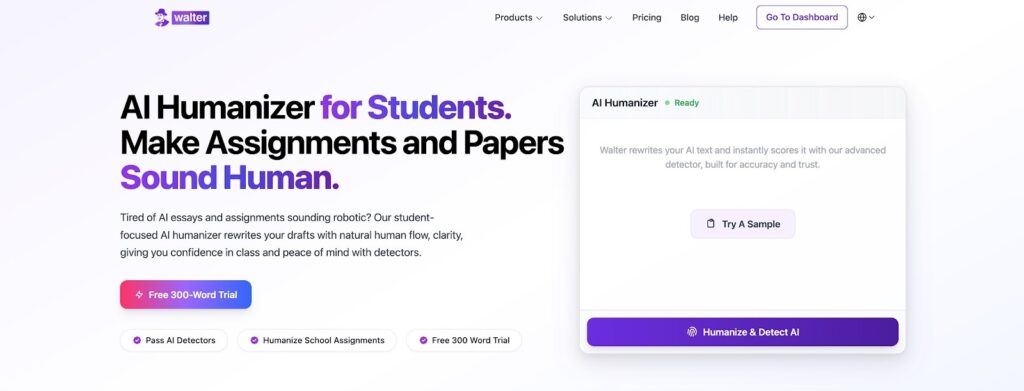
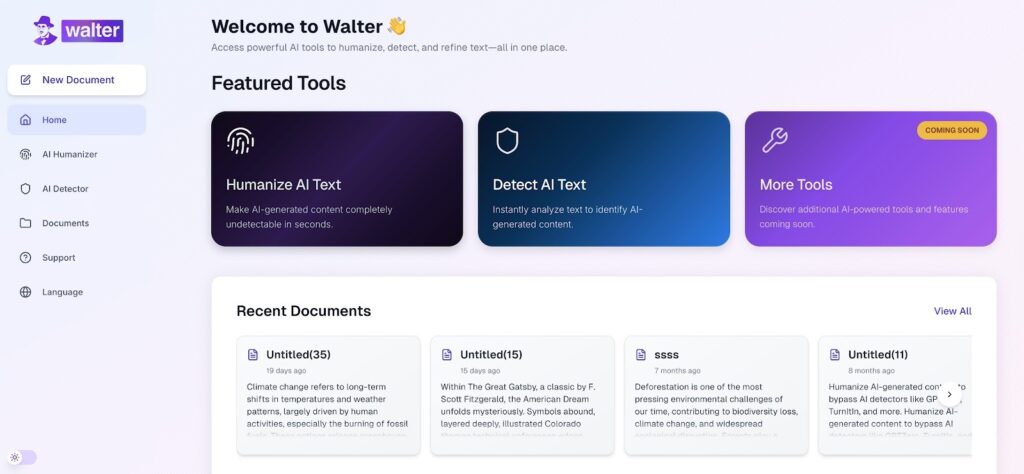
Many students find that having to manage too many different tools at once creates an unmanageable situation. So they may simply prefer to use Walter Writes as a single refinement layer. It helps them achieve clarity, a human-like flow, and self-assessment in one location, which then allows them to complete the finalization of their work after they have used Writefull.
Simple AI Tool Stacks Students Can Use With Writefull
Most students use WriteFull to clean up academic language. But, shortly after that, problems start to appear, such as originality concerns, confidence before submission, or making the writing sound more natural without breaking the rules.
There are a couple of relatively simple and ready-to-use tech stacks students use alongside Writefull in day-to-day studying. Each Tech Stack is built to meet a very specific need of the student, so you can choose one and stick with it.
Regular Assignments Stack
Best for: Students looking for more natural and human-sounding content to submit on a regular basis.
- Writefull ($7/month)- Academic tone and language polishing
- Walter Writes ($8/month)- Humanization + built-in AI detection
- Proofedmic ($8/month)- Plagiarism and originality verification
Cost Per Month: $23
Limitation: This stack is more useful for overall accurate writing and not merely for grammar corrections.
Research Papers and Thesis Stack
Best for: Research-heavy assignments, dissertations, journal-style papers
- Writefull ($7/month) – Overleaf and academic phrasing support
- Paperpal($25/month) – Research-focused language and formal tone refinement
- Proofademic($8/month) – Citation and originality checks
Cost per month: $40
Limitation: Not useful for casual/ informal essays and short-term work.
Many students eventually expand their workflow by integrating additional AI study tools to improve originality, tone, and submission confidence in their academic work.
A Quick To-Do List for Students Using AI in Academic Writing
- Draft your ideas first: Don’t let AI replace your creative thinking
- Polish your academic language: Maintain a clean structure and tone before moving further.
- Check originality and citations: Verify the sources and conduct plagiarism checks before submission.
- Review flow and consistency: Ensure that the writing sounds natural, authentic, and matches your style
- Save drafts and revisions: Keep the drafts for final revision before submitting.
The majority of students find themselves spending an extreme amount of time refining. So, they mostly seek one layer of complete refinement. That’s why tools such as Walter Writes are developed to help students in rewriting their AI drafts to a natural-sounding, authentic, and humanized write-up.
Writefull AI Review: FAQs
Can Writefull Detect AI-Generated Content?
Writefull has an AI Detector, but use the results of this tool as a signal and not as evidence of anything.
Is Writefull Safe for Academic Writing?
Yes, for light editing and polishing purposes, but you are taking a risk when using it to rewrite your assignments.
Does Writefull Check for Plagiarism?
No, it will not replace your plagiarism detection software.
Is Writefull Worth It for Students?
Yes, especially if you have Overleaf heavy workflows.
How Does Writefull Compare to Grammarly?
Writefull is more academically focused, while Grammarly is a more general-purpose grammar and spell-checking tool.
Can Universities Detect Writefull?
They are able to detect patterns of usage, but not which tool is used specifically for that purpose.
Is Writefull Free for Students?
There may be some free tier or trial versions available, but generally, there will be limitations on how much you can use.
Final note
The focus of this Writeful AI review is student safety, including privacy, academic integrity, and policy risk. The accuracy and effectiveness of Writefull’s features and functionality for refining academic language vary based on how a student uses them in their workflow.
Students who are looking for a more streamlined approach to refining their writing through an integrated, holistic system may feel that the single level of refinement is easier to navigate than using multiple tools to accomplish similar goals.
A single platform like Walter Writes will provide a smooth process in terms of student workflow as it includes humanizing, self-checking, and polishing.
Tired of getting flagged? Our free AI humanizer rewrites AI-generated drafts so they read naturally and pass detectors like ChatGPTZero, Turnitin, and Originality.ai.