




Yes, Turnitin can detect text generated by Perplexity.ai. Perplexity.ai is a research and writing assistant powered by large language models (LLMs) such as GPT-3, GPT-3.5, and GPT-4, the same AI architectures that Turnitin’s detection engine is designed to recognize. This means essays or reports written primarily with Perplexity.ai are highly likely to be flagged by Turnitin and other AI detectors similar to Turnitin.
As more students turn to AI tools like Perplexity.ai for research, understanding how Turnitin’s AI detection works has become essential for maintaining academic integrity.
Key Takeaways:
- Turnitin can detect text from Perplexity.ai. Since Perplexity is built on ChatGPT-based models, its output often shows the same linguistic markers - predictable phrasing, balanced structure, and low perplexity, that Turnitin’s AI detector recognizes.
- Detection focuses on writing style, not the tool name. Turnitin doesn’t identify “Perplexity.ai” directly; it analyzes how the text reads, looking for AI-like sentence uniformity, burstiness, and tone consistency.
- Perplexity’s polished summaries are easy to spot. Because its writing tends to sound overly formal and evenly structured, unedited Perplexity content can trigger Turnitin’s AI writing percentage.
- Human editing lowers detection risk. Rewriting for rhythm, adding your own examples or commentary, and varying sentence structure make the text more human-sounding and less likely to be flagged.
- Use Perplexity responsibly. It’s an excellent research and summarization tool, but its output should guide your work, not replace it. Always rewrite, cite, and verify sources before submission.
Always rewrite, cite, and verify sources before submission or humanize your AI text using advanced rewriting tools to maintain tone and accuracy.
What Is Perplexity.ai?
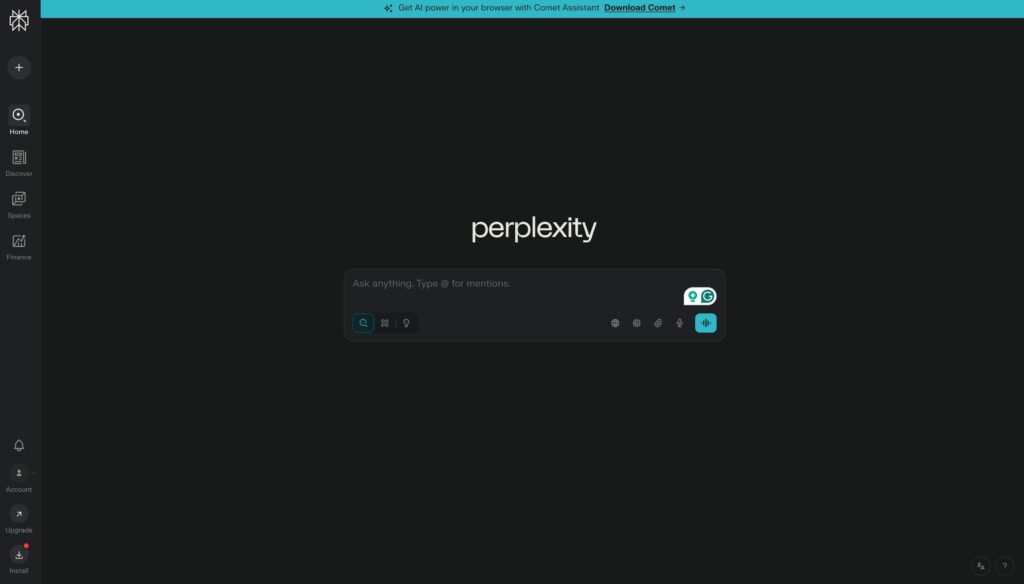
Perplexity.ai is an AI-powered research assistant that combines search, summarization, and citation. It works more like a search-and-synthesis tool than a standard chatbot. Users type a question, and Perplexity scans the web, summarizes relevant information, and provides linked sources.
Its results often sound clear and factual, closer to an academic summary than a creative draft, but that very polish can make it detectable by AI scoring tools that look for rhythm and uniformity.
How It Differs from ChatGPT:
- Cites sources automatically (helpful for fact-checking).
- Blends factual retrieval and rewriting rather than pure generation.
- Produces concise, neutral paragraphs: which can sometimes read “too perfect” for Turnitin’s AI detector.
How Turnitin Detects AI Writing
Turnitin’s AI writing detection model doesn’t identify specific tools by name, it identifies patterns characteristic of large language models. Since Perplexity.ai uses ChatGPT-based systems, its output naturally exhibits those same traits.
Here’s how Turnitin identifies AI-authored writing:
- Segmentation and Scoring: Turnitin breaks documents into overlapping text blocks and analyzes each segment using an internal model trained on human and AI writing.
- Predictable Patterns: The model measures perplexity (how predictable the text is) and burstiness (variation in sentence length). AI-generated text tends to have low burstiness and consistent pacing.
- AI Paraphrasing Detection: Turnitin can also recognize text that was originally AI-written but later rephrased with paraphrasing tools. See also: AI humanizer vs AI paraphraser for a breakdown of how these tools differ.
- Pattern Aggregation: These results are combined to calculate an AI writing percentage, signaling how likely the content was AI-generated.
Because Perplexity.ai relies on the same ChatGPT-based architecture as ChatGPT, its writing typically produces the same statistical signals Turnitin is trained to detect.
Can Turnitin Detect Perplexity.ai?
Yes, Turnitin can detect text that was generated using Perplexity.ai.
Turnitin’s AI model looks for the linguistic fingerprints of LLM-based text, and Perplexity.ai is built on precisely those foundations. Even though Perplexity outputs often include citations, its writing pattern remains machine-consistent, showing predictable syntax, balanced structure, and limited variation in tone.
That means:
- Submitting raw Perplexity.ai text is likely to trigger Turnitin’s AI indicator.
- Rewriting or adding personal insights can reduce detection likelihood, since human edits break uniform patterns.
- Using Perplexity responsibly for research or summarization remains acceptable but passing its text off as original is not.
| AI Tool | Primary Use | AI Detection Likelihood | Notes |
|---|---|---|---|
| ChatGPT | General writing and idea generation | High | Produces consistent phrasing easily flagged by Turnitin’s AI detector. |
| Claude | Long-form reasoning and analysis | Medium | More nuanced tone but still shows LLM rhythm in structured text. |
| Perplexity.ai | Research-based synthesis and summarization with citations | Medium - High | Uses GPT-3/4 models; Turnitin reliably detects its structured, low-burstiness output unless heavily human-edited. |
| Gemini (Google) | Integrated search summaries | Medium | Detection depends on rewriting depth and topic complexity. |
As generative AI tools become more sophisticated, educators and institutions must redefine what originality means in academic work. Students can now produce essays that aren’t plagiarized word-for-word but are still primarily AI-generated. According to EDUCAUSE’s analysis on academic integrity in the age of AI, universities are rethinking assessment design - emphasizing transparency, critical thinking, and responsible AI literacy rather than strict prohibition. This shift reflects a broader need to teach how AI can be used ethically, rather than avoided entirely.
Why Some Perplexity.ai Texts Are Flagged More Easily Than Others
Turnitin’s detection model can identify the linguistic traits of Perplexity.ai writing, but how strongly it flags a document depends on how much human revision occurs after generation.
Raw Perplexity.ai text, especially summaries or essays copied directly, almost always triggers Turnitin’s AI indicator. The tool’s consistent sentence rhythm, balanced syntax, and low burstiness make it unmistakably machine-generated.
However, when a student or writer paraphrases, restructures, or adds original insight, the text gains natural variation. These human-style edits can reduce the AI likelihood score, not because the content becomes “undetectable,” but because it no longer fully fits the statistical patterns of pure LLM output.
In short, Turnitin can detect Perplexity.ai content, but the degree of detection depends on how closely the final draft mirrors raw AI phrasing versus authentic human writing rhythm.
How to Use Perplexity.ai Responsibly
The key to staying compliant is transparency and revision. Use Perplexity as a research assistant, not a ghostwriter, and refine the results using a humanizing tool like Walter Writes to ensure your final draft sounds authentic and original.
Recommended Workflow:
- Research: Use Perplexity.ai to gather information and linked sources.
- Draft in your own words: Paraphrase and explain findings.
- Add personal insight: Incorporate examples, reasoning, or reflection.
- Cite properly: Attribute original ideas or quotes.
- Avoid False Flags & Refine tone: Run your text through Walter Writes’ AI humanizer to adjust rhythm, pacing, and voice before submission. This step helps avoid false flags.
- Check with detectors: Use Turnitin, GPTzero, Proofademic.ai or Originality.ai to review similarity and AI likelihood.
This method ensures your writing maintains academic integrity and originality.
Example: Perplexity.ai Output vs. Humanized Revision
| Version | Excerpt | Turnitin Detection Likelihood |
|---|---|---|
| Perplexity Output | “Turnitin uses advanced similarity detection algorithms to compare text against a vast database of academic and online materials to ensure originality.” | High (90-95%) - Uniform phrasing and formal tone. |
| Humanized Rewrite | “Turnitin reviews student submissions by comparing them to millions of online and academic sources. Its system checks how closely a paper’s phrasing matches existing material to confirm originality.” | Low (10-25%) - Varied sentence rhythm and natural human pacing. |
The rewritten version adds rhythm, human phrasing, and subtle contextual changes, reducing the AI-likelihood score without altering meaning.
Best Practices: What to Do and Avoid
To stay compliant and avoid AI detection flags, follow these key guidelines when using Perplexity.ai for academic or writing tasks. The table below highlights practical do’s and don’ts to help ensure your work remains authentic, well-written, and within academic integrity standards.
| ✅ Do This | ⚠️ Avoid This |
|---|---|
| Use Perplexity for research, summaries, and gathering citations. | Submitting Perplexity output word-for-word. |
| Revise and personalize every paragraph for voice and tone. | Over-reliance on uniform AI-generated phrasing. |
| Combine Perplexity with tools like Walter Writes to improve tone and readability. | Using AI paraphrasers alone - Turnitin can detect paraphrased AI content. |
| Run AI checks with tools like GPTZero or Proofademic before submitting. | Ignoring detection results or failing to verify cited sources. |
Common Questions About Turnitin and Perplexity.ai
What is Perplexity.ai used for?
Perplexity.ai is an AI-powered research assistant that blends search, summarization, and citation. It helps users explore topics faster by generating concise, source-linked answers from across the web, often used for research preparation and academic overviews.
Can Turnitin detect text written with Perplexity.ai?
Yes, Turnitin can detect text generated by Perplexity.ai. Because Perplexity is built on large language models like GPT-3 and GPT-4, its output often shows low perplexity and predictable phrasing patterns that Turnitin’s AI detector recognizes. Even if the text includes citations, unedited output can still trigger AI writing indicators.
Is using Perplexity.ai considered plagiarism?
Not automatically. Using Perplexity.ai for research or idea generation is acceptable, but submitting its output verbatim as original work can violate academic integrity policies. Always rewrite, cite correctly, and include your own analysis to ensure compliance.
How can I make Perplexity-generated text sound more human?
Add variation to sentence rhythm, incorporate personal insights, and review transitions for tone. Tools like Walter Writes can humanize AI text for natural flow and readability while maintaining citation accuracy and SEO integrity.
Does Turnitin detect citations from Perplexity.ai
?Turnitin identifies citations and formatting but does not determine if they were created by AI. However, if the overall writing style remains AI-like, overly uniform or lacking human tone, the text may still be flagged as machine-generated. Always double-check sources for accuracy.
How accurate is Turnitin’s AI detection for Perplexity.ai?
Turnitin’s AI writing indicator is highly accurate for text written primarily by AI tools like Perplexity.ai. It identifies patterns in predictability, sentence structure, and burstiness with over 90% accuracy for fully AI-written documents, though human-edited sections may lower the score.
How do I get access to Turnitin?
While you can use turnitin for free, it is only accessible through a teacher or school administrator. You can access it legitimately without an educator.
The Bottom Line on Turnitin and Perplexity.ai Detection
Turnitin can detect text generated by Perplexity.ai, since both tools rely on large language models that produce predictable, low-perplexity phrasing. Even when Perplexity includes citations, its structured and uniform tone often triggers Turnitin’s AI writing indicator.
That said, detection isn’t punishment - it’s awareness. Educators and students can use this insight to engage AI responsibly. Perplexity is an excellent research assistant, but it should never replace human reasoning or authentic writing.
To stay compliant, use AI tools to gather and organize information, then rewrite in your own words, add personal insight, and verify every source.
For those who want their writing to retain a natural, human voice, tools like Walter Writes help humanize AI-generated text, improving readability, tone, and originality while keeping work plagiarism-safe.