


Key Takeaway: Colleges can detect AI-written essays through a combination of detection software and trained human reviewers, and even when software misses it, admissions officers often spot the lack of personal voice, making AI-generated essays a genuine risk to your application.
- About 40% of colleges use AI detection software, with Turnitin, GPTZero, Copyleaks, Originality.AI, and Proofademic being the most commonly deployed tools
- Most top-ranked universities including Harvard, Princeton, MIT, and Stanford have not publicly confirmed using detection software on admissions essays, but all require applicants to attest that work is their own through the Common App
- Yale classifies submitting AI-generated content as application fraud, Caltech directly asks applicants whether they received AI assistance, and Brown and Georgetown have issued explicit bans
- Johns Hopkins has disabled AI detection tools entirely, citing false positive concerns, which reflects broader uncertainty about detector reliability
- Raw, unedited ChatGPT output is reliably flagged by major detectors, but human-edited AI content is significantly harder to catch by software alone
- Using AI to brainstorm or fix grammar is generally acceptable at most schools, but the final essay must be written in the student’s own voice with personal detail that only they could provide
Can Colleges Detect AI Essays? How Do Colleges Check for AI Writing?
Can colleges actually tell if you used AI on your application essay? The truth is that yes, and it’s becoming easier for them every day. Schools often rely on tools like Turnitin alongside their own judgment to spot signs of AI writing. Admissions officers look for missing personal voice, overly polished language, and inconsistent styles that don’t sound like a student’s natural work. AI detection isn’t perfect yet, but it’s improving fast, and knowing what colleges look for can help you avoid getting flagged.
The short answer on whether colleges use AI detectors: Most top schools have not publicly confirmed using detection software on admissions essays, but about 40% of colleges overall do. More importantly, every applicant who submits through the Common Application signs an attestation certifying their work is their own, making AI-generated essays a form of application fraud regardless of whether software catches it.
Why Colleges Are on High Alert for AI Essays
College admissions teams don’t just skim your essay. They actually use it to get a sense of who you are, how you think, and what makes you unique. That’s why schools are paying extra attention to spotting AI-written essays.
If your essay sounds generic, overly perfect, or doesn’t include personal details, it can send up red flags. Admissions officers are trained to catch writing that feels off or doesn’t match the tone of the rest of your application.
Many colleges are now using advanced tools like Turnitin’s AI checker and GPTZero to scan essays for patterns that look like they came from AI. For example, medical schools check AI indicators as part of a broader review process, often combining software results with manual evaluation instead of treating detection scores as final evidence.
But here’s what a lot of students don’t realize. Even if your AI-generated text gets past the software, a real person can usually tell when something doesn’t sound like it came from a human. That’s why it’s so important to make sure your essay shows your own voice, your real experiences, and your honest thoughts. Colleges want to hear your story, not a polished but empty piece of writing.
How Colleges Detect AI in College Essays
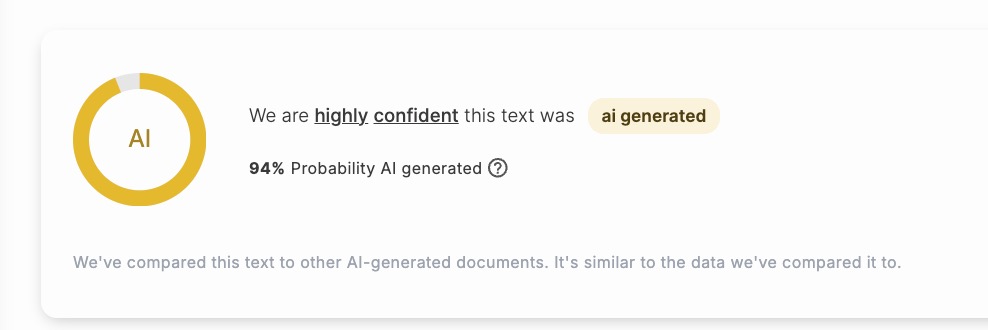
So how do schools actually figure out if you used AI? They use a mix of technology and human review to catch AI-generated writing.
First, many colleges rely on detection tools like Proofademic, GPTZero, and Turnitin. These tools look for clues in your writing, like unusual sentence patterns, strange word choices, or a lack of personal details. The software scans your essay and gives it a score showing how likely it is to have come from an AI tool.
But detection doesn’t stop there. Admissions officers also read your essay closely. If your writing feels stiff, sounds generic, or doesn’t match the tone of the rest of your application, it can set off alarms. They know what authentic student writing looks like, and they’ll notice if something feels too perfect or lacks your personality.
Sometimes, colleges will compare your essay to your other application materials, like your short answers or emails. If your essay suddenly sounds like it was written by a professional or feels disconnected from your own voice, that’s a red flag too.
Together, AI detection tools and trained admissions staff make it harder than ever to slip past the system with a fully AI-generated essay. That’s why making your writing sound natural, personal, and unique is key if you want to avoid getting flagged.
Do College Admissions Use AI Detectors?
This is one of the most searched questions on this topic, and the answer is more nuanced than most people expect.
The majority of top-ranked universities have not publicly stated that they use AI detection software on admissions essays. In fact, Johns Hopkins has explicitly disabled AI detection tools across its programs, citing concerns about false positives and unreliability. The University of Pennsylvania’s VP of Admissions stated directly that the school does not use AI to evaluate applications.
That said, roughly 40% of colleges across higher education do use some form of AI detection software. Tools like Turnitin, GPTZero, Copyleaks, Originality.AI, and Proofademic are the most commonly deployed. None are considered reliable enough to serve as sole evidence of AI use, which is why schools combine them with human review.
Here is how the major institutions have positioned themselves as of 2026:
- Yale: Explicitly states that submitting the substantive output of an AI platform constitutes application fraud. Grammar and spelling checks are permitted.
- Caltech: Requires all Fall 2026 applicants to review its AI ethics guidelines and directly asks whether applicants received AI assistance in their materials.
- Brown and Georgetown: Have issued explicit bans on AI-generated content in admissions essays.
- Duke: Stopped assigning numerical ratings to essays partly in response to AI concerns, acknowledging it can no longer assume essays accurately reflect a student’s writing ability.
- Harvard, Princeton, MIT, Stanford: Rely on existing honor codes and the Common App fraud policy. All require attestation that the work is your own. None has published dedicated AI detection software policies.
About 70% of the top 30 schools have no formal AI policy at all. Around 7% prohibit AI use entirely, and 27% allow restricted use such as grammar checking or brainstorming. Check each school’s policy individually before you apply.
Can AI Essays Really Get Past Detection?
You might be wondering if AI-generated essays can actually slip through the cracks. The honest answer is sometimes they can, but it’s getting harder every day. AI detectors are improving quickly, and colleges are combining these tools with careful human review to catch suspicious writing.
If you just copy and paste text straight from ChatGPT or another AI tool, there’s a good chance it will get flagged. The wording often sounds too polished or oddly generic, and detection tools are trained to pick up on those patterns.
However, editing your AI-generated text by adding your own thoughts, breaking up long sentences, and making the language sound more like you can reduce the chance of getting caught. Personalizing your writing makes it much harder for both AI detectors and admissions officers to tell it was generated by a machine.
But it’s important to remember there are no guarantees. Even if you spend time tweaking the text, a sharp-eyed admissions officer or a sophisticated detection tool could still flag it. That’s why it’s always safest to use AI as a helper to brainstorm and organize your ideas, but write the final draft in your own words.
Being genuine and putting your own voice into your essay is the best way to make sure your application stands out for the right reasons.
What Happens If You Submit an AI-Written Essay?

Let’s be real: the stakes are high if you try to pass off an AI-written essay as your own. If a college detects that your essay was generated by AI, it can seriously hurt your chances of getting in. Admissions officers might see it as a sign you’re not ready for college-level work or that you’re trying to cheat the system.
In some cases, your application could be rejected outright. Even worse, it could raise red flags that stay on your record, especially if the school keeps notes about academic integrity concerns. And if you’re already a student and use AI to write assignments, getting caught could lead to disciplinary actions like failing the assignment or facing suspension.
But it’s not just about getting in trouble. Submitting an AI-written essay means you miss the chance to show who you really are. College essays are your opportunity to share your story, your personality, and your goals. Relying on AI takes away your voice and can make your writing sound generic or detached, which is the opposite of what admissions officers want to see.
That’s why it’s better to use AI responsibly, like getting help organizing your ideas or improving your grammar but make sure the final essay is genuinely yours. Your unique perspective is what will make your application shine.
How to Use AI Responsibly When Writing Your College Essay
AI can be a great helper when you’re stuck staring at a blank page or trying to get your ideas in order. But the key is to use it the right way. Think of AI as a brainstorming buddy, not a ghostwriter. Let it help you outline your thoughts, suggest ways to improve your sentences, or catch grammar mistakes but always make sure you’re the one writing your story.
Once you’ve drafted your essay, go back through and add your personal experiences, feelings, and reflections. Use details only you could know, like moments that shaped you or challenges you’ve overcome. That’s the kind of real, authentic writing admissions officers want to see.
If you do use AI-generated text as a starting point, don’t just copy and paste it as-is. Rewrite it in your own words and double-check that it sounds like you. If it feels stiff or too perfect, that’s a sign it might come across as AI-generated.
Remember: the essay is your chance to share who you are. By using AI wisely, you can make the writing process easier without losing your voice or risking your application.
What Do Colleges Use to Detect AI Writing, and What AI Checker Do Colleges Use?
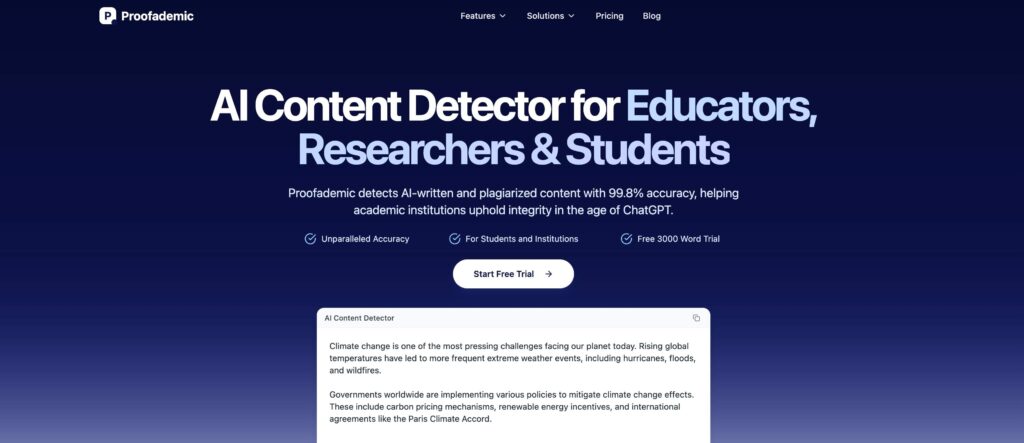
Colleges don’t just guess whether AI wrote an essay, they use powerful tools to find out. The most common ones include Proofademic, Turnitin, GPTZero, and Copyleaks. These programs look at your writing’s patterns, like sentence structure, word choice, and how consistent your style is.
When you submit an application or an assignment, admissions officers or professors can run it through these detectors. They’ll see a score or flag if the text looks like it was made by AI. While these tools aren’t perfect, they’re getting better at spotting content that lacks a personal voice or feels overly polished. That’s why it’s so important to make sure your work sounds like you and truly reflects your thoughts.
One tool students use to check their own writing before submitting is Walter Writes AI. It can help you identify whether your essay sounds too robotic and give you suggestions to make it feel more natural and personal before it ever reaches an admissions officer.
Frequently Asked Questions About AI and College Essays
Can colleges really detect if I used AI to write my essay?
Yes, they can. Many colleges use AI detection tools like Proofademic, Turnitin or GPTZero, along with admissions officers who know what to look for. If your essay lacks a personal voice or sounds too polished, it can raise suspicion.
Will I get rejected if my essay is flagged as AI-generated?
It depends on the college, but getting caught can seriously hurt your chances. Some schools may reject your application outright, while others could request an explanation or clarification.
Is it okay to use AI just to help me brainstorm or fix grammar?
Absolutely. Using AI to generate ideas or improve grammar is generally fine. Just make sure you’re the one writing the final essay, and that it reflects your true experiences and personality.
What’s the safest way to use AI for college essays?
Use AI as a tool, not a crutch. Let it help you brainstorm, structure your ideas, or edit your drafts, but make sure you add your own thoughts, stories, and voice so your essay is authentically yours.
Can AI help me make my essay sound better without writing it for me?
Yes, tools like Walter Writes AI can help you polish your writing by making your sentences clearer and more natural - but you should still write the content yourself. Think of AI as a writing assistant, not a replacement for your own ideas.
What AI detector do colleges use?
There is no single tool used universally. The most commonly adopted tools in higher education include Turnitin, GPTZero, Copyleaks, Originality.AI, and Proofademic. Turnitin is the most widely deployed, particularly at institutions with existing plagiarism detection infrastructure. However, the majority of top-ranked universities have not publicly confirmed using any of these tools on admissions essays specifically.
Do college admissions use AI detectors?
Some do, but not universally. About 40% of colleges use some form of AI detection software. Most top-10 schools rely on honor codes, applicant attestations, and experienced human reviewers instead. Johns Hopkins has explicitly disabled AI detection tools. The Common Application, which over 1,000 colleges use, classifies AI-generated essay content as application fraud regardless of whether it is detected by software.
Can colleges detect ChatGPT specifically?
Yes, to a degree. Raw, unedited ChatGPT output is reliably detected by tools like Turnitin and GPTZero. However, ChatGPT text that has been edited or rewritten by a human is significantly harder to detect. Many detectors return near-zero AI scores on human-edited AI content. This is why admissions officers also rely on human judgment: comparing writing style across your entire application rather than relying solely on a detection score.
Can colleges tell if you use ChatGPT?
They can often tell, yes. Both detection software and experienced admissions readers look for the same signals: overly polished language, generic examples without personal detail, uniform sentence structure, and a writing style that does not match the rest of your application. Even if software does not flag your essay, a reader comparing it to your short answers and recommendation letters may notice the difference.
Admissions essays are just one part of the picture. For a full breakdown of how universities detect ChatGPT across coursework, assignments, and submissions, read our 2026 guide covering every major detector and LMS.
For LMS-specific coverage, see Does Blackboard Detect AI and ChatGPT? covering SafeAssign, Turnitin LTI, and behavioral data.