





Netus AI claims it will humanize your AI-generated text so well that even the most aggressive detectors cannot identify it as AI-generated. On student forums, there are many examples of how successful this approach is at creating excitement about the tool. Many 0% AI detection screenshots have become digital badges among students.
Detector bypass success rates can be quite variable depending upon both detector type and the type of content used. While the content may appear to avoid detection, many times the rewritten content from this tool will contain unnatural-sounding language that will likely create a separate form of concern.
At the end of this review, you will know when Netus AI may work for your needs, where it falls short, and what better options exist for students looking to generate high-quality, readable humanized content.
Quick Verdict of Netus AI Humanizer Review for Students
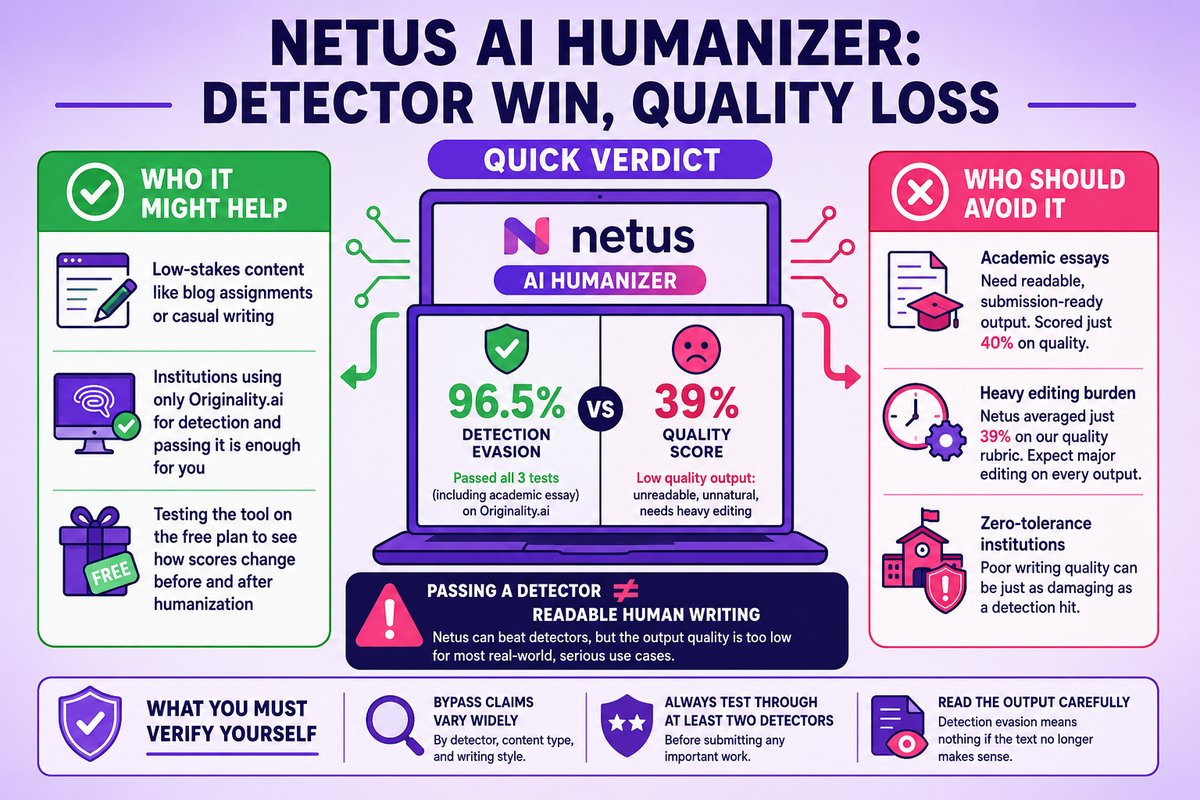
Netus AI claims its product can serve as a fully featured humanizer as well as a detector. In the mini-review below, we’ll provide an honest, quick verdict before you commit to spend a single credit on this tool.
What Netus Does
The numbers tell an interesting story. Netus passed all three of our test samples on Originality.ai, even the challenging academic essay sample. Its detection evasion score was also very impressive at 96.5%. That makes it look very strong based on that one number alone.
But the issue is: passing a detector does not equate to humanized writing. A good humanizer should be able to write AI content in such a way that it sounds natural and readable. That being said, it should also sound natural enough to pass a detection software, which is the byproduct of good humanization.
What Netus appears to do is scramble up the original writing enough that it is able to deceive the detector into thinking the scrambled version is human-written. But after running the output generated by Netus through our quality rating system, it scored only 39%, making the output you receive unreadable, unnatural, and in most instances requiring a considerable amount of additional editing and rewriting.
If you still have to rewrite the output generated by a humanizer tool from scratch, what value did you really derive from using the tool?
Who Netus AI Might Help
- Students working on low-stakes content like blog-style assignments or casual creative writing pieces
- Users whose institution relies only on Originality.ai for detection, and their only concern is passing it, and are comfortable doing heavy manual editing afterwards.
- Those testing the tool briefly on the free plan to see how detection scores shift before and after humanization
Who Should Avoid It
- Students submitting academic essays who need the output to be readable and submission-ready. Netus scored just 40% on quality for the academic essay, with readability and grammar both hitting rock bottom with just 1 out of 5.
- Anyone who cannot afford to spend time heavily editing every output before submitting, because Netus averaged just 39% on our quality rubric, meaning drift and readability issues are very likely.
- Students at institutions with zero tolerance for AI use, where getting flagged for poor writing quality can be just as damaging as a detection hit
What You Must Verify Yourself
- Bypass claims vary widely by detector, content type, and writing style
- Always test through at least two detectors before submitting
- Read the rewritten output carefully before using it because detection evasion means nothing if the text no longer makes sense
Detection evasion is merely one half of the issue. Scrambling the meaning of an item in order to avoid it being detected by a detector creates another problem: submissions that read poorly result in losing marks. In our quality assessment, Netus averaged just 39% across all three samples.
If you are looking for a product that will provide the best detection evasion and high-quality readable output, then Walter Writes AI humanizer is worth giving a shot.
What Netus AI Is (And What It Claims to Do)
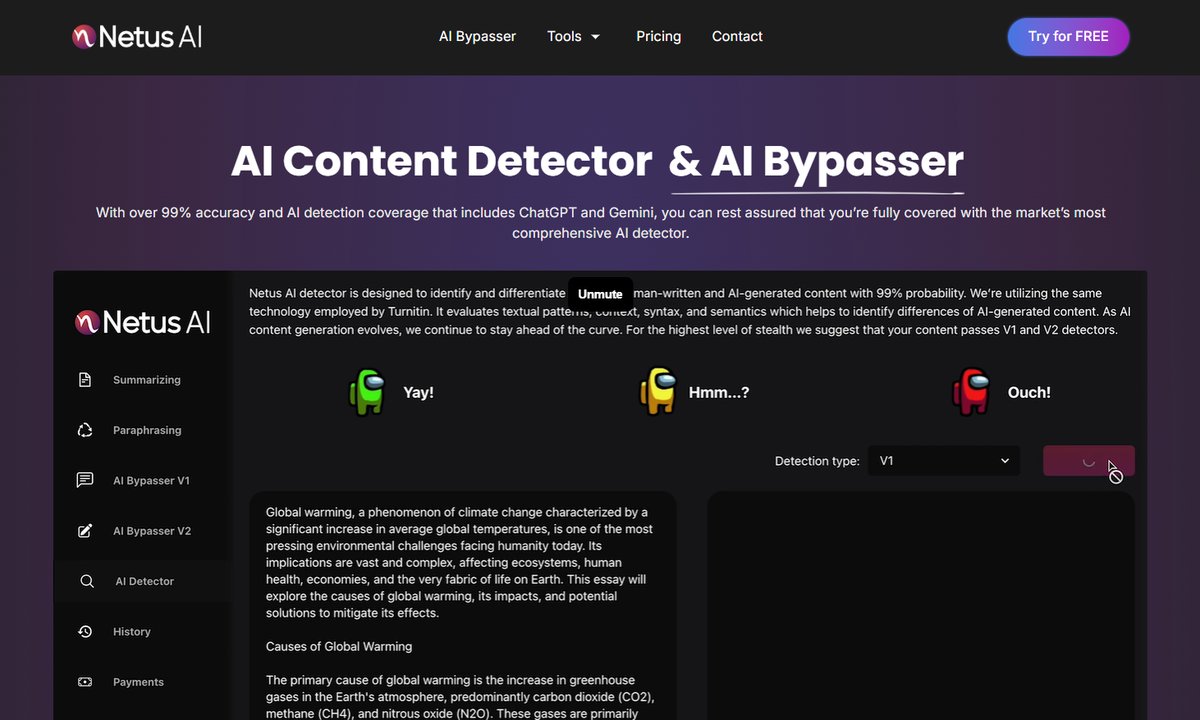
Netus AI is a web-based tool that combines two functions: an AI bypasser and an AI detector. The bypasser takes AI-generated text and rewrites it in such a way as to minimize the chance of being detected by detection software. The detector allows you to take a sample of text, identify its level of AI similarity, both before and after humanizing it.
This combined functionality sounds like something that should work well in practice. Generate content, input the generated content into the system, have it humanized, check the detection percentage of the content, and then submit it for grading. The workflow is simple and easy enough for most students to follow and visually appealing, with low detection percentages in promotional screenshots, yet there is a very important difference between what users perceive they are purchasing and what the product provides.
Students generally believe “bypass” means the end result will be written in such a manner as to allow them to pass through any detectors their institutions may use. But what the tool truly delivers is not always consistent from one detector to another. For example, the rewritten version of text that scored 0% on one detector can also score 15% on another. This is due to the fact that the tool does not know which detectors your institution uses. It does not guarantee academic safety. And it does not treat meaning preservation or output quality as a priority, as seen in our stress test results.
It serves as a bypasser only and cannot be considered a good humanizer tool because humanization is a lot different from this. Humanization emphasizes making your AI writing sound natural, which is a much better way to make it submission-ready. Understanding this gap is the most significant thing you can take from this Netus AI bypasser review before making any decision.
You can try Walter’s AI humanizer for students if you want to get rid of the robotic AI writing.
Netus AI Features Breakdown
Netus AI offers three core tools. Below is a description of exactly how each component works for the student using it.
Netus AI Bypasser
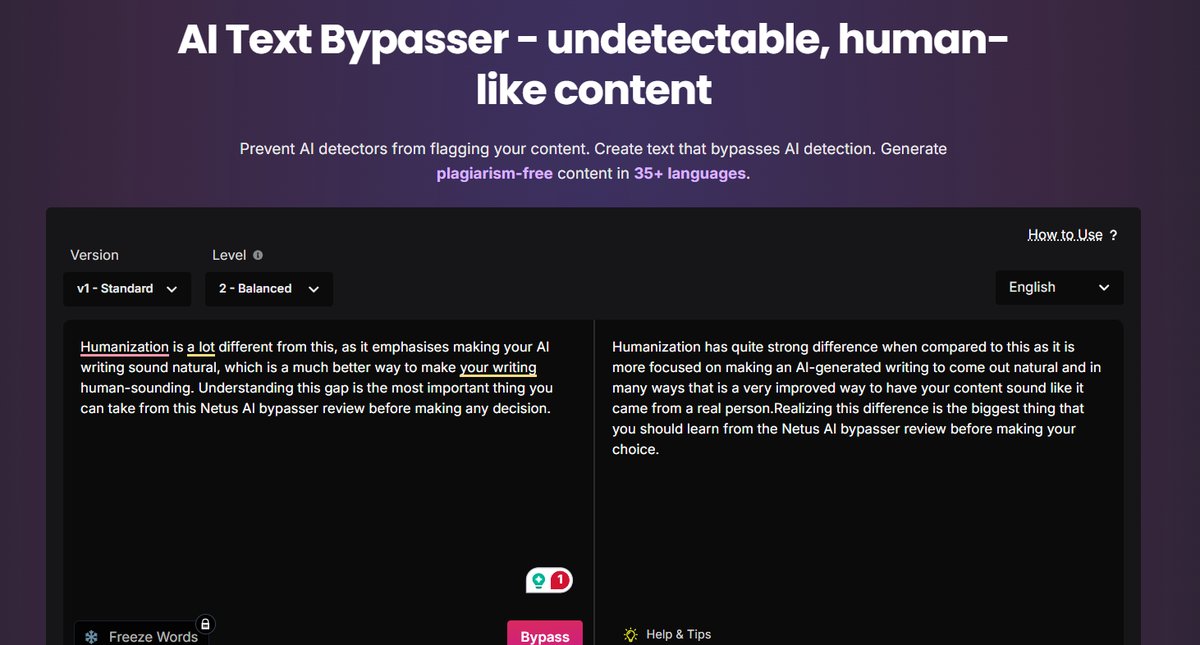
The bypasser rewrites AI-generated text across three layers: syntax restructuring, vocabulary substitution, and sentence reordering. The purpose of doing this is to move the statistical pattern of the text far enough away from being classified as “AI” that detectors will classify it as written by humans.
The changes are broad, not precise. The tone, argumentation, and phrasing of the original text vary during this process. The bypass is only effective at rewriting generic content. It is less effective when trying to rewrite technical or academic content where exact wording is required.
Netus AI Detector
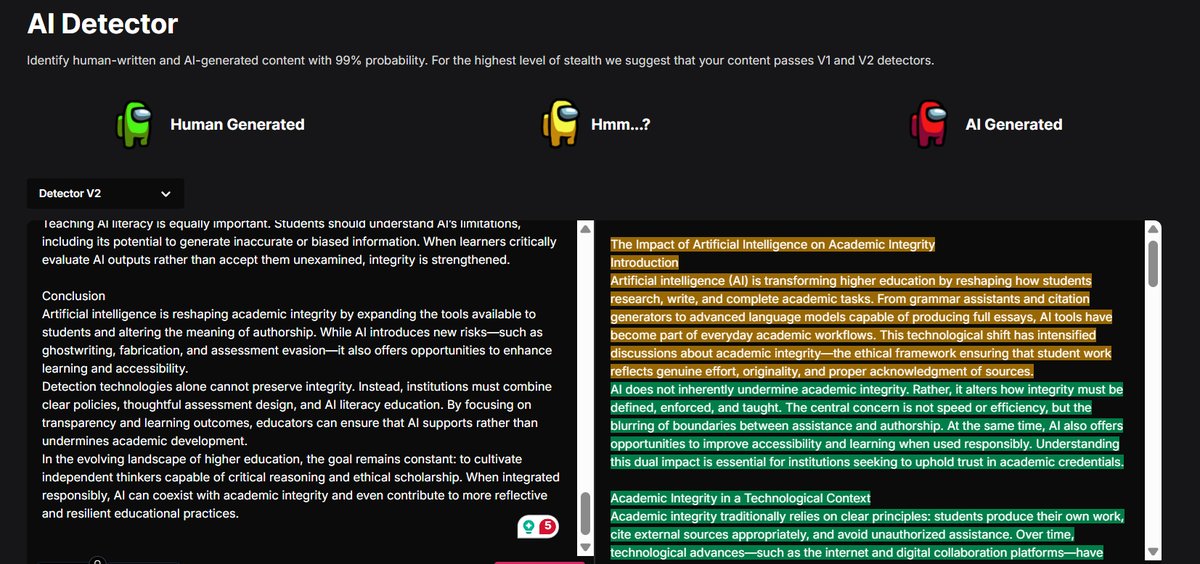
The built-in detector returns three results:
- Human Generated
- Hmm…? (mixed)
- AI Generated
It also shows each sentence with its confidence rating so that you may visually identify what the tool has identified as high risk.
Mixed labels are most frequently misread. The tool does not indicate whether the content will be acceptable to another detection tool. Since each detector uses a different model, a clean output from Netus is no indication of how a piece of content will perform on Originality.ai, GPTZero, or Turnitin. Consider it to be a direction check, but do not rely on it for a complete decision.
Student-Relevant Features at a Glance
- Supports multiple languages beyond English
- Browser-based, no document upload on the free plan
- No tone controls or formality settings modes
- No built-in plagiarism checker
- Free plan capped at 50 credits (roughly 500 words)
- No browser extension available
Netus AI Pricing + Credit System
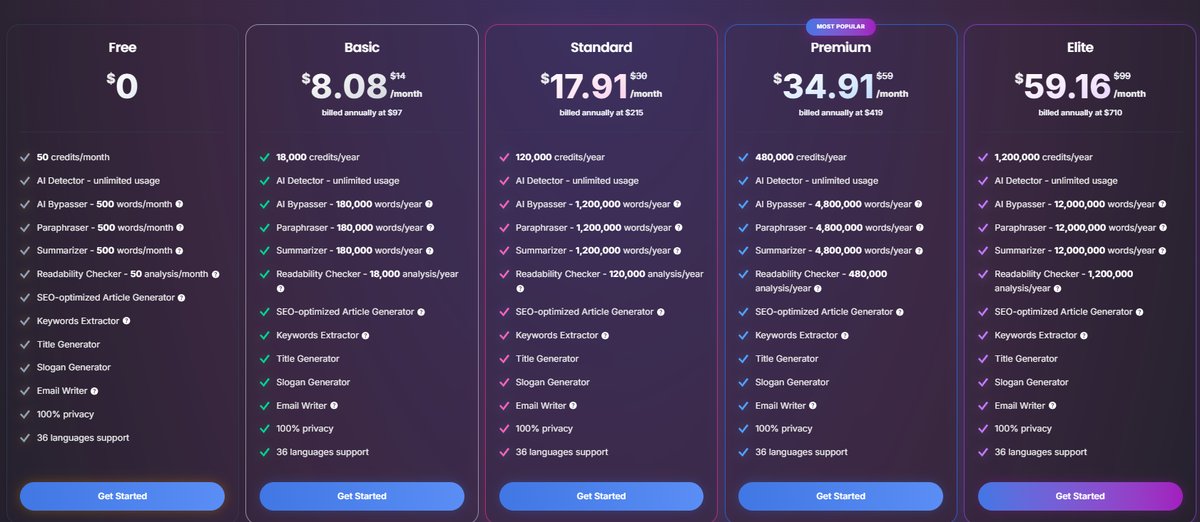
Netus AI operates using a credit system. Each activity you perform will consume a portion of your credit balance. The detector is free and unlimited on all plans.
| Plan | Price | Credits | Bypasser Words |
|---|---|---|---|
| Free | $0 | 50/month | 500/month |
| Basic | $8.08/mo (billed annually at $97) | 18,000/year | 180,000/year |
| Standard | $17.91/mo (billed annually at $215) | 120,000/year | 1,200,000/year |
| Premium | $34.91/mo (billed annually at $419) | 480,000/year | 4,800,000/year |
| Elite | $59.16/mo (billed annually at $710) | 1,200,000/year | 12,000,000/year |
Bottom line for students:
- The free scanner has limitations based on either 3,500 characters or 500 words. With respect to credits, 1 credit = 10 words, and they give you a total of 50 credits.
- The credits are depleted much quicker than anticipated for longer or more complicated content that requires multiple scans.
How to Use Netus AI
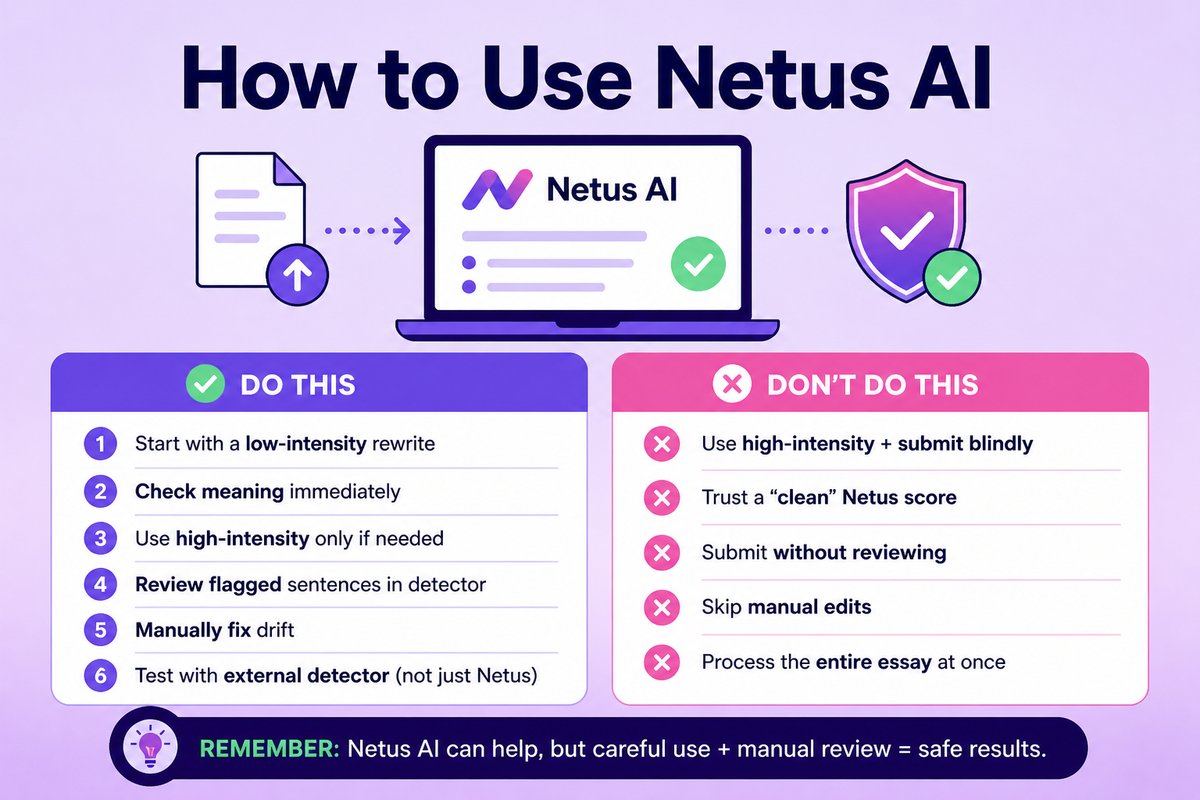
The best way to safely use Netus AI:
- Firstly, paste your draft into the Netus AI bypasser and do a low-intensity rewrite of your draft.
- Then check the rewritten version immediately. Before running any other tests or utilizing this information, review whether there has been an alteration to the meaning.
- If the content still does not appear acceptable at this point, do a high-intensity rewrite using the enhancement option.
- Check the output in the built-in detector and note which sentences flag as risky.
- Manually adjust any changes to the original that occurred during meaning drift. Then, again, run the detection tool.
- Before submitting, run the final version through the external detector your institution actually uses, not just Netus’s own tool.
Do not do this:
- Running the AI bypass tool at the highest level of intensity and then just uploading without reading it.
- Considering a clean Netus score as final proof that it will pass Turnitin or Originality.ai.
- Submit your essay all at once. Rather do it in sections, as this way you will pick up drift before it becomes bad.
- Skipping the manual review portion of the process. Netus AI might change the meaning of your work, and no detector will catch that for you.
If you would like a reliable means to follow the same workflow but do not wish to sacrifice the quality of your writing, this guide covers exactly how to make an essay undetectable without ruining it.
Netus AI Stress Test: Real-World Performance
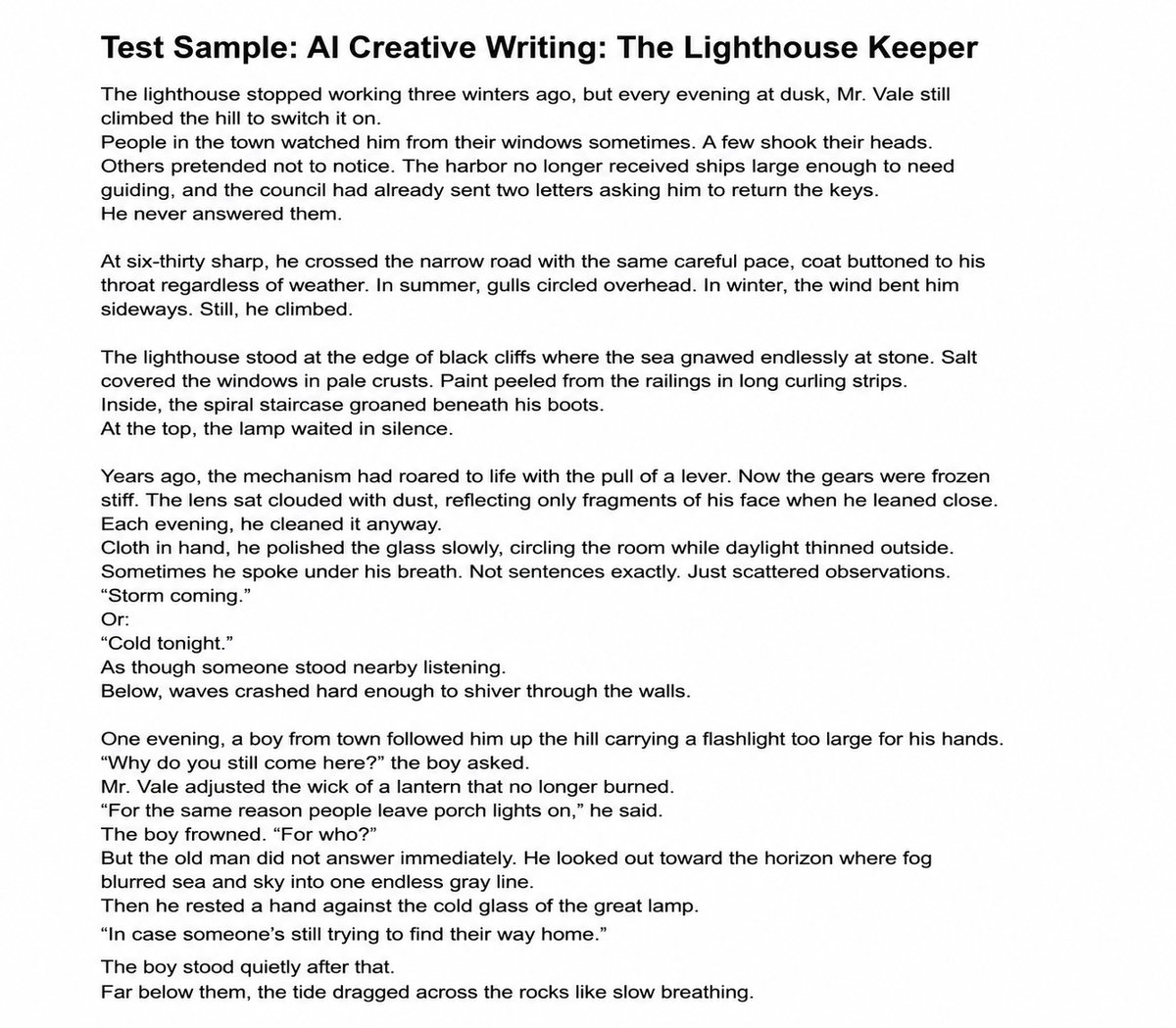
We tested Netus AI across three content types: an academic essay, a blog post, and a creative writing sample. The original versions were all created by AI and had been put through Netus AI bypasser on its free plan. Next, we used both Originality.ai and Proofademic for detection and scored each of the outputs based on their overall quality utilizing a 30-point rubric.
Results Table
| Use Case | Originality.ai | Proofademic | Avg Detection Score | Quality Score |
|---|---|---|---|---|
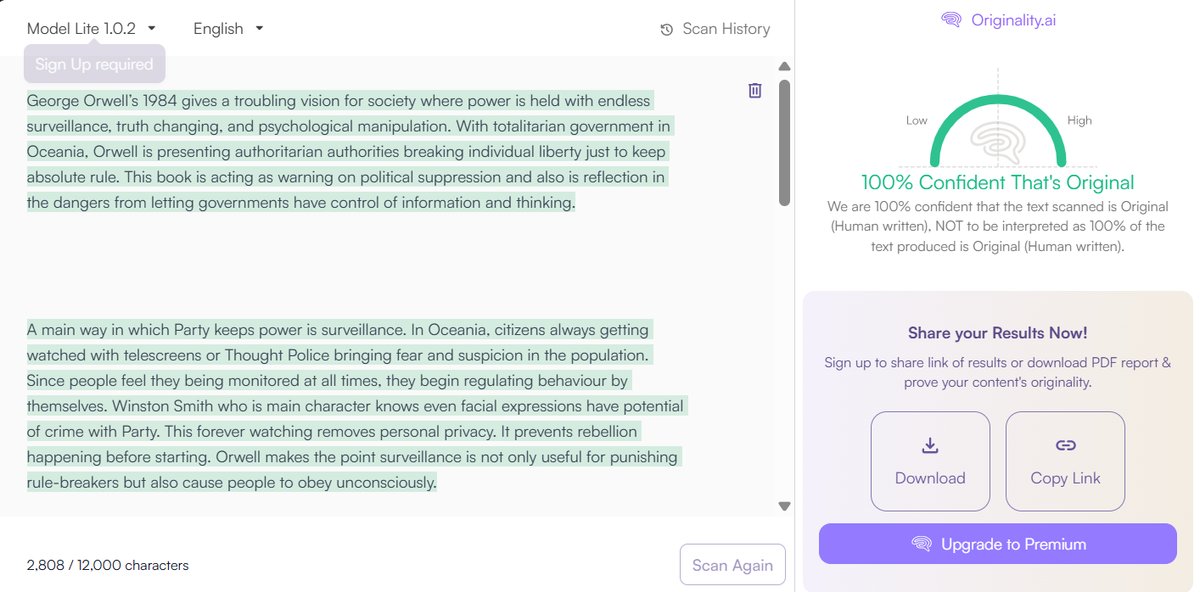
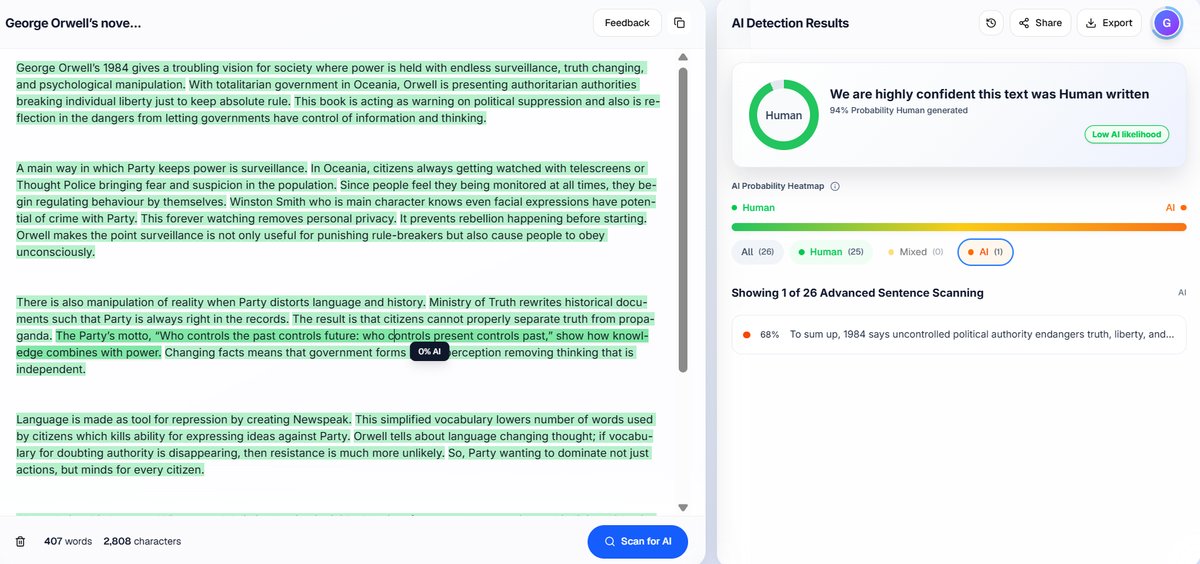
| Academic Essay | 0% AI ✅ | 6% AI ✅ | 3% AI | 12 / 30 (40%) ❌ |
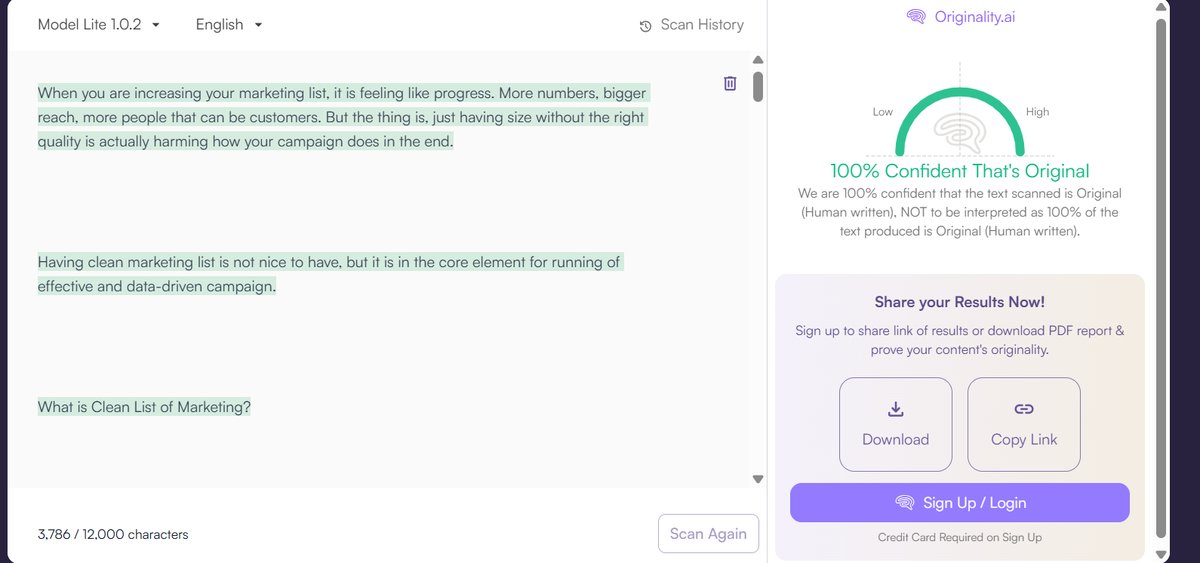
| Blog Post | 0% AI ✅ | 0% AI ✅ | 0% AI | 11 / 30 (37%) ❌ |
| Creative Writing | 0% AI ✅ | 15% AI ✅ | 7.5% AI | 12 / 30 (40%) ❌ |
| Average | 0% AI | 7% AI | 3.5% AI | 11.67 / 30 (39%) |
Detection Score Indicators:
- ✅ = Good (under 20% AI detected)
- ⚠️ = Moderate (20-40% AI detected)
- ❌ = Poor (over 40% AI detected)
The Test Inputs (3 use cases we tested)
We used three standardized content types to keep results comparable across tools:
- Academic essay: This is the hardest content type to clear. It’s dense, formal, and heavily scrutinized by tools like Turnitin, making it the most difficult to humanize without triggering detection.
- Blog post: Lower stakes but readability still matters for content work.
- Creative writing: Tests whether humanization preserves voice and tone.
All three were completely AI-generated and were run through Netus AI’s humanizer.
Link to the AI samples:
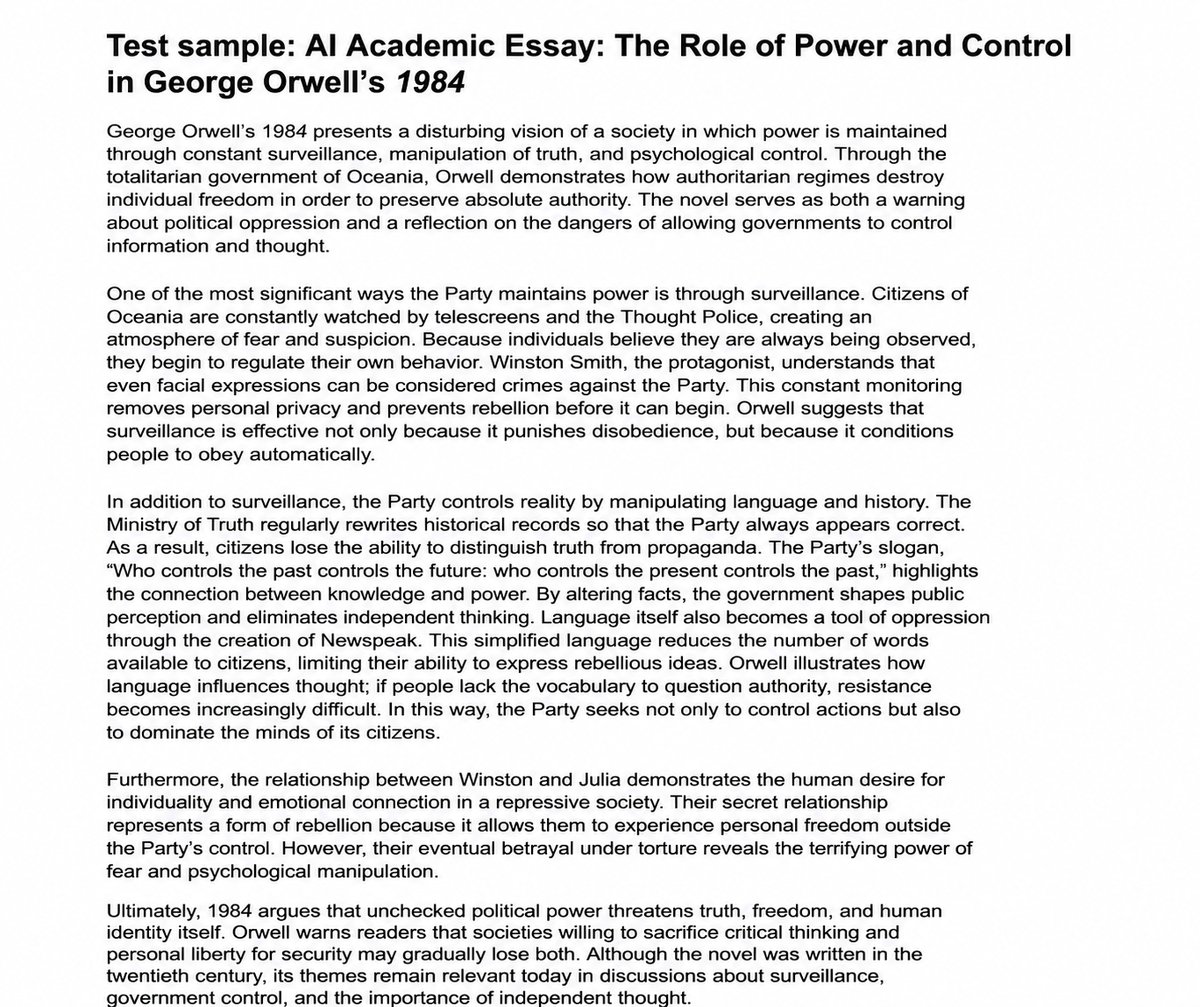
- Academic Essay: Sample Academic Essay |AI| The Role of Power and Control in George Orwell’s 1984
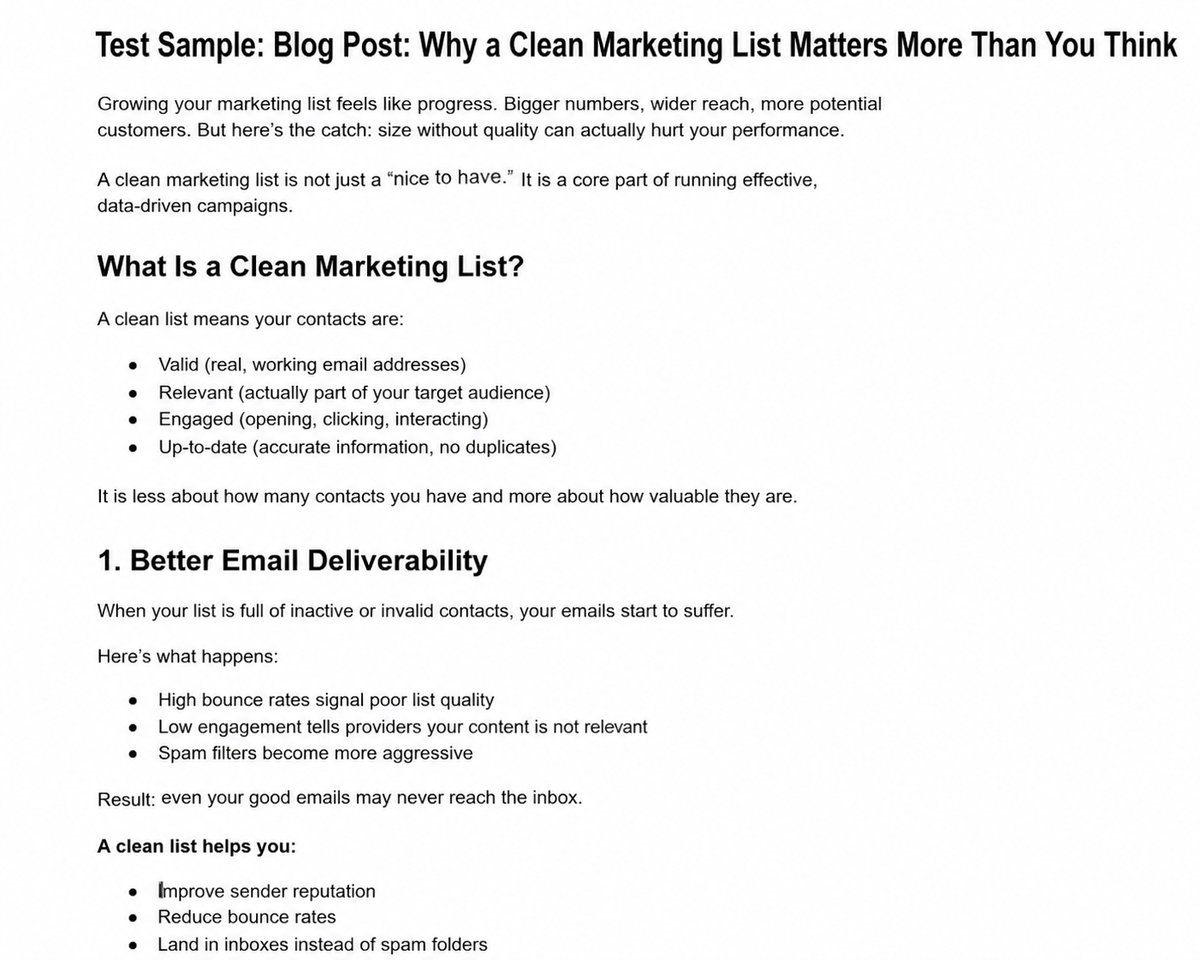
- Blog Post: Sample Blog Post |AI| Why a Clean Marketing List Matters More Than You Think
- Creative Writing: Sample Creative Writing |AI| The Lighthouse Keeper
Test Sample (AI Academic Essay: The Role of Power and Control in George Orwell’s 1984)
Test Sample (Blog Post: Why a Clean Marketing List Matters More Than You Think)
Test Sample (Creative Writing: The Lighthouse Keeper)
Link to the Humanized samples of Netus AI:
- Academic Essay: Academic essay |Humanized| The Role of Power and Control in George Orwell’s 1984
- Blog Post: Blog Post |Humanized| Why a Clean Marketing List Matters More Than You Think
- Creative Writing: Creative Writing |Humanized| The Lighthouse Keeper
The Test Setup
- Plan used: Free plan (50 credits, 1 credit = 10 words or 3,500 characters per scan)
- Settings: Enhanced humanizer mode with V2 level detection bypass
- Word counts: Each sample kept under 500 words to work within free plan limits
- Limits encountered: The character cap utilized the free limit while humanizing each sample in one go.
Detectors Used
We ran every output through two of the strongest detectors that students are most likely to encounter:
- Originality.ai: The standard for academic and publishing contexts. Known for being strict, especially on AI-heavy or lightly edited text.
- Proofademic: Increasingly used in educational settings, making it a useful AI checkpoint.
Using both prevents results from looking cherry-picked and shows how detection varies across tools on identical input.
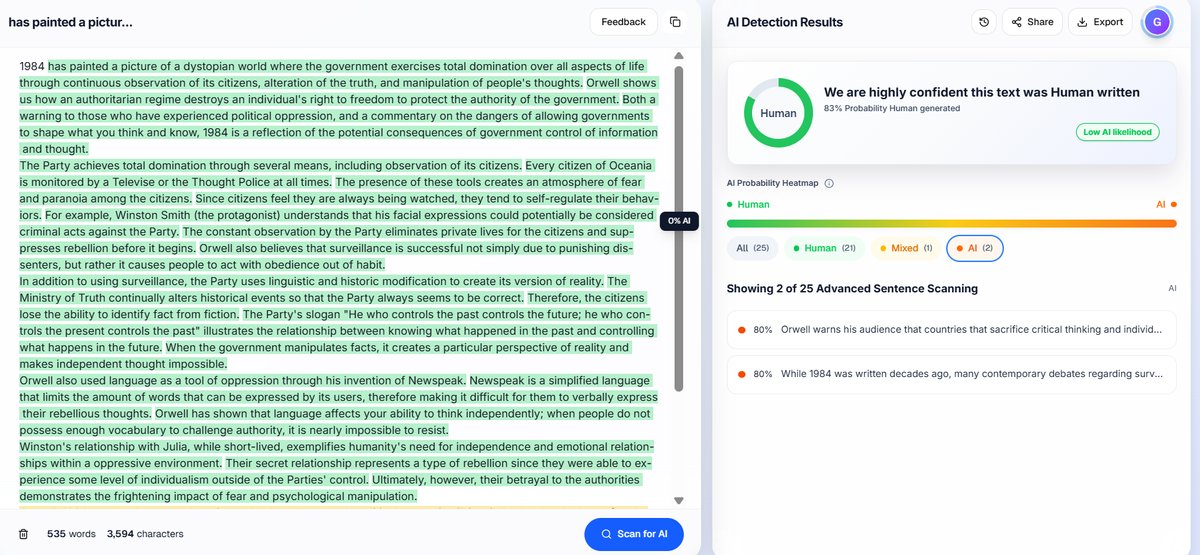
Academic Essay: Originality.ai Detection Results
Academic Essay: Proofademic Detection Results
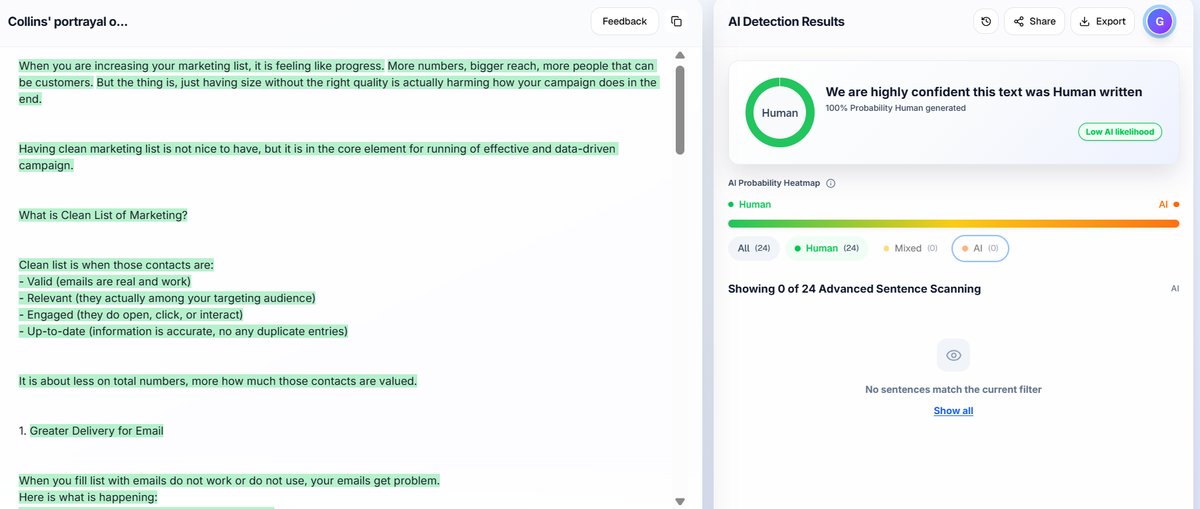
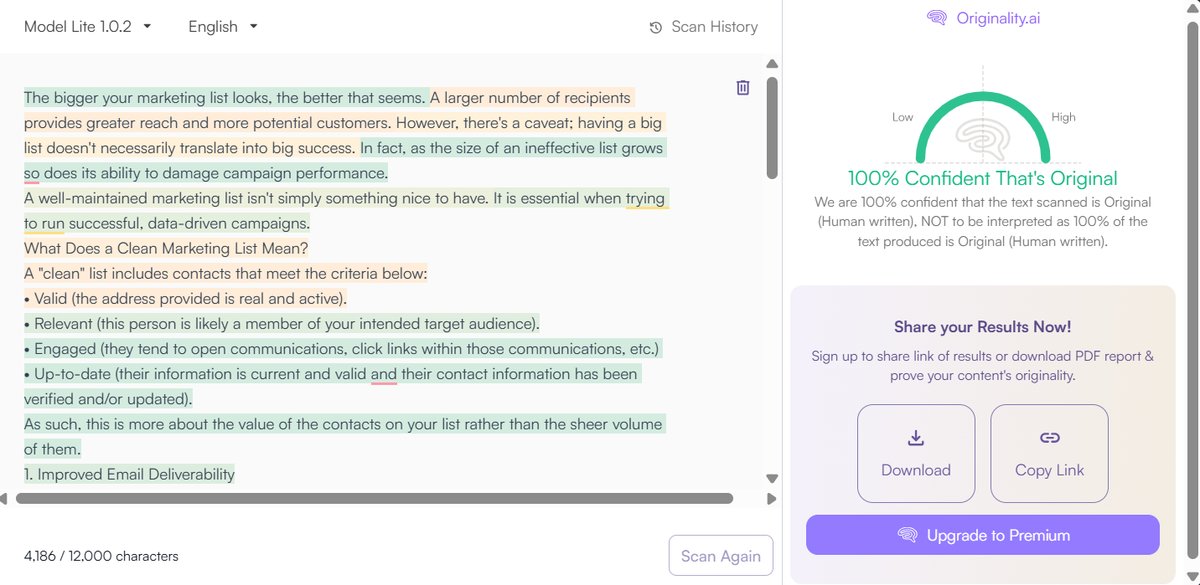
Blog Post: Originality.ai Detection Results
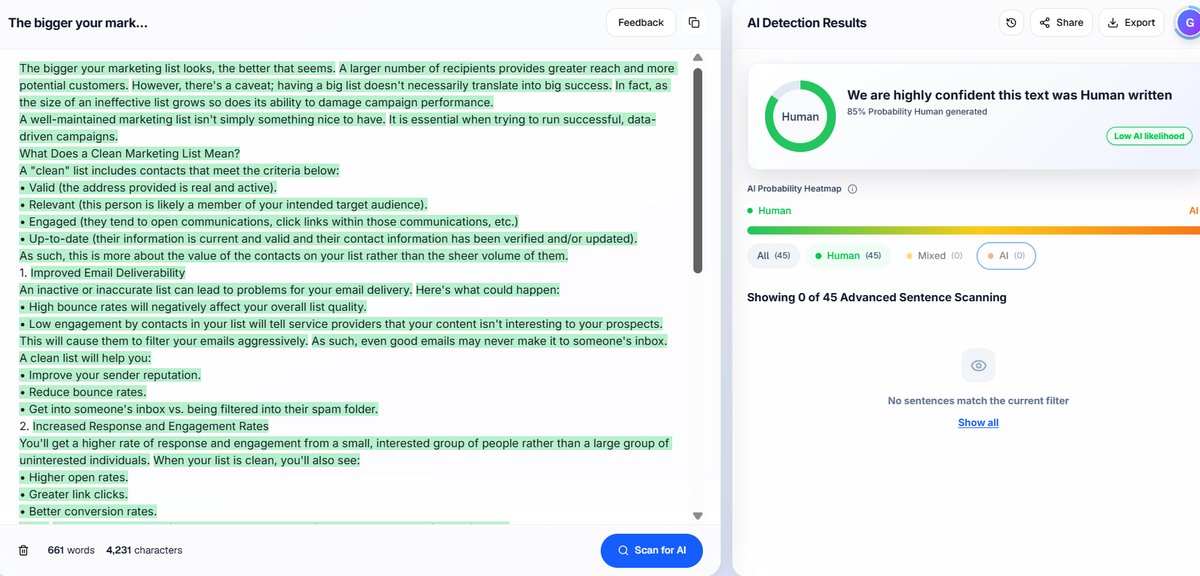
Blog Post: Proofademic Detection Results
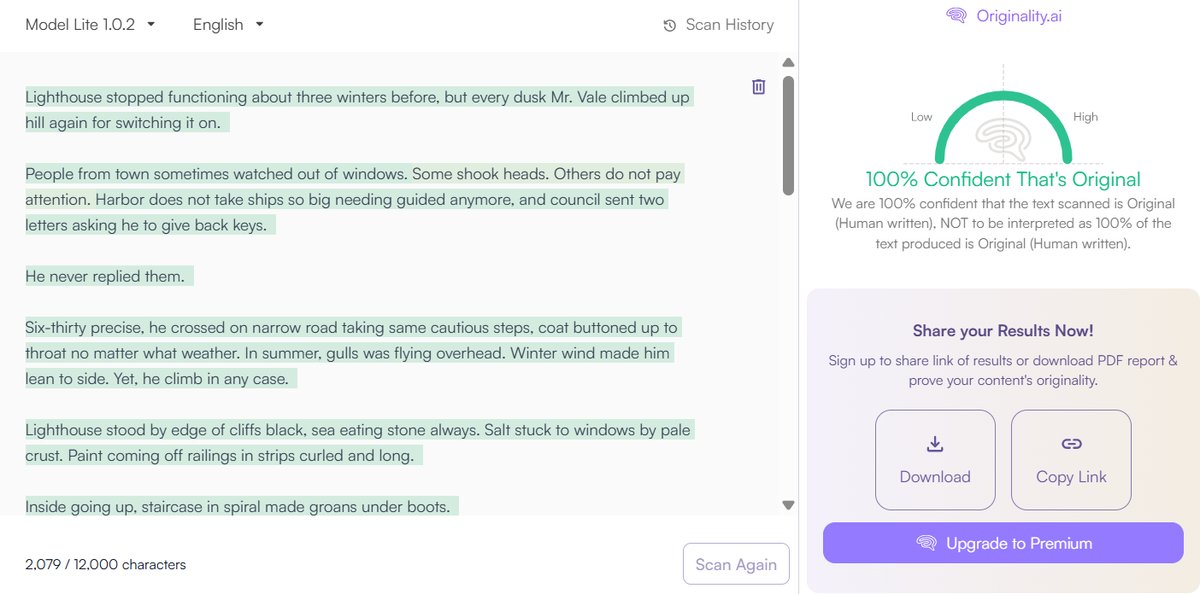
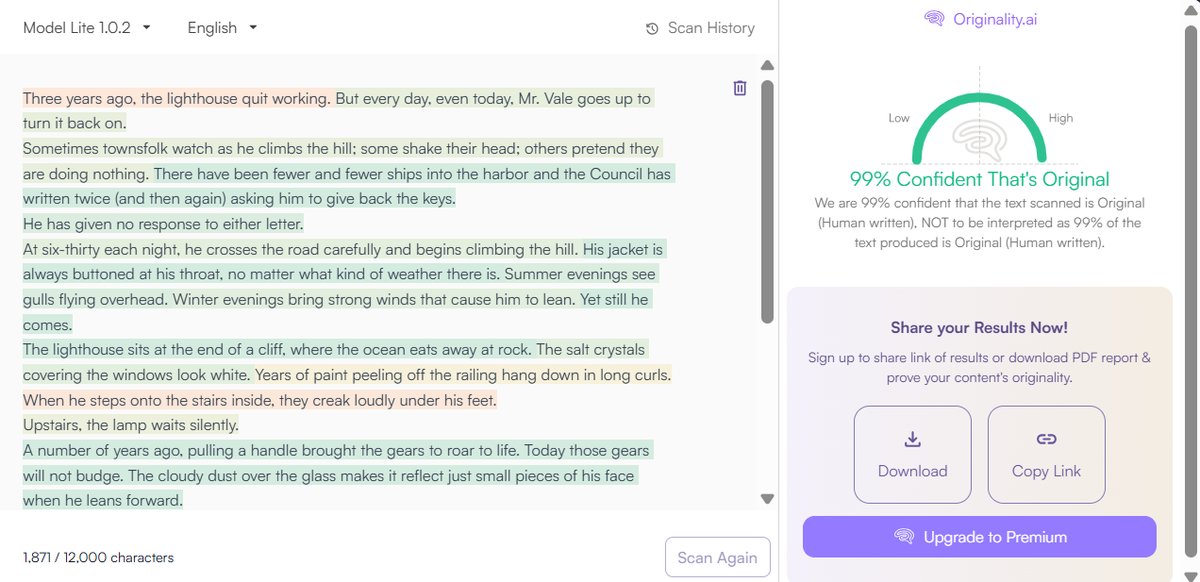
Creative Writing: Originality.ai Detection Results
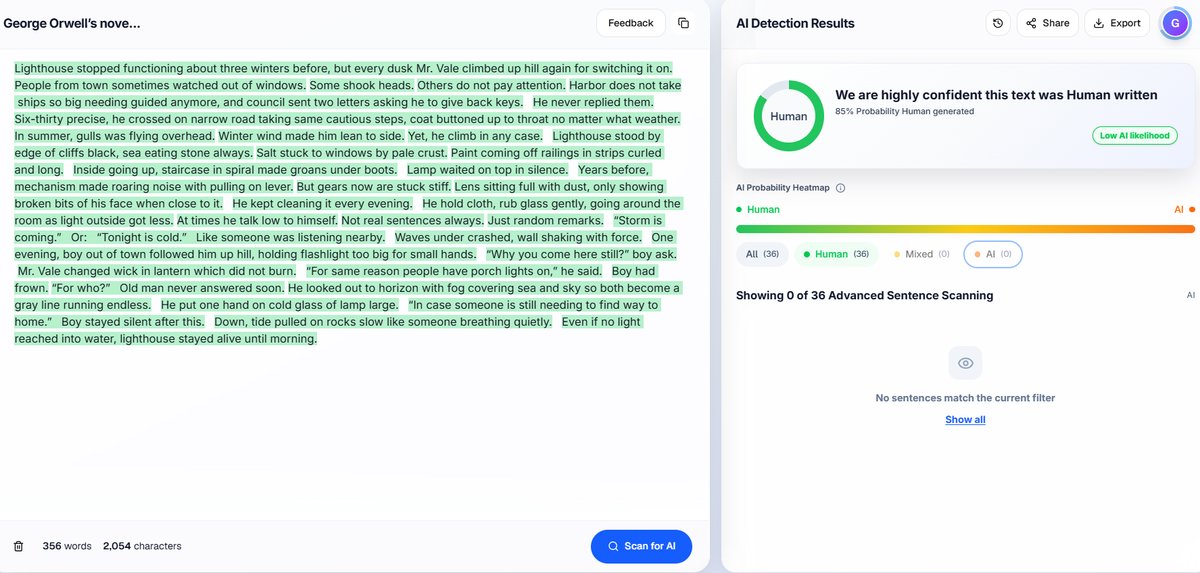
Creative Writing: Proofademic Detection Results
How We Calculated the Results of Netus AI
Quality Assessment Rubric
In our assessment test, each output was scored across 6 criteria, 1 to 5 points each, for a maximum of 30:
- Readability and Natural Flow
- Accuracy and Meaning Preservation
- Coherence and Logic
- Grammar and Mechanics
- Word Choice and Vocabulary Appropriateness
- Tone Consistency
Average Quality Score Across all 3 Samples
| Rubric Criteria | Academic Essay Score | Blog Post Score | Creative Writing Score |
|---|---|---|---|
| Readability and Natural Flow | 1/5 | 1/5 | 1/5 |
| Accuracy and Meaning Preservation | 3/5 | 3/5 | 3/5 |
| Coherence and Logic | 3/5 | 2/5 | 3/5 |
| Grammar and Mechanics | 1/5 | 1/5 | 1/5 |
| Word Choice and Vocabulary Appropriateness | 2/5 | 2/5 | 2/5 |
| Tone Consistency | 2/5 | 2/5 | 2/5 |
| Total Score | 12 / 30 (40%) | 11 / 30 (37%) | 12 / 30 (40%) |
Average Quality Score= (12+11+12) divided by 3 = 11.67 / 30 (39%)
Detection Evasion Scorecard
- Average AI detection percentage calculated across all tests
- Converted to evasion success: 100% minus average detection %
- Example: 3.5% AI detected = 96.5% evasion success
Overall Performance Score
| Metric | Score | Calculation |
|---|---|---|
| Average AI Detection | 3.5% | From detection tests |
| Detection Evasion Score | 96.5% | 100% - 3.5% |
| Quality Score | 39% | (11.67 / 30) × 100 |
| Overall Performance Score | 67.75% | (96.5 + 39)÷ 2 |
Combines both metrics into a single comparable score:
- Overall Score = (Detection Evasion Score + Quality Score) divided by 2
- Netus: (96.5% evasion + 39% quality) divided by 2 = 67.75% overall
What the Results Mean for Students
Detection Evasion Performance
- Netus cleared all three content types on Originality.ai, including the academic essay, scoring 0% AI detected across the board.
- On Proofademic, results were equally strong: 6% AI on the academic essay, 0% on the blog post, and 15% on creative writing.
- The consistency demonstrated with the detection evasion by Netus is notable. Netus achieved a perfect score on all samples tested using both detectors.
Quality Assessment
- It sounds unnatural in terms of how a person writes. The rewriting did sufficiently shift the detection measures, but it did not capture the original meaning intact, as well as the flow.
- The academic essay displayed the greatest amount of drift. The output’s natural logic was broken, and the substitution of vocabulary created an input that was off in terms of contextual usage.
- Readability and grammar scored 1 out of 5 on all three samples, no exceptions. This is the rock bottom of our rubric, and Netus hit it for all three contents.
- Word choice and tone consistency scored 2 out of 5 across the board, meaning the output feels off, even where it is technically coherent.
- Most students would have to make considerable edits to be able to say the final product reads as they wrote it themselves.
Overall Effectiveness
- The total overall effectiveness score was 67.75%, which is comprised of a good detection evasion score of 96.5% and a poor quality detection score of 39%.
- Netus does evade the detector, but what it provides in return is generally inconsistently written, unnatural sounding and will almost always require significant amounts of manual revisions to be considered suitable for submission.
- Suitable for informal content or rapid detection checks when you anticipate that you need to edit your output before submitting it.
- Not good enough for an academic submission, where your detection score and the quality of the writing are going to be evaluated.
Netus AI vs Walter AI Humanizer
The same three samples were run through Walter’s humanizer with the exact same parameters. Afterwards, we ran the test outputs through the same two detection tools and below are the results we got.
Results Table
| Use Case | Originality.ai | Proofademic | Avg Detection Score | Quality Score |
|---|---|---|---|---|
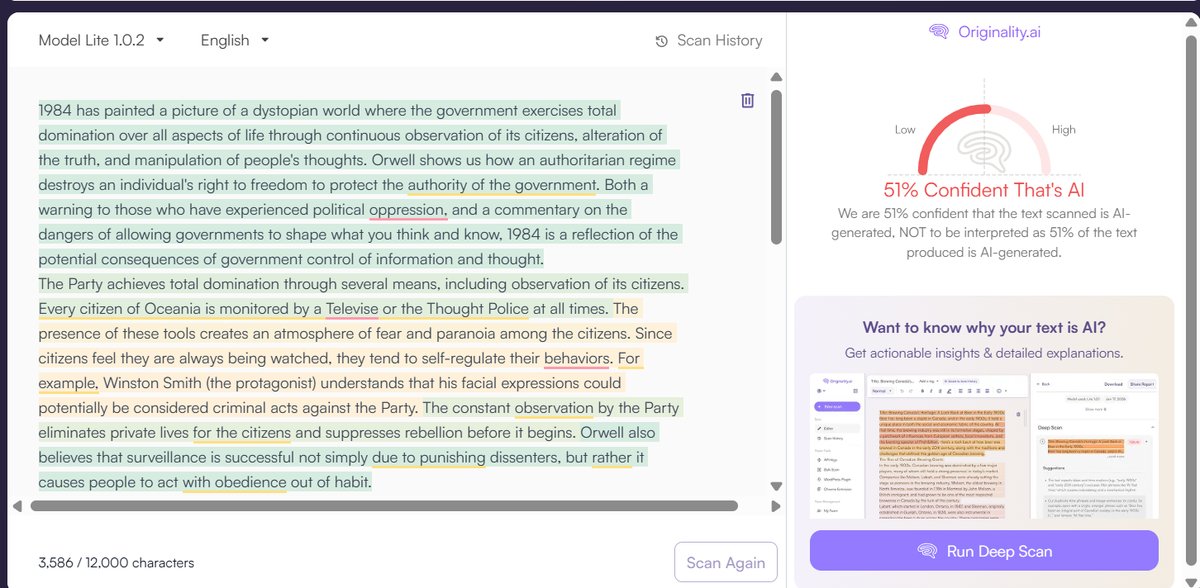
| Academic Essay | 51% AI ❌ | 17% AI ✅ | 34% AI | 21 / 30 (70%) ✅ |
| Blog Post | 0% AI ✅ | 15% AI ✅ | 7.5% AI | 21 / 30 (70%) ✅ |
| Creative Writing | 1% AI ✅ | 15% AI ✅ | 8% AI | 20 / 30 (67%) ✅ |
| Average | 17.3% AI | 15.6% AI | 16.5% AI | 20.6 / 30 (69%) |
Detection Score Indicators:
- ✅ = Good (under 20% AI detected)
- ⚠️ = Moderate (20-40% AI detected)
- ❌ = Poor (over 40% AI detected)
Link to the Humanized samples of Walter AI:
- Academic Essay: Academic essay |Humanized| The Role of Power and Control in George Orwell’s 1984
- Blog Post: Blog Post |Humanized| Why a Clean Marketing List Matters More Than You Think
- Creative Writing: Creative Writing |Humanized| The Lighthouse Keeper
Academic Essay: Originality.ai Detection Results
Academic Essay: Proofademic Detection Results
Blog Post: Originality.ai Detection Results
Blog Post: Proofademic Detection Results
Creative Writing: Originality.ai Detection Results
Creative Writing: Proofademic Detection Results
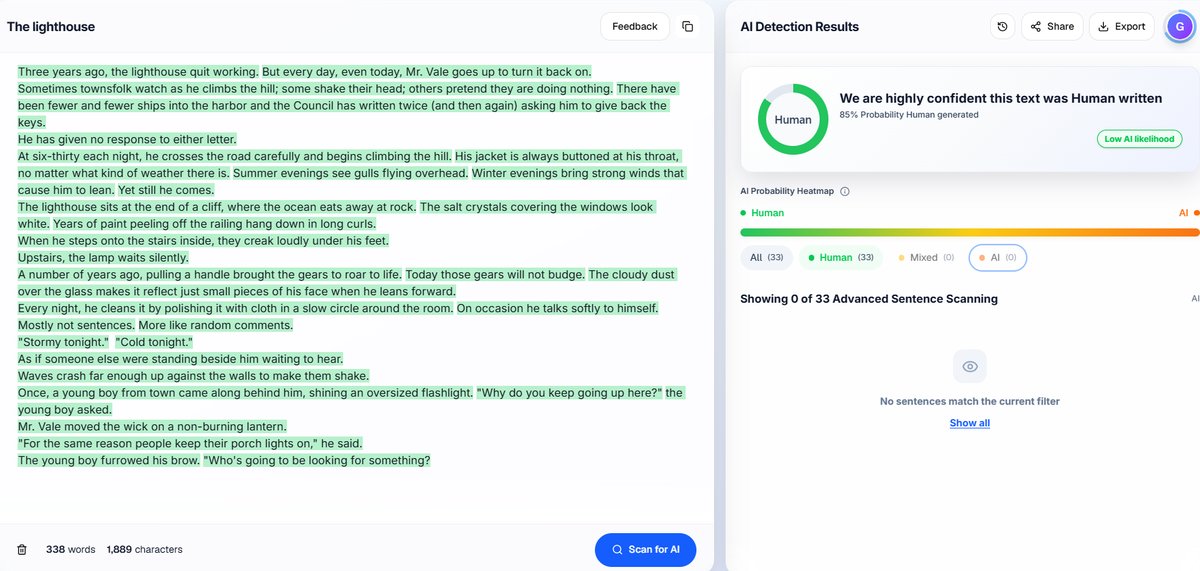
How We Calculated the Results of Walter AI:
Results were calculated on the same grounds that were used for testing Netus AI.
Average Quality Score Across all 3 Samples
| Rubric Criteria | Academic Essay Score | Blog Post Score | Creative Writing Score |
|---|---|---|---|
| Readability and Natural Flow | 3/5 | 3/5 | 3/5 |
| Accuracy and Meaning Preservation | 4/5 | 4/5 | 3/5 |
| Coherence and Logic | 4/5 | 4/5 | 4/5 |
| Grammar and Mechanics | 3/5 | 3/5 | 4/5 |
| Word Choice and Vocabulary Appropriateness | 3/5 | 3/5 | 3/5 |
| Tone Consistency | 4/5 | 4/5 | 3/5 |
| Total Score | 21 / 30 (70%) | 21 / 30 (70%) | 20 / 30 (67%) |
Average Quality Score= (21+21+20) divided by 3 = 20.6 / 30 (69%)
Detection Evasion Scorecard
- Average AI detection percentage calculated across all tests
- Converted to evasion success: 100% minus average detection %
- Example: 16.5% AI detected = 83.5% evasion success
Overall Performance Score
| Metric | Score | Calculation |
|---|---|---|
| Average AI Detection | 16.5% | From detection tests |
| Detection Evasion Score | 83.5% | 100% - 16.5% |
| Quality Score | 69% | (20.6 / 30) × 100 |
| Overall Performance Score | 76.25% | (83.5 + 69)÷ 2 |
Combines both metrics into a single comparable score:
- Overall Score = (Detection Evasion Score + Quality Score) divided by 2
- Walter: (83.5% evasion + 69% quality) divided by 2 = 76.25% overall
Detection Evasion Comparison:
| Use Case | Detector | Netus Score | Walter Score | Winner |
|---|---|---|---|---|
| Academic Essay | Originality.ai | 0% AI | 51% AI | Netus✅ |
| Academic Essay | Proofademic | 6% AI | 17% AI | Both ✅ |
| Blog Post | Originality.ai | 0% AI | 0% AI | Both ✅ |
| Blog Post | Proofademic | 0% AI | 15% AI | Both ✅ |
| Creative Writing | Originality.ai | 0% AI | 1% AI | Both ✅ |
| Creative Writing | Proofademic | 15% AI | 15% AI | Both ✅ |
| Average | Both | 3.5% AI | 16.5% AI | Both ✅ |
Quality Comparison:
| Use Case | Netus Quality | Walter Quality | Winner |
|---|---|---|---|
| Academic Essay | 12 / 30 (40%) | 21 / 30 (70%) | Walter ✅ |
| Blog Post | 11 / 30 (37%) | 21 / 30 (70%) | Walter ✅ |
| Creative Writing | 12 / 30 (40%) | 20 / 30 (67%) | Walter ✅ |
| Average | 11.67 / 30 (39%) | 20.6 / 30 (69%) | Walter ✅ |
Comparison Analysis
- Detection evasion: Netus leads significantly on detection evasion, averaging just 3.5% AI detected versus Walter’s 16.5%. It bypassed detection successfully in all 3 cases.
- Output quality: Walter had better overall output quality than Netus with respect to every type of content used in our comparison. The gap was consistent: 70% versus 40% on the academic essay, 70% versus 37% on the blog post, and 67% versus 40% on creative writing. Netus rewrites aggressively enough to clear the detector but does so at the cost of readability, grammar, and natural flow.
- Balance of both: Walter balances detection evasion and quality significantly better. Netus’s slightly better evasion comes at the cost of output that often needs heavy editing before it is usable. Walter’s output is far more likely to be submission-ready as is.
- Where each excels: Netus performs better in bypassing AI detection. Walter performs better across all content types where output quality and readability matter, along with avoiding AI detection.
- Price-to-performance: Netus starts at $8.08/month for meaningful use. Walter offers comparable or better results without the credit ceiling frustration that Netus users consistently flag, and starts from $8/month.
- Ease of use: It appears that Netus has a more difficult learning curve and is less user-friendly. Walter’s workflow is much easier and allows users to get from input to useful output without much difficulty.
How We Determined the Overall Winner
- Detection Evasion (50% weight): Which humanizer achieves lower average AI detection scores across all tests? The higher the detection evasion percentage, the better.
- Quality Score (50% weight): Which humanizer produces better quality output based on the 6-criterion rubric? A higher score is better.
- Overall Winner criteria: Compare averages across both dimensions. Consistency across use cases will also be used as an evaluation criterion. The winner must perform higher in the combined score across both dimensions.
Overall Performance
| Metric | Netus | Walter |
|---|---|---|
| Detection Evasion Score | 96.5% | 83.5% |
| Quality Score | 39% | 69% |
| Overall Score | 67.75% | 76.25% |
Winner: Walter AI
Walter did significantly better on the quality of content across all three content types, averaging 69% versus Netus’s 39%, while Netus held a narrow detection evasion edge, scoring 96.5% compared to Walter’s 83.5%. But detection evasion alone does not make a good humanizer. If students require output that is both detection-resistant and readable enough to submit, Walter is the more reliable choice.
What Netus AI Results Suggest About Other Detectors
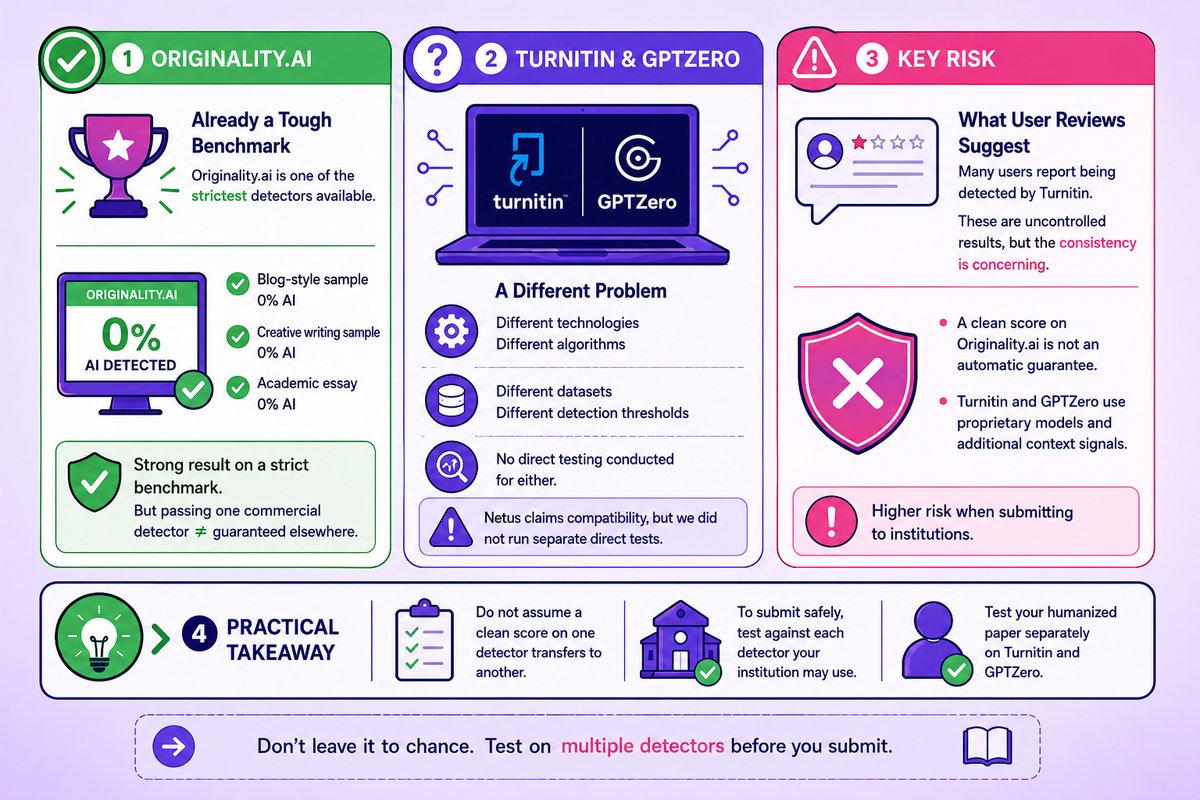
Our testing used Originality.ai and Proofademic as benchmarks. But most students are worried about Turnitin and GPTZero. Here is what the results imply.
Originality.ai Is Already a Tough Benchmark
Originality.ai is widely considered one of the strictest detectors available. Netus cleared all three of our samples on Originality.ai, including the academic essay, scoring 0% AI detected across the board. That is a strong result on a strict benchmark. But passing one commercial detector does not guarantee the same outcome on institutional tools that use proprietary models and additional context signals. A 2023 study in the International Journal for Educational Integrity tested 14 detection tools, including Turnitin, and found that paraphrasing significantly worsened their performance. Paraphrasing is exactly what Netus does, so the pattern cuts both ways: the same trick that clears one detector can behave unpredictably on the next.
Turnitin and GPTZero Are a Different Problem
Unlike Originality.ai, Turnitin & GPTZero are completely different technologies using entirely different algorithms, trained on datasets, and set at different detection thresholds. Netus’s website claims compatibility with both.
What does show up in customer review comments is that users have been complaining about being detected by Turnitin. Again, these are uncontrolled results. But there seems to be enough consistency across the board to warrant taking this seriously. A clean score on Originality.ai is not an automatic guarantee that Netus will always pass Turnitin detection.
The Practical Takeaway
Do not assume a clean score on one detector transfers to another. In order to make sure that you can submit papers to institutions that may use Turnitin or GPTZero, test your humanized paper against each separately prior to making the final decision. To get a better understanding of which humanizers work best when dealing with Turnitin, read this article on the best AI humanizers for Turnitin.
| What users liked | What they did not like |
|---|---|
| “It not only rewrites text but also enchances it on better language level if applicable…”- Tamar P., G2 | “One potential downside of Netus AI could be its complexity…” - Verified User in Computer Software, G2 |
Why Walter Writes Is the Practical Choice
Netus sits in the middle of this field. It has a decent built-in detector and handles informal content. But where it consistently falls short is readability, natural flow, and overall output quality, and for students, that gap matters just as much as the detection score.
When to Pick Walter Over Netus:
- You are submitting academic content and need output that reads as yours, not just output that cleared a detection score.
- You want to humanize and verify in the same place without juggling separate tools.
- You have already tried Netus and found that you still had to edit each piece of content significantly before it was acceptable to submit.
- You would like to receive high-quality content across all formats and types of content rather than output that requires heavy rewriting every single time.
- You do not want to hit a credit ceiling mid-document and lose your progress.
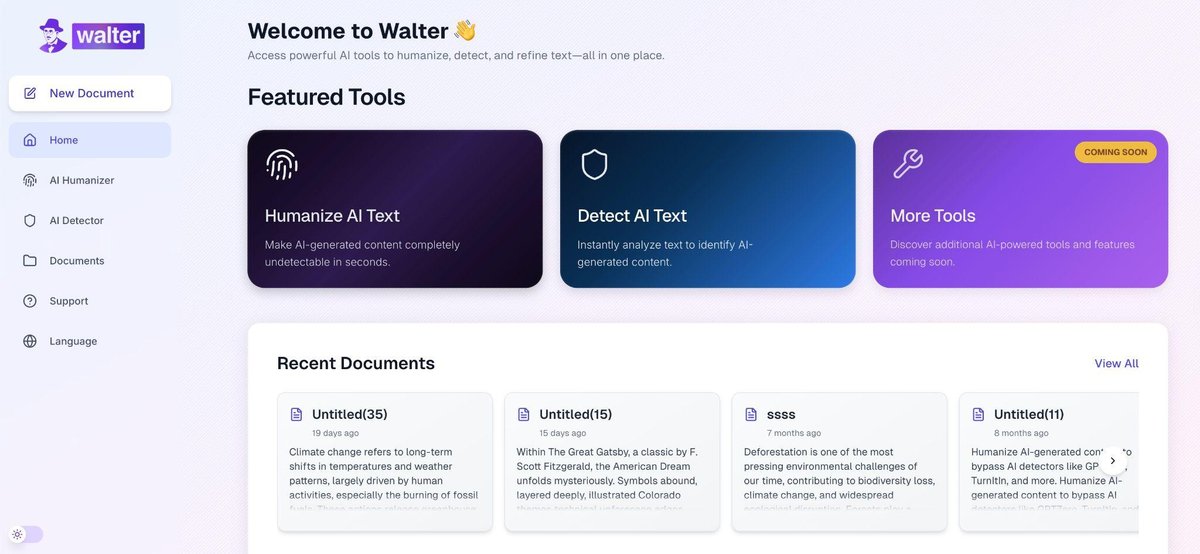
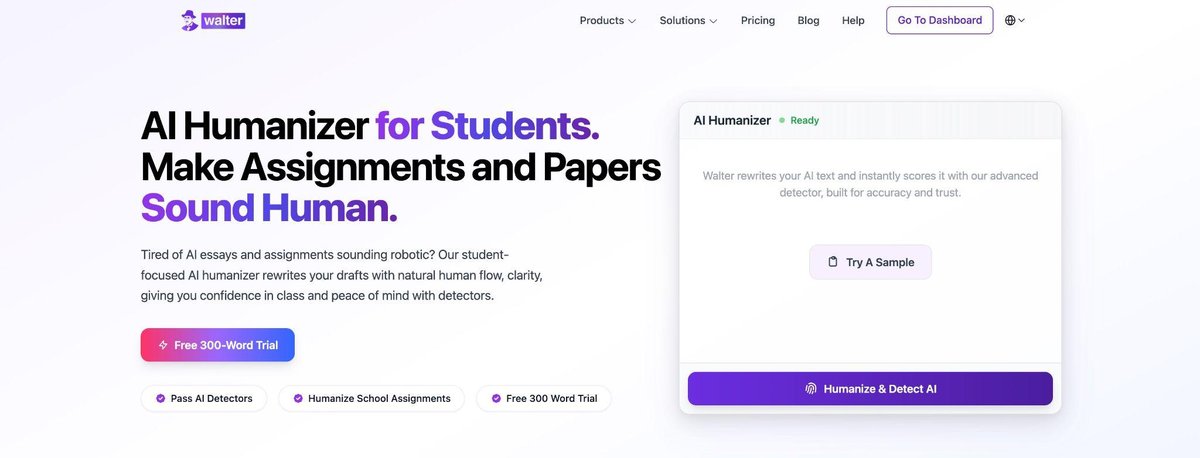
When using Walter AI, just type in or copy and paste your AI content. It will make it sound human without losing its original meaning. Then use the AI detector, which can be used before or after making the content humanized without needing to switch tabs or spend additional credits.
Although there are many options with regard to tools, there is no guarantee of clearing all detectors from all submissions with any humanizer. For students seeking a user-friendly, low-friction tool, utilizing Walter AI will provide them with the best opportunity to detect evasions while maintaining a high level of quality.
So if you would like to edit your work, test detection, and make revisions all at once without having to deal with tracking credits or switching back and forth between tabs, try Walter Writes.
For a broader look at what is available, see our full resource guide to AI tools for students.
Frequently Asked Questions
Does Netus AI Bypass Turnitin?
No, generally. Although Netus indicates that its product will work in conjunction with Turnitin, user feedback repeatedly notes that users have been flagged by Turnitin when using this service. As such, take all statements regarding “bypassing Turnitin” as unsubstantiated until you personally verify them against your own original material.
Is Netus AI Safe to Use for Academic Work?
That depends on your institution’s policy. Using an AI humanizer to disguise AI-generated content violates academic integrity policies at most universities. The risk is not just detection, but also the consequence if you get caught.
What Happens if You Get Caught Using an AI Bypasser?
Depending on school policies, students can lose their grades on the assignment, be expelled, or something in between. For some schools, this is considered the same as plagiarizing.
How Does Netus AI Compare to Undetectable AI?
Both programs are designed to help users avoid detection of AI-generated writing, but Undetectable AI has many more rewrite modes than Netus, and overall, it creates more readable output that requires less manual editing. Although Netus is significantly cheaper to try out, most users find that they have to do less editing with Undetectable.
Does Netus AI Work With GPTZero and Originality.ai?
When we tested it, Netus cleared all three of our samples on Originality.ai, including the academic essay, scoring 0% AI detected across the board. We did not test GPTZero directly. Results will vary by content type and writing style, so always verify through your own testing before submitting.
Can Teachers or Professors Detect Text Run Through Netus AI?
Possibly, even without a detector. Heavy meaning drift and unnatural phrasing are signals that an experienced reader can identify without running a scan. Humanized text that reads nothing like your previous work is suspicious regardless of detection scores.
What Is the Credit System in Netus AI, and How Does It Work?
Yes, if you’re just doing some simple testing. No, if you want to know if the tool really works on all your content. With only a 500-word limit, which isn’t much for a whole long assignment, you will have to break up longer content into several passes due to the word character limitation.
What Are the Best Alternatives to Netus AI for Students?
Walter Writes, Undetectable AI, and StealthGPT are the most commonly compared tools. See our StealthWriter review for students and WriteHuman review for a side-by-side comparison of these AI tools.
Does Using an AI Humanizer Count as Plagiarism?
No, in the traditional sense, but virtually every academic integrity policy treats this as a form of dishonesty or misrepresentation of authorship. What constitutes plagiarism is usually defined by each school or university.
Final Recommendation
Netus AI is a functional tool with a real use case: quick detection checks and light humanization on informal content. But based on our testing, detection evasion alone is not enough to make a humanizer reliable for academic writing.
The real question is whether the output it gives you is usable. With an overall quality score of just 39% and readability and grammar both hitting the floor at 1 out of 5 across every sample, most students will find themselves rewriting the output almost entirely before it is fit to submit. At that point, the tool has saved you very little.
Netus’s overall performance score of 67.75% reflects exactly this gap: impressive on evasion, weak on quality, and not reliable enough for high-stakes submissions where both things matter.
Students who are looking for a workflow that has reliability:
- Walter Writes allows you to create and humanize, edit, and run detection all within one platform. There are no credit limits, and there will be no need to switch tools.
- Proofademic provides the most robust way to perform an academic-facing detection check prior to your final submission.
Both tools provide you with much greater control over what you produce, higher quality results than many other options available to writers, and a much clearer understanding of how well you have done prior to submitting your work.