



Review signal
Use the result to guide review, not as proof of identity.
 AI Voice Detector API
Analyze uploaded audio for signs of AI-generated speech. Get a clear result your team can review inside your own product.
voice-sample.mp3
Illustrative audio analysis
Use the result to guide review, not as proof of identity.
curl -X POST https://developer-portal.walterwrites.ai/api/voice-detector/detect/ -H "X-API-Key: YOUR_API_KEY" -F "[email protected]"{
"status": "success",
"verdict": "ai_voice",
"ai_probability": 0.92,
"natural_probability": 0.08,
"duration_seconds": 4.2,
"segments": [],
"billed_seconds": 5,
"credits_used": 50
}Bring audio analysis into your existing upload, review and evaluation workflows.

Add a review signal to submitted audio. Give moderators the original clip, the result and the context they need to apply your policies.

Add a check when assessing contributed interviews or voice clips. Keep source verification and editorial judgment in the workflow.

Bring audio analysis into a private dashboard. Track reviewer decisions and investigate patterns across the recordings your team handles.

Request an analysis after an audio upload and show the result alongside the original recording.

Help reviewers find recordings that need attention. Keep human decisions and supporting context together.

Compare results with a labeled set of natural and synthetic recordings before choosing review thresholds.
Use one developer portal and scoped API keys for humanization, AI text detection, grammar correction, plagiarism scanning, and AI image detection.
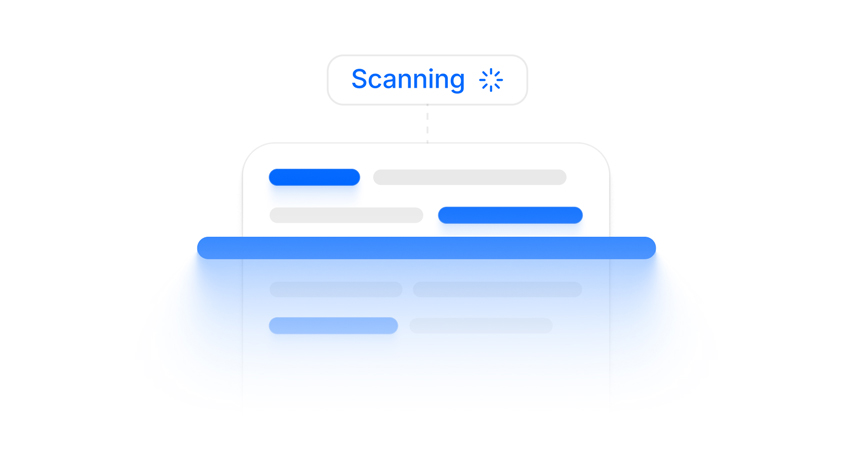
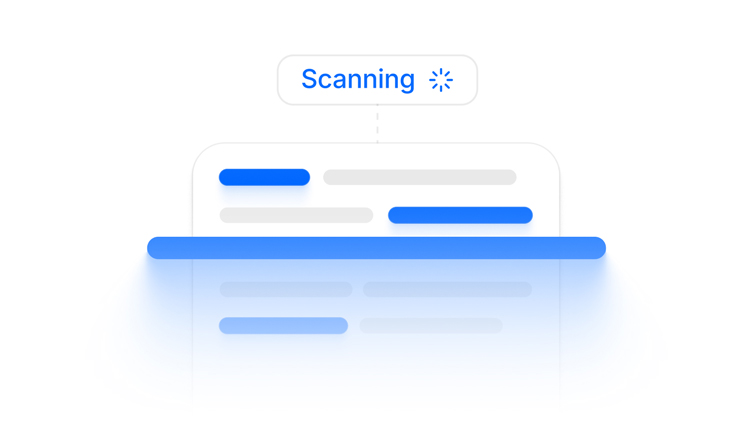
Analyze text for AI-generated content with confidence scores and sentence-level details.
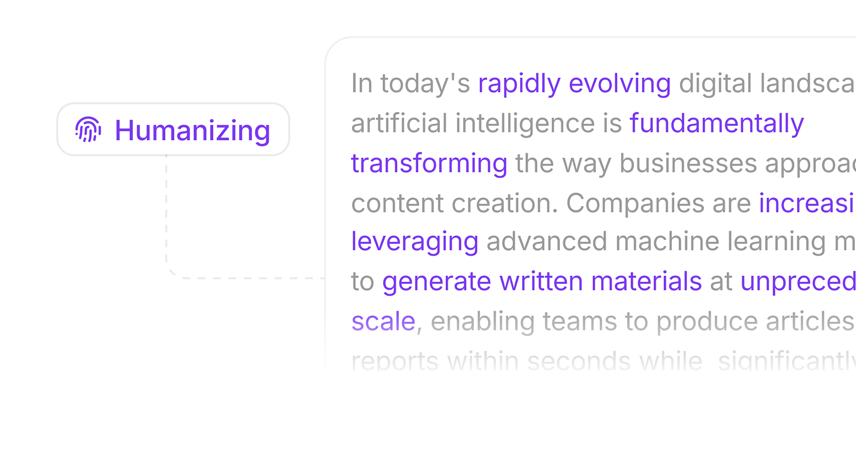
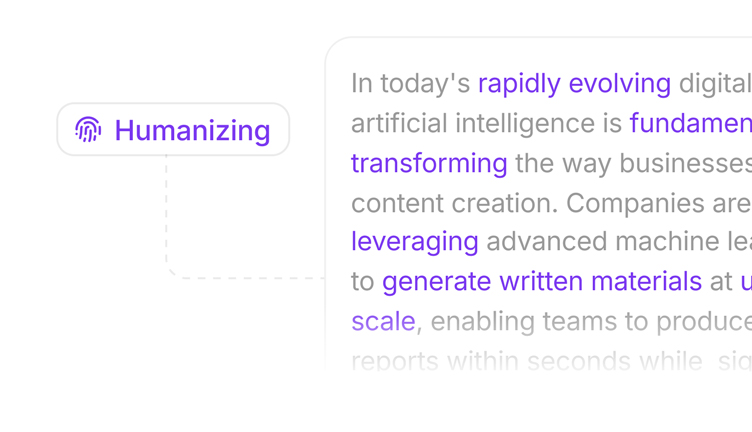
Transform AI-generated text into natural, human-like content through a documented REST endpoint.
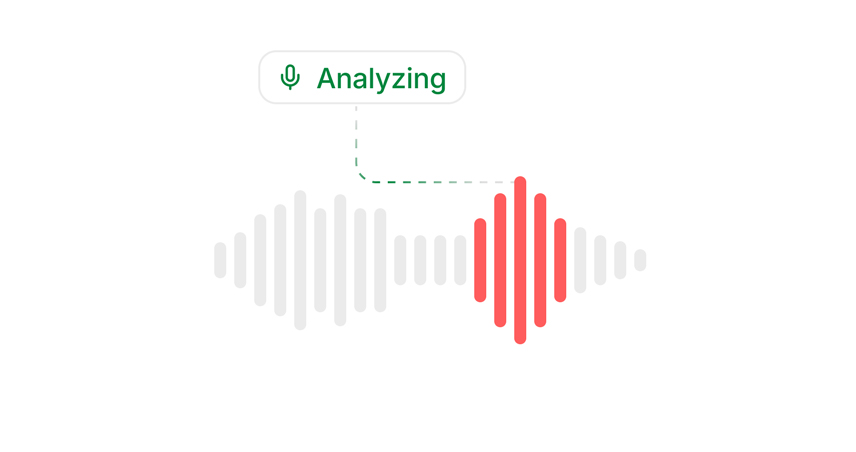
Analyze uploaded audio for synthetic speech and review the returned evidence in your product.
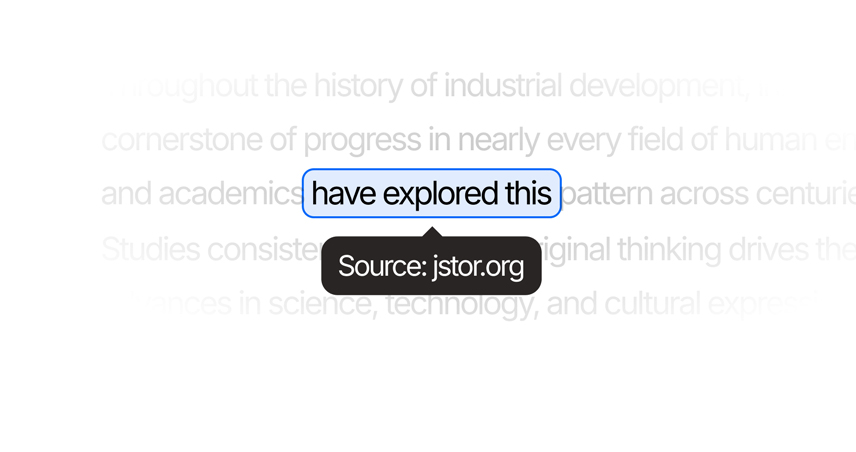
Scan text against web sources and return a score, matched URLs, and highlighted character ranges.
Correct grammar, spelling, and punctuation and return corrected text plus a complete word-level diff.


Upload an image and receive a real, fake, or inpainting verdict with confidence and per-class probabilities.
10 credits per audio second, rounded up. These examples show credits per recording, not subscription prices.
Need enterprise pricing?
Discuss higher-volume audio review and your integration requirements with our team.
Practical answers for teams evaluating and integrating voice detection.
A verdict, probabilities and audio duration. Longer recordings also include segment results. See the response reference.
WAV, FLAC, OGG, MP3, M4A and AAC, up to 150 MB and 10 minutes. Extract audio from video before uploading.
No universal detection guarantee is made here. Evaluate the API against the generators, languages and recording conditions relevant to your product. Independent audio-deepfake research shows why benchmark performance alone is insufficient for real-world deployment.
No. A detection score should prompt investigation, not identify a speaker or establish intent. Check the recording’s source and corroborating evidence before drawing conclusions.
The documented endpoint accepts uploaded files. It does not document a streaming interface. Design this integration around completed recordings.
A trailing span shorter than the analysis window can be skipped. Do not present unprocessed audio as verified natural speech.
Make requests from your backend. Keep the key out of browser code, logs and public repositories. Use a secrets manager and separate environment keys. See authentication guidance.
Explain the failure and preserve the upload. Correct invalid input before retrying; use controlled retries for temporary errors. The error guide describes response codes and recovery.
This page makes no zero-retention or no-training promise. Review Walter’s privacy policy and Trust Center, then confirm any audio-specific requirements with the team before integrating sensitive data.
Create a labeled test set representative of your users. Measure false positives and missed detections separately, including changes in quality and recording conditions. Treat published research as evaluation guidance, not as a Walter accuracy claim.
Create an API key with the required scope, follow the documented request format, and keep the returned evidence in your existing review workflow.
From the blog
Guides, comparisons and practical advice from Walter.
View allConnect Walter to OpenAI Codex over MCP in three commands. Humanize drafts and run AI detection without leaving…
Read moreOne prompt. The whole content workflow. Walter’s MCP connector brings humanization, detection, and batch processing directly into Claude.…
Read moreOne of the most common questions I get as a heavy AI user is the old “ChatGPT vs…
Read more