Key Takeaway: Colleges can detect AI-written essays through a combination of detection software and trained human reviewers, and even when software misses it, admissions officers often spot the lack of personal voice, making AI-generated essays a genuine risk to your application.
- About 40% of colleges use AI detection software, with Turnitin, ChatGPTZero, Copyleaks, Originality.AI, and Proofademic being the most commonly deployed tools
- Most top-ranked universities including Harvard, Princeton, MIT, and Stanford have not publicly confirmed using detection software on admissions essays, but all require applicants to attest that work is their own through the Common App
- Yale classifies submitting AI-generated content as application fraud, Caltech directly asks applicants whether they received AI assistance, and Brown and Georgetown have issued explicit bans
- Johns Hopkins has disabled AI detection tools entirely, citing false positive concerns, which reflects broader uncertainty about detector reliability
- Raw, unedited ChatChatGPT output is reliably flagged by major detectors, but human-edited AI content is significantly harder to catch by software alone
- Using AI to brainstorm or fix grammar is generally acceptable at most schools, but the final essay must be written in the student’s own voice with personal detail that only they could provide
Can Colleges Detect AI Essays? How Do Colleges Check for AI Writing?
Can colleges actually tell if you used AI on your application essay? The truth is that yes, and it’s becoming easier for them every day. Schools often rely on tools like Turnitin alongside their own judgment to spot signs of AI writing. Admissions officers look for missing personal voice, overly polished language, and inconsistent styles that don’t sound like a student’s natural work. AI detection isn’t perfect yet, but it’s improving fast, and knowing what colleges look for can help you avoid getting flagged.
The short answer on whether colleges use AI detectors: Most top schools have not publicly confirmed using detection software on admissions essays, but about 40% of colleges overall do. More importantly, every applicant who submits through the Common Application signs an attestation certifying their work is their own, making AI-generated essays a form of application fraud regardless of whether software catches it.
高校为何高度警惕人工智能论文
大学招生团队不会只浏览你的论文。他们实际上是通过它来了解你是谁,你是如何思考的,以及你的独特之处。这就是为什么学校会格外注意识别人工智能撰写的论文。
如果您的文章听起来很一般、过于完美或不包含个人细节,就会引起注意。招生官训练有素,他们会抓住那些感觉不对或与申请材料其他部分格调不符的文章。
Many colleges are now using advanced tools like Turnitin’s AI checker and ChatGPTZero to scan essays for patterns that look like they came from AI. For example, medical schools check AI indicators as part of a broader review process, often combining software results with manual evaluation instead of treating detection scores as final evidence.
但很多学生并没有意识到这一点。即使人工智能生成的文本通过了软件审核,但真人通常也能分辨出哪些内容听起来不像是出自人类之口。这就是为什么确保你的文章能表达出你自己的声音、真实的经历和诚实的想法是如此重要。高校希望听到的是你的故事,而不是一篇光鲜但空洞的文章。
高校如何检测大学论文中的人工智能

那么,学校究竟是如何查明你是否使用了人工智能的呢?他们采用技术和人工审核相结合的方式来捕捉人工智能生成的写作。
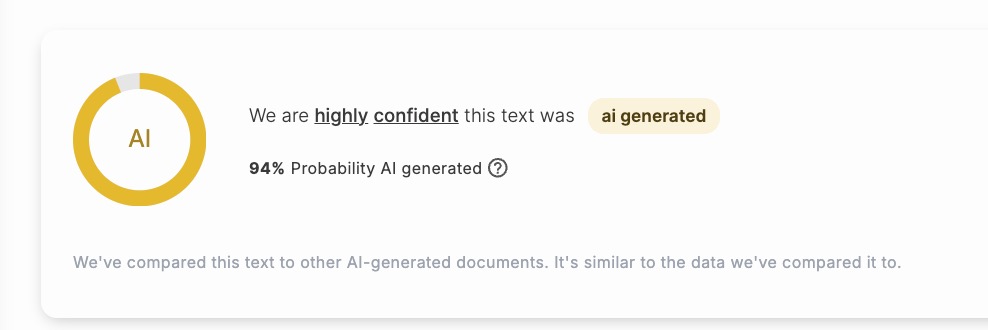
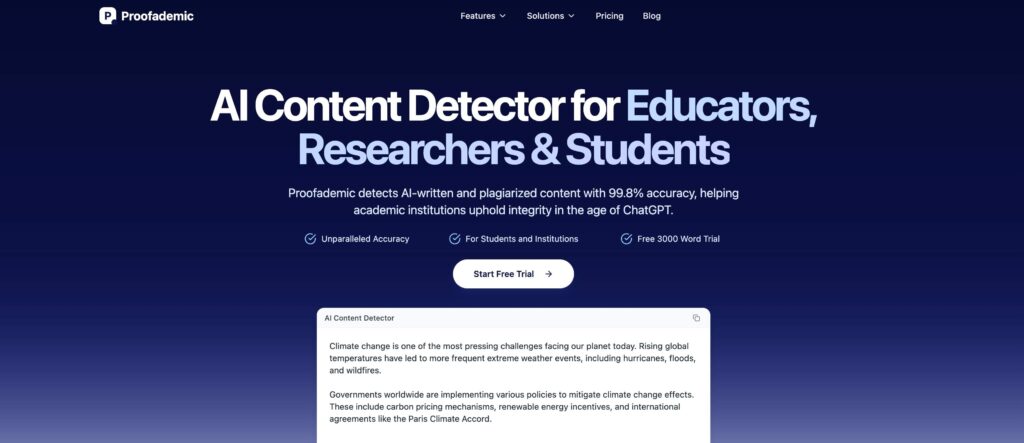
First, many colleges rely on detection tools like Proofademic, ChatGPTZero, and Turnitin. These tools look for clues in your writing, like unusual sentence patterns, strange word choices, or a lack of personal details. The software scans your essay and gives it a score showing how likely it is to have come from an AI tool.
但检测并不止于此。招生官也会仔细阅读您的文章。如果您的文章感觉生硬、听起来一般,或者与申请材料的其他部分格调不符,就会引起警觉。他们知道真实的学生作文是什么样的,他们会注意到你的作文是否过于完美或缺乏个性。
有时,大学会将您的论文与您的其他申请材料(如简短回答或电子邮件)进行比较。如果你的文章突然听起来像是专业人士写的,或者感觉与你自己的声音脱节,这也是一个警示。
人工智能检测工具和训练有素的招生人员共同作用,使完全由人工智能生成的论文比以往任何时候都更难蒙混过关。因此,如果您想避免被标记,让自己的文章听起来自然、个性、独特是关键。
Do College Admissions Use AI Detectors?
This is one of the most searched questions on this topic, and the answer is more nuanced than most people expect.
The majority of top-ranked universities have not publicly stated that they use AI detection software on admissions essays. In fact, Johns Hopkins has explicitly disabled AI detection tools across its programs, citing concerns about false positives and unreliability. The University of Pennsylvania’s VP of Admissions stated directly that the school does not use AI to evaluate applications.
That said, roughly 40% of colleges across higher education do use some form of AI detection software. Tools like Turnitin, ChatGPTZero, Copyleaks, Originality.AI, and Proofademic are the most commonly deployed. None are considered reliable enough to serve as sole evidence of AI use, which is why schools combine them with human review.
Here is how the major institutions have positioned themselves as of 2026:
- Yale: Explicitly states that submitting the substantive output of an AI platform constitutes application fraud. Grammar and spelling checks are permitted.
- Caltech: Requires all Fall 2026 applicants to review its AI ethics guidelines and directly asks whether applicants received AI assistance in their materials.
- Brown and Georgetown: Have issued explicit bans on AI-generated content in admissions essays.
- Duke: Stopped assigning numerical ratings to essays partly in response to AI concerns, acknowledging it can no longer assume essays accurately reflect a student’s writing ability.
- Harvard, Princeton, MIT, Stanford: Rely on existing honor codes and the Common App fraud policy. All require attestation that the work is your own. None has published dedicated AI detection software policies.
About 70% of the top 30 schools have no formal AI policy at all. Around 7% prohibit AI use entirely, and 27% allow restricted use such as grammar checking or brainstorming. Check each school’s policy individually before you apply.
人工智能论文真的能通过检测吗?
您可能想知道,人工智能生成的论文是否真的会被漏掉。诚实的回答是有时会,但难度与日俱增。人工智能检测器正在迅速改进,大学正在将这些工具与人工审阅相结合,以捕捉可疑的写作。
If you just copy and paste text straight from ChatChatGPT or another AI tool, there’s a good chance it will get flagged. The wording often sounds too polished or oddly generic, and detection tools are trained to pick up on those patterns.
不过,编辑人工智能生成的文本,加入自己的想法,拆分长句,让语言听起来更像自己,可以减少中招的几率。个性化写作能让人工智能检测器和招生官更难分辨出你的文章是由机器生成的。
但重要的是要记住,没有任何保证。即使您花时间对文本进行了调整,眼尖的招生官或复杂的检测工具仍有可能将其标记出来。因此,最安全的做法是使用人工智能作为助手,帮助您集思广益、整理思路,但最终定稿还是要用您自己的话来写。
Being genuine and putting your own voice into your essay is the best way to make sure your application stands out for the right reasons.
提交人工智能撰写的论文会怎样?

实话实说:如果你想把人工智能撰写的论文冒充自己的论文,风险是很大的。如果大学发现你的论文是由人工智能生成的,就会严重影响你被录取的机会。招生官可能会认为,这表明你还没有准备好应对大学阶段的学习,或者你在试图欺骗系统。
在某些情况下,你的申请可能会被直接拒绝。更糟糕的是,这可能会在你的记录中留下 “红旗”,尤其是在学校记录了学术诚信问题的情况下。如果你已经是一名学生并使用人工智能写作业,被发现后可能会受到纪律处分,比如作业不及格或面临停学。
但这不仅仅是为了惹麻烦。提交人工智能撰写的论文意味着你失去了展现真实自我的机会。大学论文是你分享自己的故事、个性和目标的机会。依赖人工智能会剥夺你的发言权,会让你的文章听起来平庸或脱离实际,这与招生官希望看到的恰恰相反。
这就是为什么最好负责任地使用人工智能,比如让别人帮助你整理思路或改进语法,但要确保最后的文章是真正属于你的。你的独特视角会让你的申请大放异彩。
撰写大学论文时如何负责任地使用人工智能
当你被困在一张白纸前或试图理清思路时,人工智能可以成为你的好帮手。但关键是要用对方法。将人工智能视为头脑风暴伙伴,而不是鬼才。让它帮你勾勒思路,提出改进句子的建议,或找出语法错误,但一定要确保是你自己在写故事。
草拟好论文后,再回头看看,补充个人经历、感受和反思。使用只有您自己才知道的细节,如塑造您的时刻或您克服的挑战。这才是招生官希望看到的真实可信的文章。
如果您使用人工智能生成的文本作为起点,请不要原封不动地复制和粘贴。用你自己的话重新写一遍,仔细检查听起来是否像你自己。如果感觉生硬或过于完美,那就说明它可能是人工智能生成的。
请记住:作文是你分享自己的机会。通过明智地使用人工智能,你可以让写作过程变得更轻松,而不会失去你的声音或给你的申请带来风险。
What Do Colleges Use to Detect AI Writing, and What AI Checker Do Colleges Use?

Colleges don’t just guess whether AI wrote an essay, they use powerful tools to find out. The most common ones include Proofademic, Turnitin, ChatGPTZero, and Copyleaks. These programs look at your writing’s patterns, like sentence structure, word choice, and how consistent your style is.
当你提交申请或作业时,招生官或教授可以通过这些检测器进行检测。如果文字看起来像是人工智能制作的,他们就会看到评分或标记。虽然这些工具并不完美,但它们在发现缺乏个人声音或感觉过于精致的内容方面做得越来越好。这就是为什么确保你的作品听起来像你自己并真实反映你的想法如此重要的原因。
One tool students use to check their own writing before submitting is Walter Writes AI. It can help you identify whether your essay sounds too robotic and give you suggestions to make it feel more natural and personal before it ever reaches an admissions officer.
关于人工智能和大学论文的常见问题
大学真的能检测出我是否使用了人工智能来撰写论文吗?
Yes, they can. Many colleges use AI detection tools like Proofademic, Turnitin or ChatGPTZero, along with admissions officers who know what to look for. If your essay lacks a personal voice or sounds too polished, it can raise suspicion.
如果我的论文被标记为人工智能生成,会被拒绝吗?
这取决于学校,但被发现会严重影响您的申请机会。有些学校可能会直接拒绝你的申请,而有些学校可能会要求你做出解释或澄清。
使用人工智能来帮助我进行头脑风暴或修改语法可以吗?
当然可以。使用人工智能生成想法或改进语法一般都没问题。只要确保最终的文章是由你来写的,并且能反映出你的真实经历和个性就可以了。
在大学论文中使用人工智能最安全的方法是什么?
将人工智能作为工具,而不是拐杖。让它帮你集思广益、构思或编辑草稿,但要确保添加了你自己的想法、故事和声音,这样你的文章才是真正属于你的。
人工智能能帮我把文章写得更好吗?
是的,像 Walter Writes AI等工具可以帮你润色文章,让句子更清晰、更自然,但你还是应该亲自撰写内容。将人工智能视为写作助手,而不是你自己想法的替代品。
What AI detector do colleges use?
There is no single tool used universally. The most commonly adopted tools in higher education include Turnitin, ChatGPTZero, Copyleaks, Originality.AI, and Proofademic. Turnitin is the most widely deployed, particularly at institutions with existing plagiarism detection infrastructure. However, the majority of top-ranked universities have not publicly confirmed using any of these tools on admissions essays specifically.
Do college admissions use AI detectors?
Some do, but not universally. About 40% of colleges use some form of AI detection software. Most top-10 schools rely on honor codes, applicant attestations, and experienced human reviewers instead. Johns Hopkins has explicitly disabled AI detection tools. The Common Application, which over 1,000 colleges use, classifies AI-generated essay content as application fraud regardless of whether it is detected by software.
Can colleges detect ChatChatGPT specifically?
Yes, to a degree. Raw, unedited ChatChatGPT output is reliably detected by tools like Turnitin and ChatGPTZero. However, ChatChatGPT text that has been edited or rewritten by a human is significantly harder to detect. Many detectors return near-zero AI scores on human-edited AI content. This is why admissions officers also rely on human judgment: comparing writing style across your entire application rather than relying solely on a detection score.
Can colleges tell if you use ChatChatGPT?
They can often tell, yes. Both detection software and experienced admissions readers look for the same signals: overly polished language, generic examples without personal detail, uniform sentence structure, and a writing style that does not match the rest of your application. Even if software does not flag your essay, a reader comparing it to your short answers and recommendation letters may notice the difference.
Admissions essays are just one part of the picture. For a full breakdown of how universities detect ChatChatGPT across coursework, assignments, and submissions, read our 2026 guide covering every major detector and LMS.
For LMS-specific coverage, see Does Blackboard Detect AI and ChatChatGPT? covering SafeAssign, Turnitin LTI, and behavioral data.