


Kernpunt: Universiteiten kunnen aanwijzingen voor AI-geschreven essays vinden door detectiesoftware en menselijke beoordeling te combineren. Ook een gebrek aan een persoonlijke stem kan opvallen bij de toelatingscommissie, zelfs als de software niets markeert.
- Instellingen kunnen tools zoals Turnitin, GPTZero, Copyleaks, Originality.AI en Proofademic gebruiken; dat gebeurt niet overal en een score bewijst op zichzelf niet wie de tekst heeft geschreven
- Ga er zonder openbare bevestiging niet van uit dat een universiteit een bepaalde detector gebruikt; controleer de eisen over auteurschap en de verklaringen bij je aanmelding
- Regels over AI verschillen per instelling en kunnen onderscheid maken tussen tekst genereren en grammatica corrigeren; raadpleeg de instructies van iedere universiteit
- Fout-positieve resultaten en beperkingen in betrouwbaarheid vragen om een voorzichtige interpretatie van detectorscores
- Detectoren kunnen ChatGPT-tekst markeren, maar ook menselijke tekst verkeerd beoordelen of AI-tekst missen
- Controleer vóór gebruik of de universiteit AI toestaat voor het ordenen van ideeën of grammaticale correcties; je essay moet je eigen stem en ervaringen weerspiegelen
Kunnen universiteiten AI-geschreven essays detecteren? Hoe controleren universiteiten op AI-geschreven tekst?
Kan een universiteit weten of je AI hebt gebruikt voor je toelatingsessay? Ze kan aanwijzingen vinden via detectietools en menselijke beoordeling. Ontbrekende persoonlijke details, algemene formuleringen of een stijl die afwijkt van de rest van je aanmelding kunnen vragen oproepen. Die signalen en automatische scores hebben beperkingen: ze bewijzen op zichzelf niet hoe het essay tot stand kwam.
Er is geen werkwijze die voor alle universiteiten geldt. Controleer de regels van iedere instelling en de auteurschapsverklaringen waarmee je bij het indienen instemt. Dat een detector niets markeert, betekent niet dat het gebruik aan die regels voldoet.
Waarom hogescholen alert zijn op AI-essays
Toelatingscommissies kijken niet alleen naar je essay. Ze gebruiken het om een idee te krijgen van wie je bent, hoe je denkt en wat jou uniek maakt. Daarom besteden scholen extra aandacht aan het herkennen van AI-geschreven essays.
Als je opstel algemeen klinkt, overdreven perfect is of geen persoonlijke details bevat, kan dat een waarschuwing zijn. Toelatingscommissiemedewerkers zijn getraind om schrijfsels op te merken die vreemd aanvoelen of niet overeenkomen met de toon van de rest van je sollicitatie.
Sommige instellingen gebruiken tools zoals de AI-detector van Turnitin en GPTZero om patronen te zoeken die bij AI-tekst kunnen passen. Zo kunnen medische opleidingen op aanwijzingen voor AI letten als onderdeel van een bredere beoordeling, waarbij ze software-uitkomsten met handmatige controle combineren in plaats van scores als definitief bewijs te behandelen.
Maar dit is wat veel studenten zich niet realiseren. Zelfs als je AI-gegenereerde tekst langs de software komt, kan een echt persoon meestal zien wanneer iets niet klinkt alsof het van een mens komt. Daarom is het zo belangrijk om ervoor te zorgen dat je essay je eigen stem, je echte ervaringen en je eerlijke gedachten laat horen. Universiteiten willen jouw verhaal horen, niet een opgepoetst maar leeg stuk tekst.
Hoe universiteiten AI detecteren in hun scripties
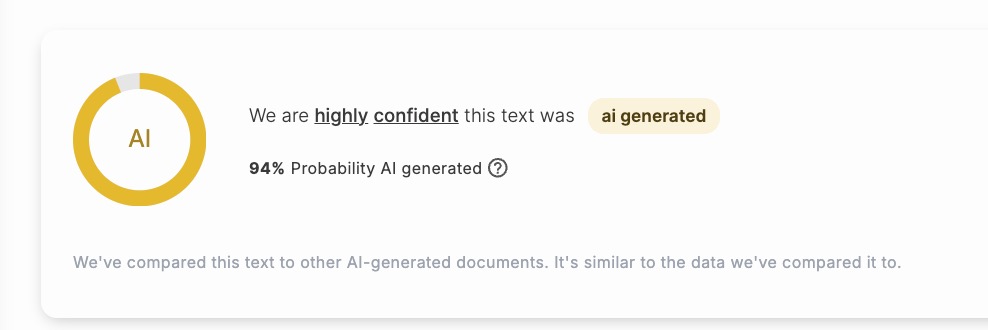
Hoe komen scholen er eigenlijk achter of je AI hebt gebruikt? Ze gebruiken een mix van technologie en menselijke beoordeling om AI-gegenereerd schrijven te ontdekken.
Tools zoals Proofademic, GPTZero en Turnitin analyseren tekstpatronen en schatten in of tekst door AI kan zijn gegenereerd. Zo’n score vraagt om voorzichtigheid: fout-positieve en fout-negatieve resultaten zijn mogelijk. De score vervangt geen beoordeling van het werk en het schrijfproces.
Maar daar houdt de detectie niet op. Toelatingsambtenaren lezen je essay ook aandachtig. Als je tekst stijfjes aanvoelt, generiek klinkt of niet overeenkomt met de toon van de rest van je sollicitatie, kan dat alarmbellen doen rinkelen. Ze weten hoe een authentiek studentenschrift eruitziet en het zal ze opvallen als iets te perfect aanvoelt of je persoonlijkheid mist.
Soms vergelijken universiteiten je essay met je andere sollicitatiemateriaal, zoals je korte antwoorden of e-mails. Als je essay plotseling klinkt alsof het door een professional is geschreven of losstaat van je eigen stem, is dat ook een rode vlag.
Samen maken AI-detectietools en getrainde toelatingsmedewerkers het moeilijker dan ooit om langs het systeem te glippen met een volledig door AI gegenereerd essay. Daarom is het belangrijk dat je schrijven natuurlijk, persoonlijk en uniek klinkt als je wilt voorkomen dat je wordt gemarkeerd.
Gebruiken toelatingscommissies AI-detectoren?
Dit is een veelgestelde vraag, maar het antwoord hangt af van de universiteit en de beoordelingscontext.
Niet alle universiteiten maken bekend welke tools ze voor toelatingsessays gebruiken. Bovendien kunnen regels van afdelingen, vakken en toelatingscommissies verschillen. Trek een besluit binnen één opleiding niet door naar de hele instelling.
Turnitin, GPTZero, Copyleaks, Originality.AI en Proofademic zijn voorbeelden van detectietools. Hun beschikbaarheid bewijst niet dat een bepaalde universiteit ze gebruikt. De uitkomsten horen ook niet het enige bewijs voor AI-gebruik te zijn.
Controleer vóór je aanmelding deze punten in de officiële informatie van iedere universiteit:
- Yale: bekijk de instructies over AI in aanmeldingen en het onderscheid tussen inhoud genereren en spelling of grammatica controleren.
- Caltech: controleer de richtlijnen voor de betreffende toelatingsronde en of je AI-ondersteuning moet melden.
- Brown en Georgetown: raadpleeg de actuele regels over auteurschap van essays en toegestane ondersteuning.
- Duke: bekijk hoe essays worden beoordeeld en wat nodig is om je aanmelding je eigen werk te laten weerspiegelen.
- Harvard, Princeton, MIT en Stanford: controleer de aanmeldingsinstructies, integriteitsafspraken en toepasselijke auteurschapsverklaringen.
Regels kunnen per toelatingsronde veranderen. Controleer ze voordat je je aanmeldt en vraag de toelatingscommissie om uitleg als je beoogde gebruik niet wordt genoemd.
Kunnen AI Essays echt voorbij detectie komen?
Je vraagt je misschien af of AI-gegenereerde essays echt door de mazen van het net kunnen glippen. Het eerlijke antwoord is dat dat soms kan, maar dat het elke dag moeilijker wordt. AI-detectoren worden snel beter en hogescholen combineren deze tools met zorgvuldige menselijke beoordeling om verdachte teksten te ontdekken.
Tekst rechtstreeks uit ChatGPT kopiëren kan algemene of onpersoonlijke formuleringen opleveren en de regels van de aanmelding schenden. Een detector kan dit markeren, maar er is geen gegarandeerde uitkomst.
Als je echter je door AI gegenereerde tekst bewerkt door je eigen gedachten toe te voegen, lange zinnen af te breken en het taalgebruik meer op jou te laten lijken, kun je de kans verkleinen dat je betrapt wordt. Door je tekst te personaliseren wordt het voor zowel AI-detectors als toelatingscommissie veel moeilijker om te zien dat het door een machine is gegenereerd.
Maar het is belangrijk om te onthouden dat er geen garanties zijn. Zelfs als je tijd besteedt aan het aanpassen van de tekst, kan een scherpziende toelatingsmedewerker of een geavanceerde detectietool het nog steeds markeren. Daarom is het altijd het veiligst om AI te gebruiken als hulpmiddel om te brainstormen en je ideeën te ordenen, maar het uiteindelijke ontwerp in je eigen woorden te schrijven.
Authentiek schrijven met je eigen stem helpt je aanmelding om de juiste redenen op te vallen.
Wat gebeurt er als je een door AI geschreven essay indient?

Laten we eerlijk zijn: er staat veel op het spel als je probeert een door AI geschreven essay als je eigen essay te laten doorgaan. Als een universiteit ontdekt dat je scriptie door AI is gemaakt, kan dat je kansen om toegelaten te worden ernstig schaden. Toelatingsambtenaren zouden het kunnen zien als een teken dat je niet klaar bent voor het werk op universitair niveau of dat je het systeem probeert te omzeilen.
In sommige gevallen kan je aanvraag helemaal worden afgewezen. Erger nog, het kan leiden tot rode vlaggen die in je dossier blijven staan, vooral als de school aantekeningen bijhoudt over academische integriteit. En als je al student bent en AI gebruikt om opdrachten te schrijven, kan betrapping leiden tot disciplinaire maatregelen zoals het niet halen van de opdracht of schorsing.
Maar het gaat niet alleen om problemen krijgen. Als je een door een AI geschreven essay indient, mis je de kans om te laten zien wie je echt bent. Universitaire essays zijn je kans om je verhaal, je persoonlijkheid en je doelen te delen. Vertrouwen op AI neemt je stem weg en kan je schrijven generiek of afstandelijk laten klinken, wat het tegenovergestelde is van wat toelatingsambtenaren willen zien.
Daarom is het beter om AI op een verantwoorde manier te gebruiken, zoals hulp krijgen bij het organiseren van je ideeën of het verbeteren van je grammatica, maar zorg ervoor dat het uiteindelijke essay echt van jou is. Jouw unieke perspectief is wat je sollicitatie zal laten schitteren.
Hoe AI verantwoordelijk gebruiken bij het schrijven van je college essay
AI kan een geweldige hulp zijn als je naar een lege pagina zit te staren of je ideeën op een rijtje probeert te krijgen. Maar de sleutel is om het op de juiste manier te gebruiken. Zie AI als een brainstormmaatje, niet als een ghostwriter. Laat het je helpen je gedachten te schetsen, suggesties te doen om je zinnen te verbeteren of grammaticafouten te ontdekken, maar zorg er altijd voor dat jij degene bent die je verhaal schrijft.
Als je je essay hebt opgesteld, ga dan terug en voeg je persoonlijke ervaringen, gevoelens en overwegingen toe. Gebruik details die alleen jij kunt weten, zoals momenten die je gevormd hebben of uitdagingen die je overwonnen hebt. Dat is het soort echte, authentieke schrijven dat toelatingscommissiemedewerkers willen zien.
Als je een door AI gegenereerde tekst als uitgangspunt neemt, kopieer en plak deze dan niet zomaar. Herschrijf het in je eigen woorden en controleer dubbel of het klinkt zoals jij. Als het stijfjes aanvoelt of te perfect, is dat een teken dat het misschien overkomt als door AI gegenereerd.
Onthoud: het essay is jouw kans om te laten zien wie je bent. Door AI verstandig te gebruiken, kun je het schrijfproces gemakkelijker maken zonder je stem te verliezen of je sollicitatie op het spel te zetten.
Welke tools gebruiken universiteiten om AI-tekst te detecteren?
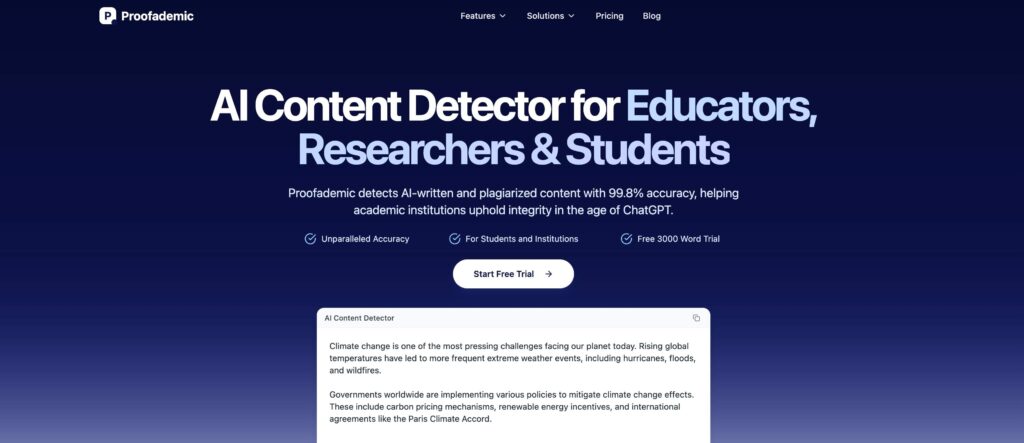
Universiteiten kunnen menselijke beoordeling en detectietools combineren om een essay te beoordelen. Beschikbare tools zijn onder meer Proofademic, Turnitin, GPTZero en Copyleaks. Ze analyseren zinsbouw, woordkeuze en de gelijkmatigheid van de stijl; de resultaten moeten worden geïnterpreteerd.
Wanneer je een sollicitatie of een opdracht indient, kunnen toelatingscommissie of professoren deze detectoren doorlopen. Ze krijgen een score of een vlag te zien als de tekst eruitziet alsof hij door AI is gemaakt. Hoewel deze tools niet perfect zijn, worden ze steeds beter in het herkennen van inhoud die een persoonlijke stem mist of te gepolijst aanvoelt. Daarom is het zo belangrijk om ervoor te zorgen dat je werk klinkt zoals jij en echt je gedachten weergeeft.
Walter Writes AI is een tool waarmee studenten hun tekst kunnen herzien. De tool kan helpen om een mechanische toon te herkennen en een revisie voor te bereiden, maar garandeert geen toelating en vervangt de regels van de universiteit niet.
Veelgestelde vragen over AI en academische essays
Kunnen universiteiten echt detecteren of ik AI heb gebruikt om mijn essay te schrijven?
Ze kunnen aanwijzingen vinden via tools zoals Proofademic, Turnitin of GPTZero en menselijke beoordeling. Ontbrekende persoonlijke details of stijlverschillen kunnen vragen oproepen, maar geen enkel los signaal bewijst AI-gebruik.
Word ik afgewezen als mijn essay wordt gemarkeerd als AI-gegenereerd?
Het hangt van de school af, maar betrapt worden kan je kansen ernstig schaden. Sommige scholen kunnen je aanvraag direct afwijzen, terwijl andere om uitleg of verduidelijking kunnen vragen.
Is het goed om AI te gebruiken om me te helpen brainstormen of grammatica te verbeteren?
Dat hangt af van de regels van de universiteit. Controleer of AI is toegestaan voor ideeën of grammaticale correcties en of je het gebruik moet melden. Het uiteindelijke essay moet je ervaringen en je eigen stem weerspiegelen.
Wat is de veiligste manier om AI te gebruiken voor essays voor de universiteit?
Gebruik AI als hulpmiddel, niet als steun. Laat het je helpen bij het brainstormen, het structureren van je ideeën of het redigeren van je concepten, maar zorg ervoor dat je je eigen gedachten, verhalen en stem toevoegt zodat je essay authentiek van jou is.
Kan AI me helpen mijn essay beter te laten klinken zonder het voor mij te schrijven?
Ja, hulpmiddelen zoals Walter Writes AI kunnen je helpen om je schrijven te polijsten door je zinnen duidelijker en natuurlijker te maken - maar je moet de inhoud nog steeds zelf schrijven. Zie AI als een schrijfassistent, niet als een vervanging voor je eigen ideeën.
Welke AI-detector gebruiken universiteiten?
Er is geen universele tool. Beschikbare opties zijn Turnitin, GPTZero, Copyleaks, Originality.AI en Proofademic. Raadpleeg officiële informatie om te weten wat een instelling voor toelatingsessays gebruikt, in plaats van dit af te leiden uit de tools die bij vakken worden ingezet.
Gebruiken toelatingscommissies AI-detectoren?
Sommige kunnen dat doen, maar het gebeurt niet overal. Instellingen kunnen ook de samenhang van de aanmelding beoordelen en auteurschapsverklaringen eisen. Controleer de regels van iedere universiteit en van het aanmeldingssysteem dat je gebruikt.
Kunnen universiteiten specifiek ChatGPT detecteren?
Detectoren kunnen patronen herkennen die bij AI-tekst passen, maar een tekst niet met zekerheid aan ChatGPT toeschrijven. Menselijke bewerking kan de uitkomst veranderen en fout-positieve resultaten zijn mogelijk. Daarom zijn ook het schrijfproces en de volledige aanmelding van belang.
Kunnen universiteiten zien of je ChatGPT gebruikt?
Ze kunnen aanwijzingen vinden, zoals algemene voorbeelden, gelijkmatige zinsbouw of een stijl die afwijkt van andere onderdelen van je aanmelding. Die aanwijzingen kunnen aanleiding zijn voor nader onderzoek, maar vormen op zichzelf geen sluitend bewijs.
Toelatingsessays zijn maar één onderdeel van dit onderwerp. Lees voor meer informatie over hoe universiteiten ChatGPT detecteren bij vakken, opdrachten en ingeleverd werk onze gids uit 2026 over detectoren en onderwijsplatforms.
Lees voor informatie over onderwijsplatforms Detecteert Blackboard AI en ChatGPT?, met uitleg over SafeAssign, Turnitin LTI en activiteitsgegevens.