



Every few months, a new “free AI writing tool” makes its rounds in student forums. One of those is Writify AI, which has been attracting a lot of interest for two key things: a full suite of free AI writing tools and a free AI humanizer.
But two of the most overused terms when talking about this type of service are “free” and “humanizer.” So, before incorporating it into your workflow, it would be a good idea to understand exactly how Writify works, where it falls short, and whether its humanizer will hold up in real-world use cases.
This Writify AI review covers both sides, writing tools and humanizer, including a hands-on stress test without any hype, just what students need to know.
What Writify AI Is (And What It’s Trying to Replace)
Writify AI isn’t a single tool for generating text. Instead, it’s an AI-powered utility hub, a collection of separate and distinct writing tools all centered on one simple idea: allowing students to use AI in their writing process as they want to, with no account required.
The application has two primary components:
Writing tools are the ones that students need most frequently. The typical writing tasks include the generation of an outline for an essay, thesis statement generators, rewriting of paragraphs, introductory builders, and summary tools for content. Unlike a general-purpose chatbot, each of these writing tools was created to do just one thing well.
The Humanizer tool functions independently of other features. You paste AI-generated text into the tool, and it rewrites the paragraph as well as the rhythm to be less robotic-sounding and appears to have been written by an actual individual.
Note: Based on our testing, we found that while this tool produced readable output, it had little to no effect on reducing AI detection. See additional information about this within the stress test section below.
In theory, Writify has been marketed toward anyone seeking quick content creation. In reality, the people using the tool are students seeking a low-cost alternative to manually writing essay responses, short answer questions, or drafting their own work to then revise and edit. And that’s not a small group. The College Board’s 2025 research found that 84% of high schoolers now use generative AI for schoolwork, with half of them turning to it for brainstorming, editing, or research.
A product developed to produce any type of content for a general audience performs very differently from a product created specifically for the workflows of students, and the difference shows up where it matters most.
To learn more about how you can develop a strong student writing process, check out our AI tools for students hub.
Is Writify AI Actually Free in 2026? The Web vs App Confusion
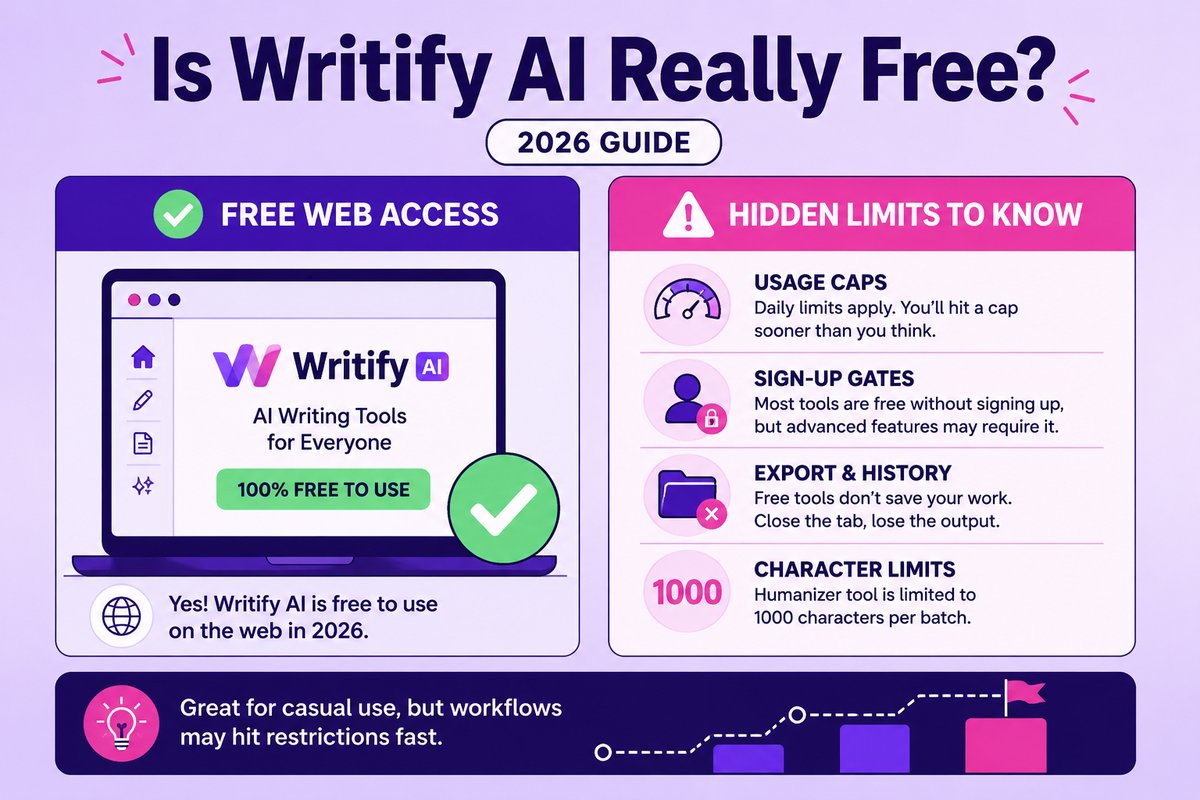
The short answer is yes, Writify AI is free to use on the web. But “free” comes with enough asterisks that it is worth breaking down before you build it into your workflow.
The confusion arises from the fact that Writify offers both a web-based platform and references to apps for subscription services. In many cases, if you see an app reference in addition to a web-based version of the same service, this does not refer to the versions which most students utilize.
Before adding Writify AI to your workflow, make sure to check the following things:
- Usage caps: Most free tools will limit how many times you can use them in one day. These limits are usually hidden from view until you exceed them.
- Sign-up gates: Writify has most of its tools available without signing up, but some of the advanced tools and features may require registration.
- Export and history: Free writing tools will not save your work. Once you close the tab, the output is lost.
- Character limits: The humanizer tool has a limit of 1000 characters per batch. So if you write something longer than that, you would have to run it through the humanizer multiple times.
Access to all of the free options is there, but limited. What you receive is the tools themselves. This is likely to be a limiting factor for many students because they will need to come back into their writing at different times for editing, and possibly for reusing their content parts in future projects, which is important to know before starting to use Writify AI.
Writify AI Pricing
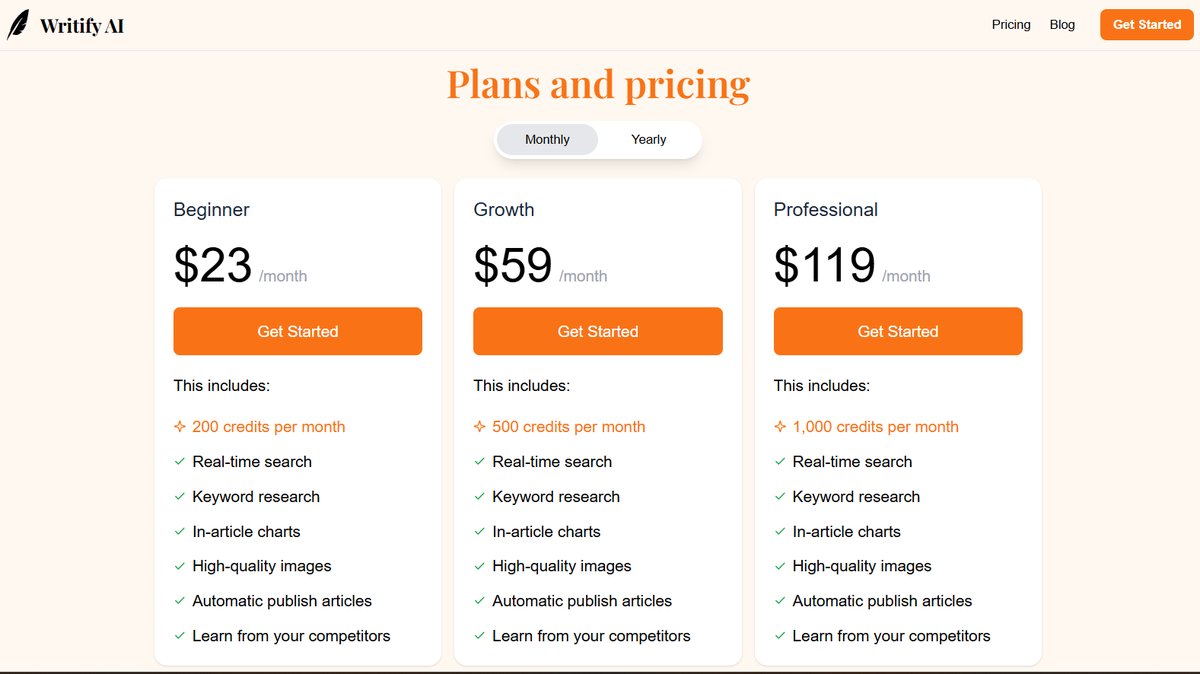
Writify AI does offer free tools on the web, but it also has a paid plan structure that is worth knowing about before you commit to it as your go-to writing tool.
| Plan | Price | Credits |
|---|---|---|
| Beginner | $23/month | 200 credits/month |
| Growth | $59/month | 500 credits/month |
| Professional | $119/month | 1,000 credits/month |
All three plans include real-time search, keyword research, in-article charts, high-quality images, automatic article publishing, and competitor learning features.
Here is how credits are consumed per generation:
- Standard article: 1 credit per generation
- Research article (30 or more sources): 10 credits per generation
- Detailed research article (100 or more sources): 30 credits per generation
That credit burn rate matters. A student on the Beginner plan generating research articles at 10 credits each will exhaust their 200 monthly credits in just 20 generations. For detailed research work, that drops to just 6 generations per month before hitting the limit.
Students who are simply looking to create quick drafts and make minor rewrites can probably get away with using the free version. But anyone creating large amounts of content through heavy research will likely find the paid tiers a little overpriced.
Writify AI Writing Tools: What Students Get (And What’s Missing)
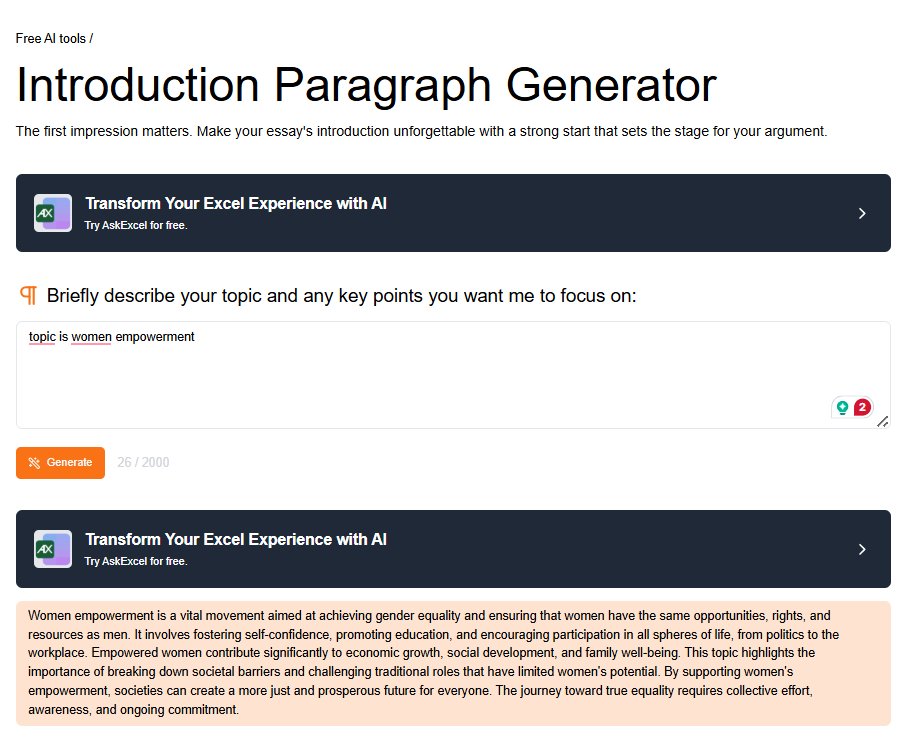
Students can use Writify to complete their most common writing needs, such as an outline of essays, thesis statements, paragraph rewrites, an introduction builder, or a content summarizer. Each tool has one purpose, which keeps things simple, but there is no connected workflow from one task to another.
The output is fast and structured, which is useful for getting a first draft on the page. But the quality is generic by default. You’ll probably be editing your work for tone, adding specifics to make it applicable to what you’re working with and fact-checking any information in the output prior to submitting it for grading.
Best for:
- Brainstorming and building structure quickly
- Rewriting paragraphs for clarity
- Getting past a blank page on short assignments
Not for:
- Citation-dependent work where accuracy matters
- Final submissions without a round of heavy editing
- Students who need consistent output quality across longer pieces
If you would like a comprehensive review of tools that hold up better for academic work, here is our roundup of the best AI writing tools for students.
Writify AI Humanizer: What It Claims to Do vs What “Humanizing” Really Means
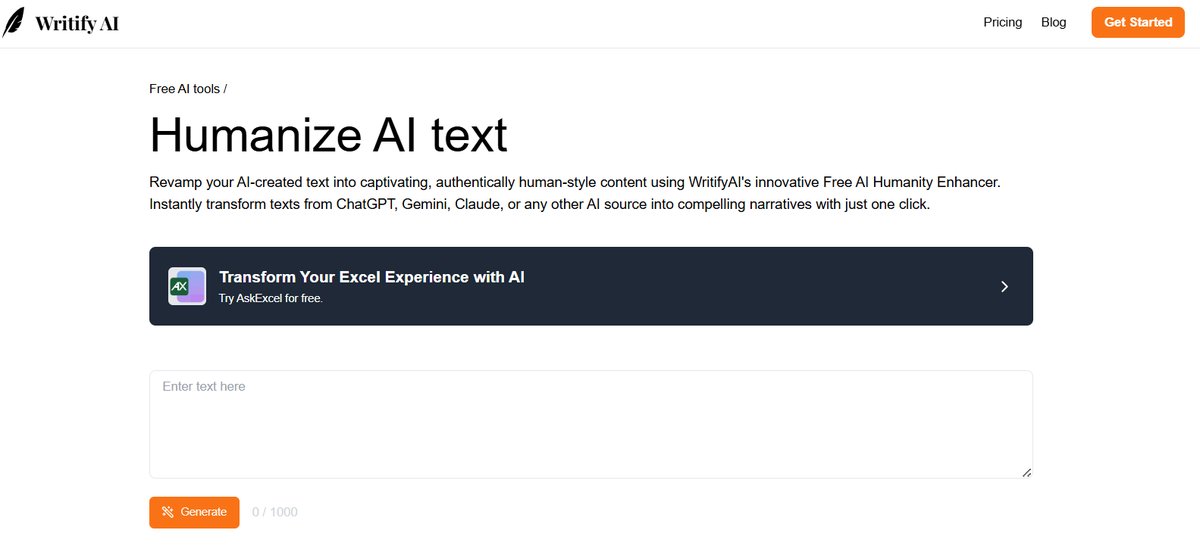
The humanizer tool is positioned as a one-click fix for AI-generated text. Simply copy your text into this application, and you will receive a revised version of your original writing which sounds like it was written by a person instead of AI.
But what an AI humanizer actually does is more specific than that. Not only should a good humanizer change word selection, but it should also modify sentence structure and structural patterns to significantly reduce the statistical identifiers that are typically looked at by detector programs. The goal is to produce better writing that has enough differences from typical AI-generated writing so that a tool cannot identify it as such.
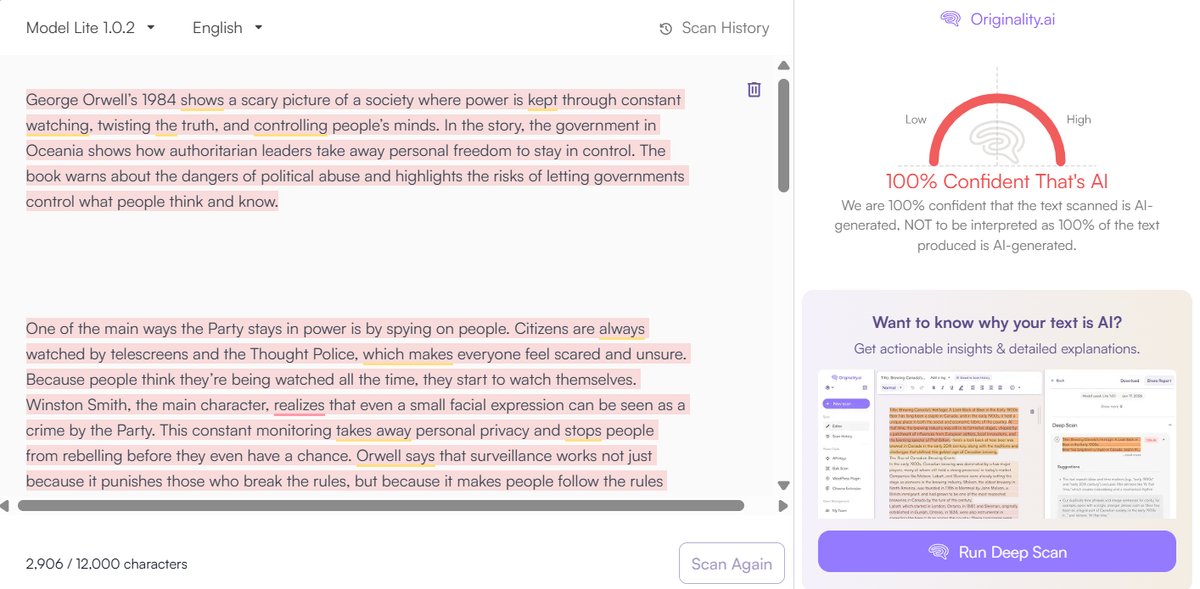
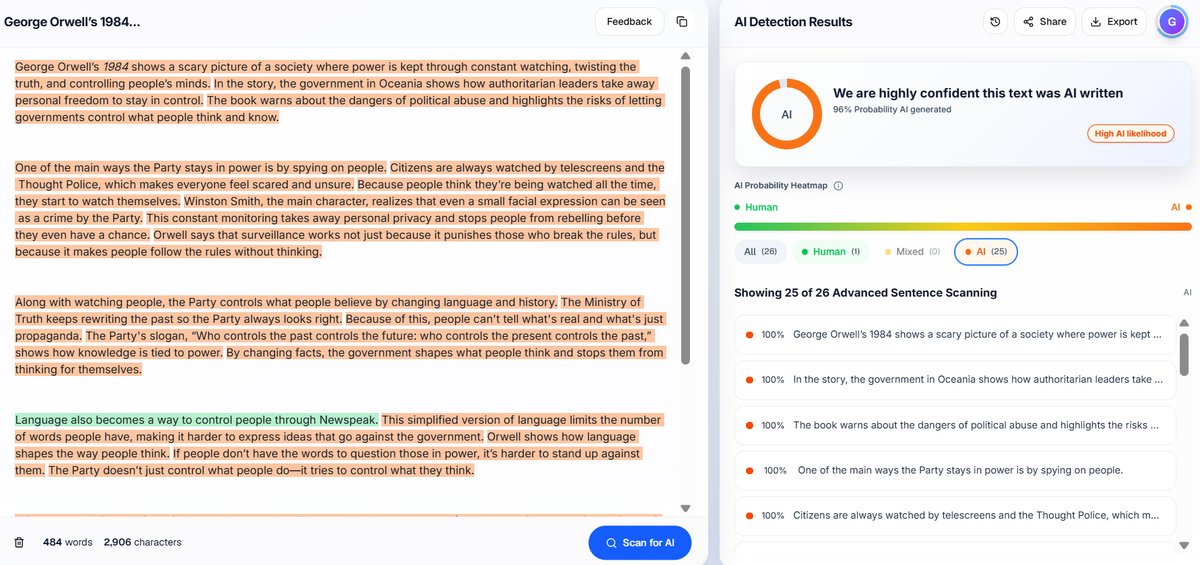
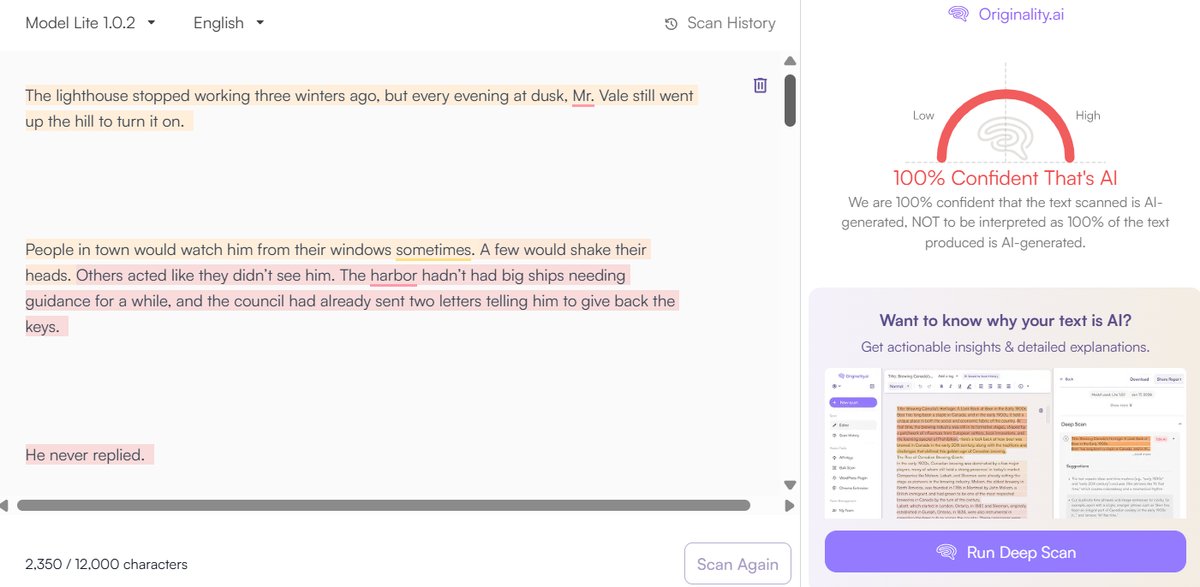
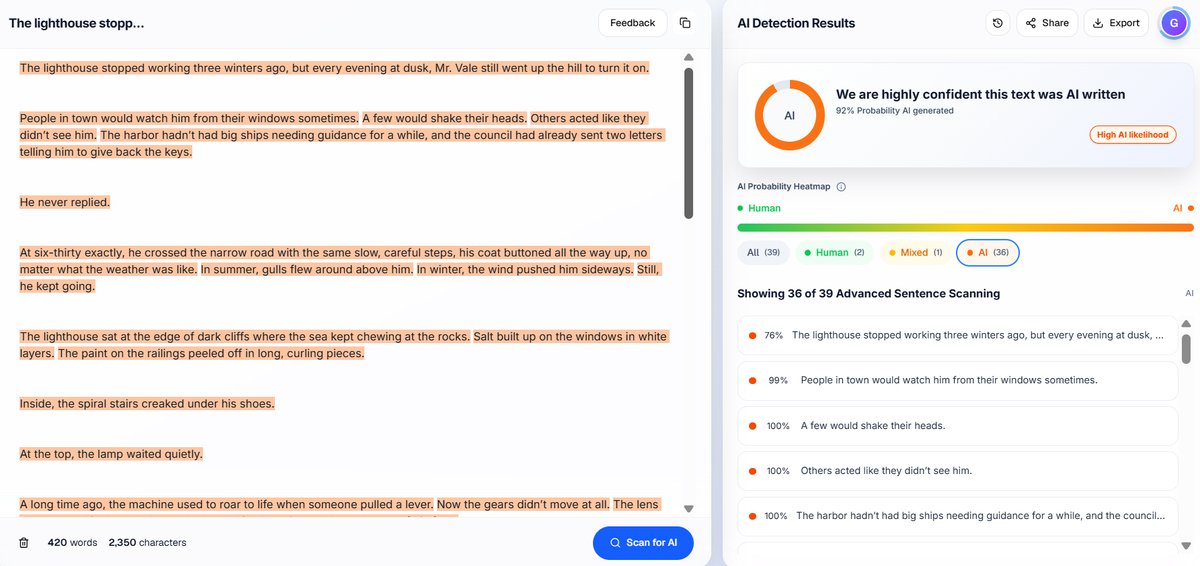
Writify’s humanizer does the first part reasonably well. Our stress test showed an average quality score of 73.3%, meaning the output is more readable than the input. But it does not do the second part at all. Detection scores averaged 97.8% AI across every test, on every detector, for every content type.
That gap is the whole story with Writify’s humanizer.
If you are interested in understanding what is really meant by responsible humanization, then this guide provides a walk-through on how to humanize your AI-generated text.
Writify AI Humanizer Stress Test
This evaluation of Writify AI’s humanized output is done based on two dimensions: detection evasion and writing quality, scored on a 30-point rubric.
The Test Setup
- Plan: Free (no account required)
- Settings: None available
- Character limit: 1,000 characters per batch (approximately 100 to 150 words are humanized in each run)
- Detectors used: Originality.ai and Proofademic
- Content types tested: Academic Essay, Blog Post, and Creative Writing
- Process: Each of the three samples was fully AI-generated, then run through Writify individually to generate each sample’s humanized version.
- Limits encountered: Because the character limit was too low, it typically gets exhausted within 100 to 150 words. So each sample was humanized in multiple batches.
Results Table
| Use Case | Originality.ai | Proofademic | Avg Detection Score | Quality Score |
|---|---|---|---|---|
| Academic Essay | 100% AI ❌ | 96% AI ❌ | 98% AI | 20 / 30 (67%) ✅ |
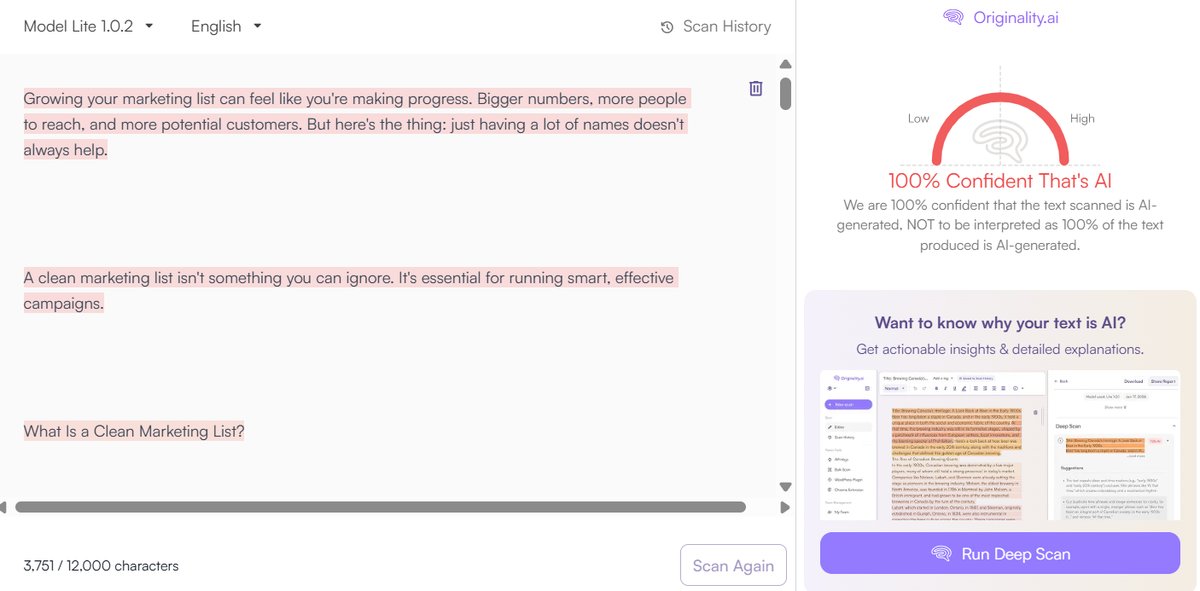
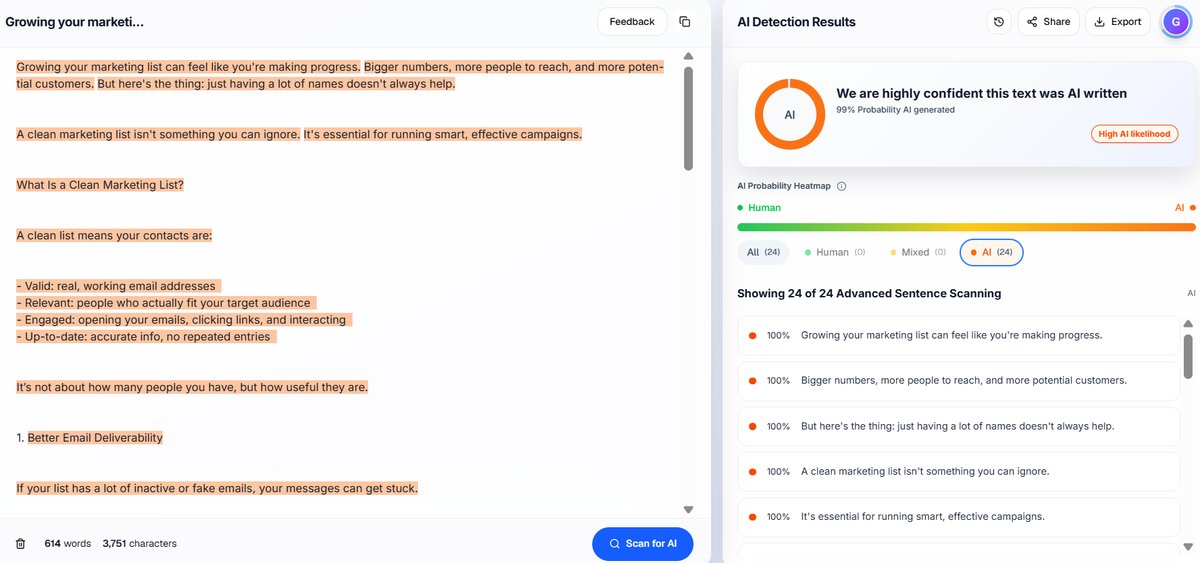
| Blog Post | 100% AI ❌ | 99% AI ❌ | 99.5% AI | 24 / 30 (80%) ✅ |
| Creative Writing | 100% AI ❌ | 92% AI ❌ | 96% AI | 22 / 30 (73%) ✅ |
| Average | 100% AI | 95.6% AI | 97.8% AI | 22 / 30 (73.3%) |
Writify Overall Performance Score: 37.75%
- Detection Evasion Score: 2.2% (100% minus 97.8%)
- Quality Score: 73.3%
- Overall: (2.2 + 73.3) / 2 = 37.75%
Detection Score Indicators:
- ✅ = Good (under 20% AI detected)
- ⚠️ = Moderate (20-40% AI detected)
- ❌ = Poor (over 40% AI detected)
The Test Inputs (3 use cases we tested)
We utilized a total of three standard content types to ensure that our test results are comparable across tools:
- Academic essay: Most challenging of all content types to clear. Academic essays are long, formal, and subject to intense scrutiny from AI detection tools such as Turnitin, making it most difficult to humanize while also being able to avoid detection.
- Blog post: Lower stakes, but readability is important when using automated content.
- Creative writing: Tests whether humanizing your writing maintains both your voice and tone.
All three content types were fully generated using AI and run through Writify’s free AI humanizer.
Link to the AI samples:
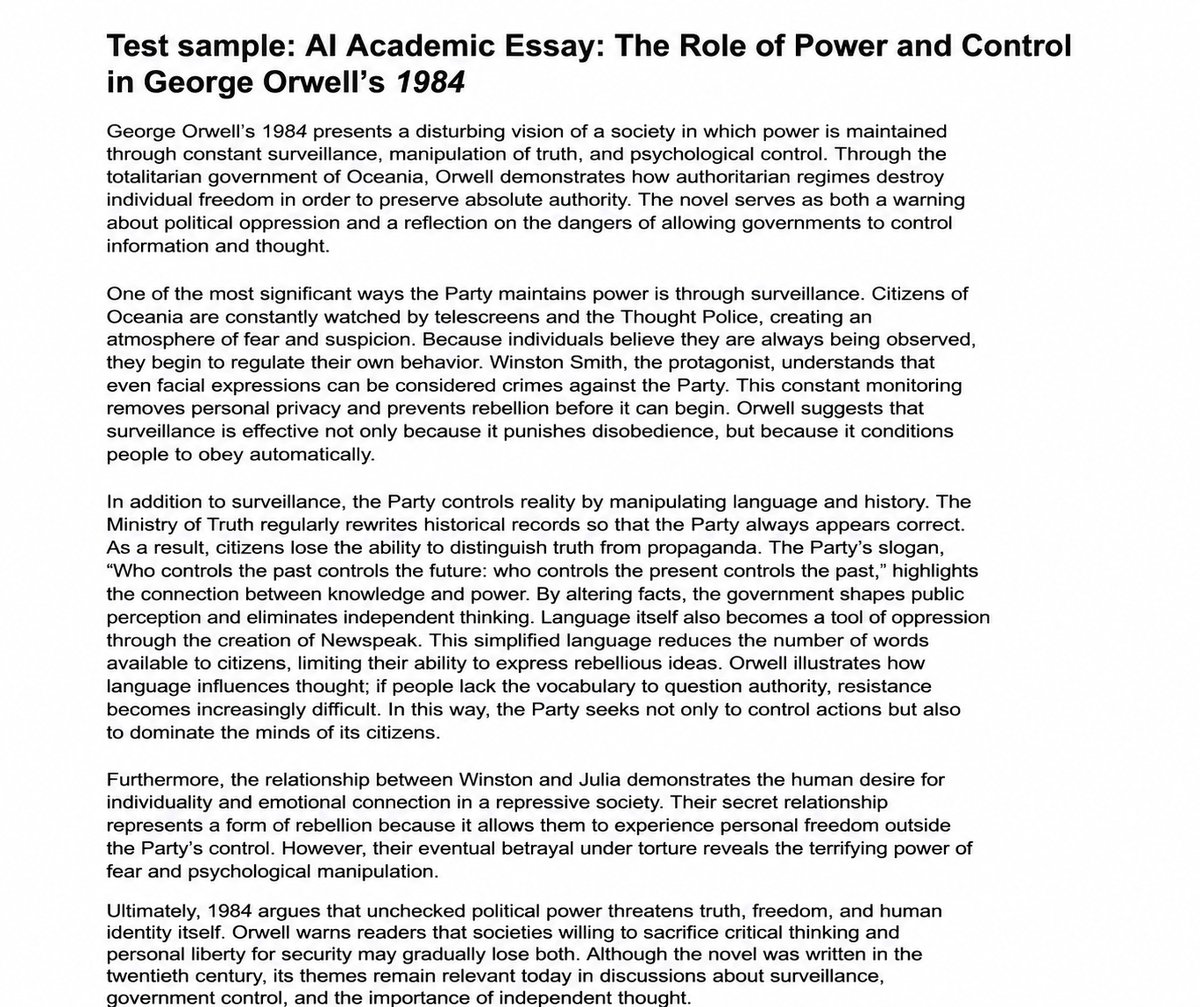
- Academic Essay: Sample Academic Essay |AI| The Role of Power and Control in George Orwell’s 1984
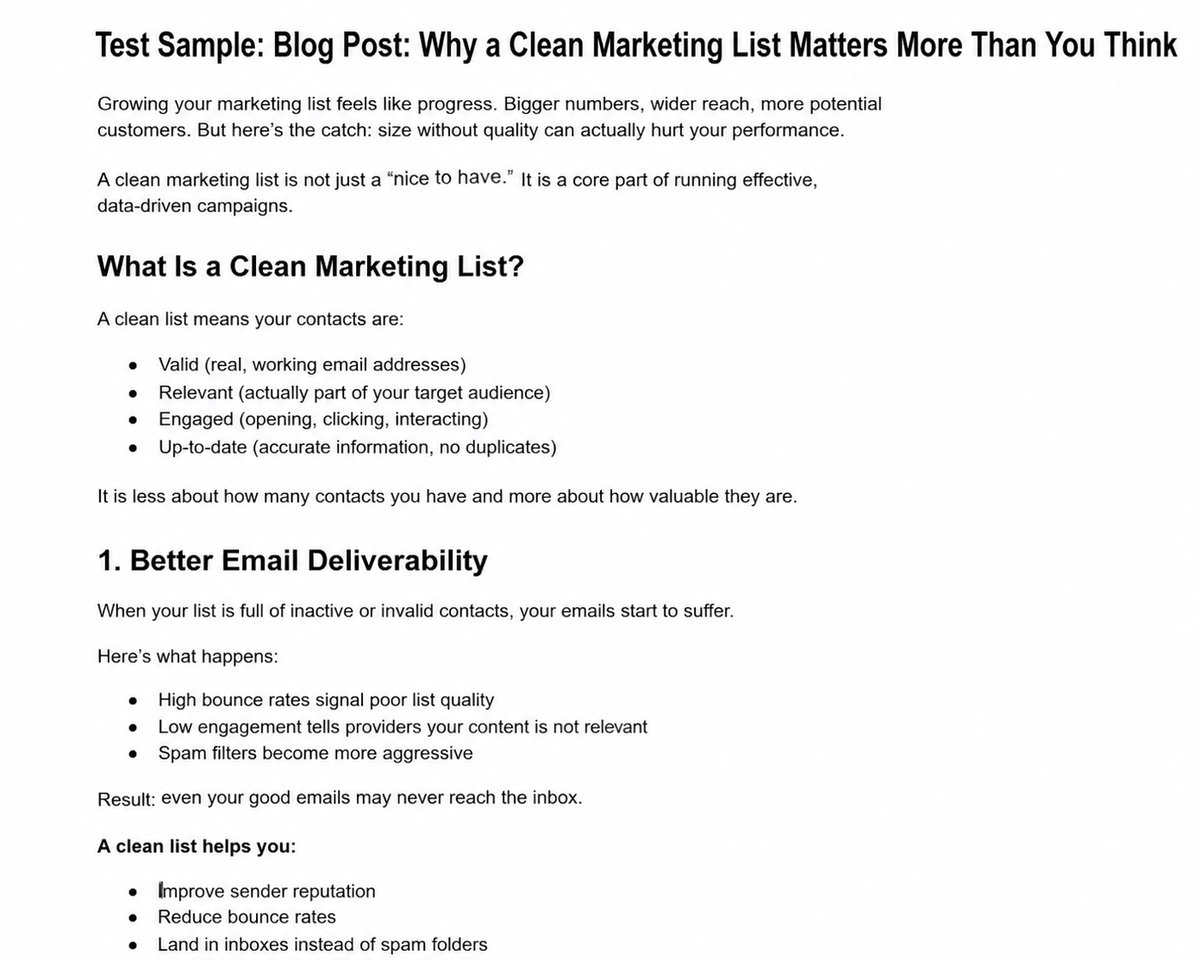
- Blog Post: Sample Blog Post |AI| Why a Clean Marketing List Matters More Than You Think
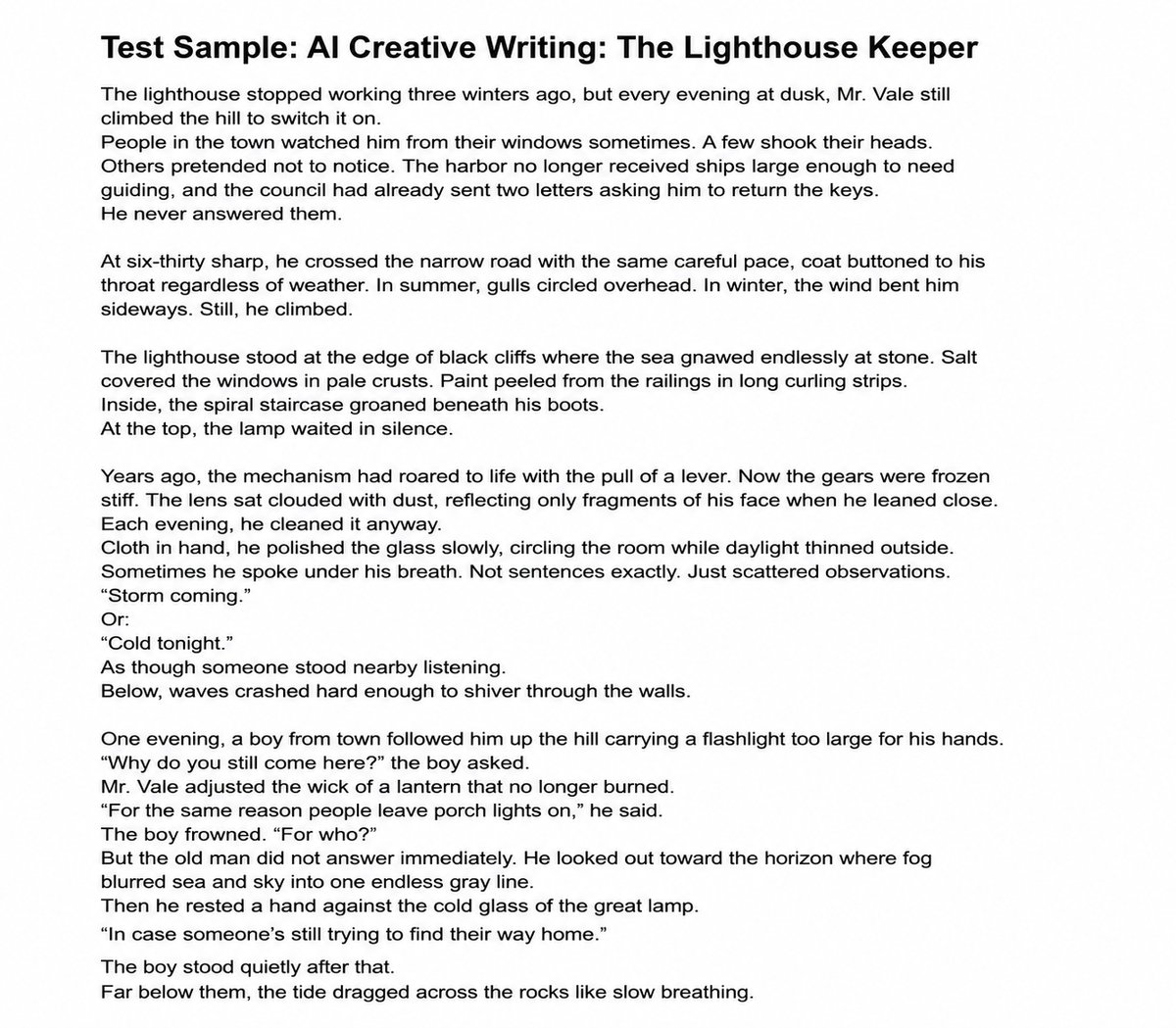
- Creative Writing: Sample Creative Writing |AI| The Lighthouse Keeper
Test Sample (AI Academic Essay: The Role of Power and Control in George Orwell’s 1984)
Test Sample (Blog Post: Why a Clean Marketing List Matters More Than You Think)
Test Sample (Creative Writing: The Lighthouse Keeper)
Link to the Humanized samples of Writify AI:
- Academic Essay: Academic essay |Humanized| The Role of Power and Control in George Orwell’s 1984
- Blog Post: Blog Post |Humanized| Why a Clean Marketing List Matters More Than You Think
- Creative Writing: Creative Writing |Humanized| The Lighthouse Keeper
Detectors Used
We tested all outputs with the two leading detectors that students will most commonly be using:
- Originality.ai: This is the go-to tool for most academic purposes. It has an extremely high bar, especially when it comes to content generated by AI with heavy or light editing.
- Proofademic: Increasingly popular choice for educational purposes, as a growing number of schools and educators use this detector as well.
Using these tools separately is beneficial because we can see how different detectors provide varying results on the same inputs.
Academic Essay: Originality.ai Detection Results
Academic Essay: Proofademic Detection Results
Blog Post: Originality.ai Detection Results
Blog Post: Proofademic Detection Results
Creative Writing: Originality.ai Detection Results
Creative Writing: Proofademic Detection Results
How We Calculated the Results of Writify AI
Writify Quality Rubric Breakdown
In our assessment test, each output was scored across 6 criteria, 1 to 5 points each, for a maximum of 30:
| Rubric Criteria | Academic Essay Score | Blog Post Score | Creative Writing Score |
|---|---|---|---|
| Readability and Natural Flow | 3/5 | 4/5 | 3/5 |
| Accuracy and Meaning Preservation | 4/5 | 4/5 | 4/5 |
| Coherence and Logic | 4/5 | 5/5 | 5/5 |
| Grammar and Mechanics | 5/5 | 3/5 | 4/5 |
| Word Choice and Vocabulary Appropriateness | 2/5 | 4/5 | 3/5 |
| Tone Consistency | 2/5 | 4/5 | 3/5 |
| Total Score | 20 / 30 (67%) | 24 / 30 (80%) | 22 / 30 (73%) |
Average Quality Score= (20+24+22) divided by 3 = 22 / 30 (73.3%)
Detection Evasion Scorecard
- Average AI detection percentage calculated across all tests
- Converted to evasion success: 100% minus average detection %
- Example: 97.8% AI detected = 2.2% evasion success
Overall Performance Score
| Metric | Score | Calculation |
|---|---|---|
| Average AI Detection | 97.8% | From detection tests |
| Detection Evasion Score | 2.2% | 100% - 97.8% |
| Quality Score | 73.3% | (22 / 30) × 100 |
| Overall Performance Score | 37.75% | (2.2 + 73.3)÷ 2 |
What the Results Mean for Students
Detection Evasion Performance
- Writify’s humanizer failed every single detection test across both tools, averaging 97.8% AI detected
- This means if you copy-paste AI-generated content, paste it into Writify and click submit, there is an extremely high likelihood that your output will get flagged as AI-written.
- The creative writing sample performed the best of the three, but the AI detection rate was still as high as 96%, clearly failing to pass the test.
- A 1000-character batch limit severely hampers user efficiency when trying to perform the same operation on larger pieces of content, such as paragraphs greater than a few sentences long, adding additional friction to a process that already has poor results.
Quality Assessment
- Although a failure to detect was experienced by the tool, overall quality in terms of composition averaged 22 out of 30 (73.3%), as per the three different samples examined.
- Writify achieved its best scores on an informal, conversational blog post, where it earned 24 out of 30 (80%). This indicates that Writify has a better ability to produce content that is informal and conversational rather than producing formal written content.
- It produced the poorest scores on an academic essay, where it received a total score of 20 out of 30 (67%). Mainly, scores were poor due to word selection and tone, and these two categories represent the greatest importance when evaluating student submissions.
- Scores for coherence and logic remained strong among all three forms of content evaluated.
Overall Effectiveness
- Writify’s overall performance score came in at 37.75%, calculated by averaging the detection evasion score (2.2%) and the quality score (73.3%).
- Quality scores show that it is suitable for very minor drafting or rewriting projects.
- Detection evasion scores show that they are completely inadequate to be of use to any student who has concerns over AI flags being generated against their own work.
- In short, Writify can help you write better, but it will not help you write safer.
Writify AI Humanizer vs Walter AI Humanizer
The same three samples were used for testing Walter’s humanizer in the same way as Writify’s. Walter’s results were also run through the same two detection tools: Originality.ai and Proofademic, so that we could keep our comparisons fair.
Results Table
| Use Case | Originality.ai | Proofademic | Avg Detection Score | Quality Score |
|---|---|---|---|---|
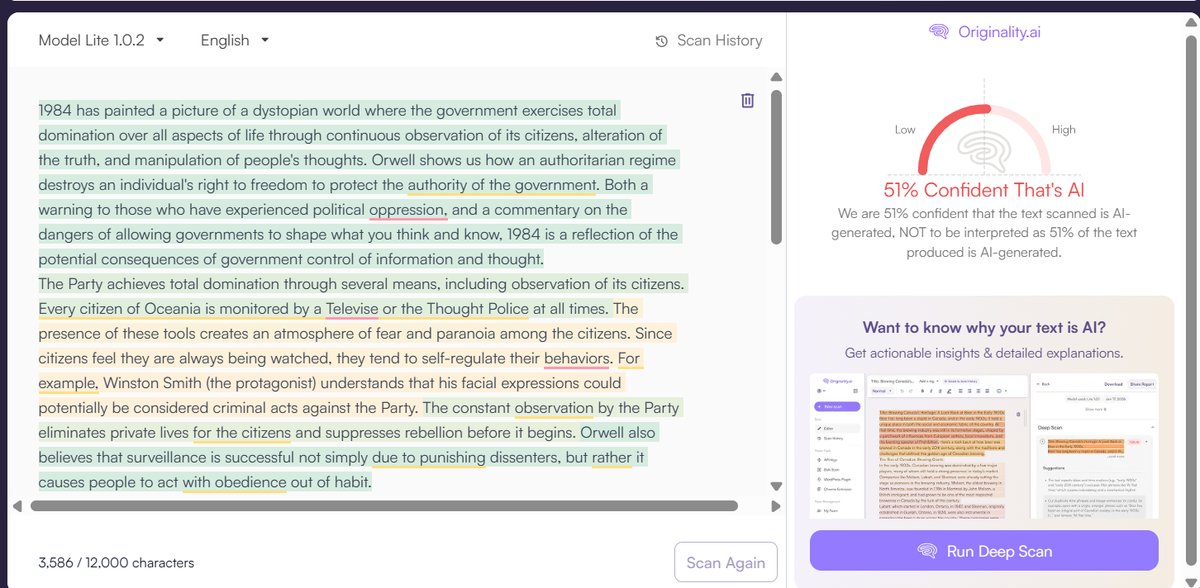
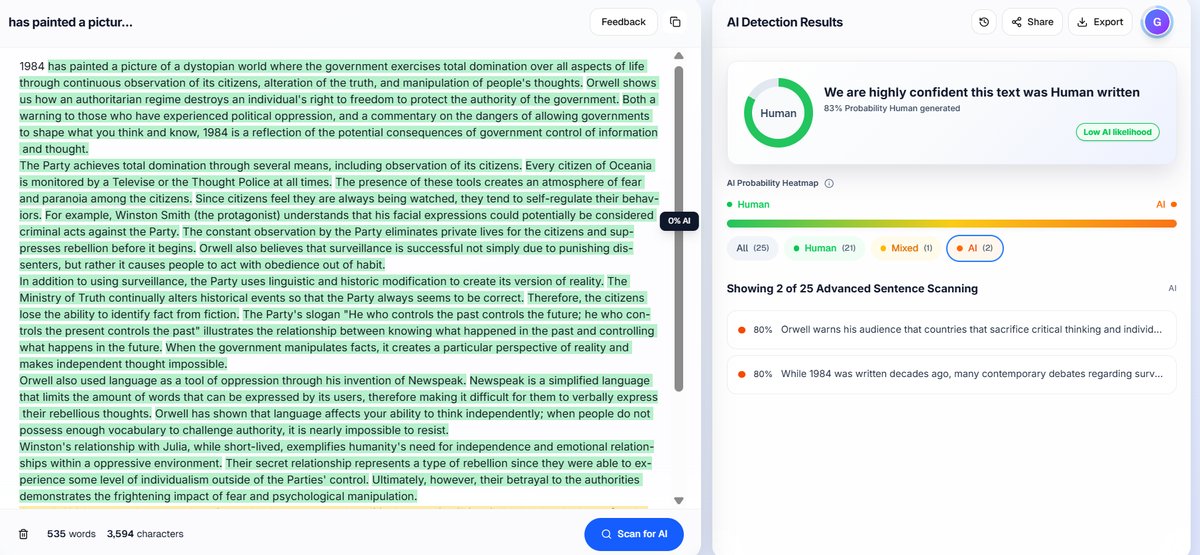
| Academic Essay | 51% AI ❌ | 17% AI ✅ | 34% AI | 21 / 30 (70%) ✅ |
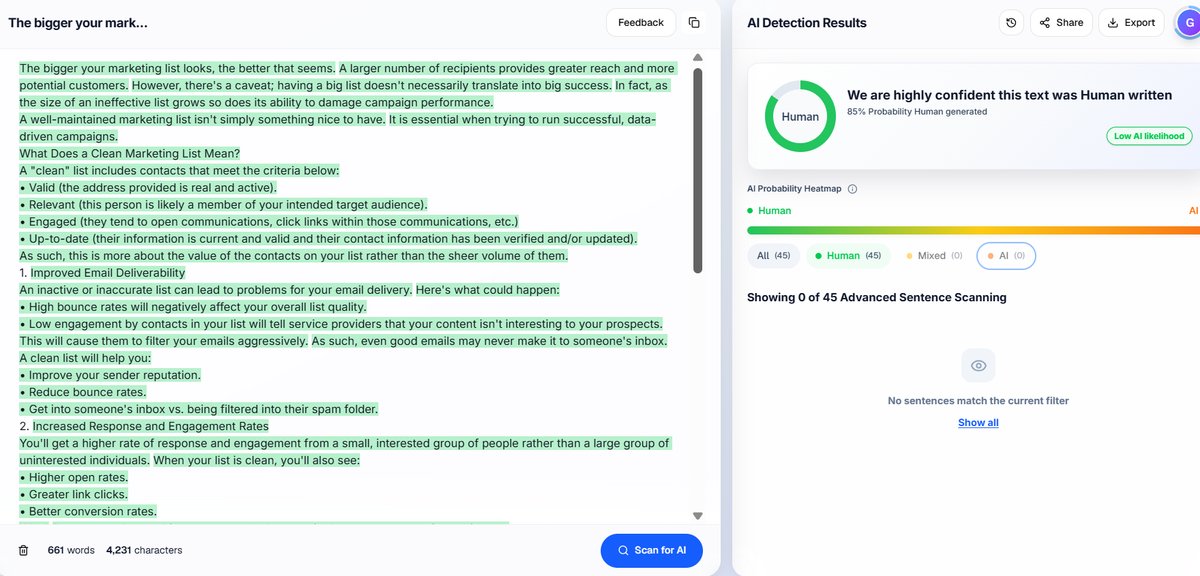
| Blog Post | 0% AI ✅ | 15% AI ✅ | 7.5% AI | 21 / 30 (70%) ✅ |
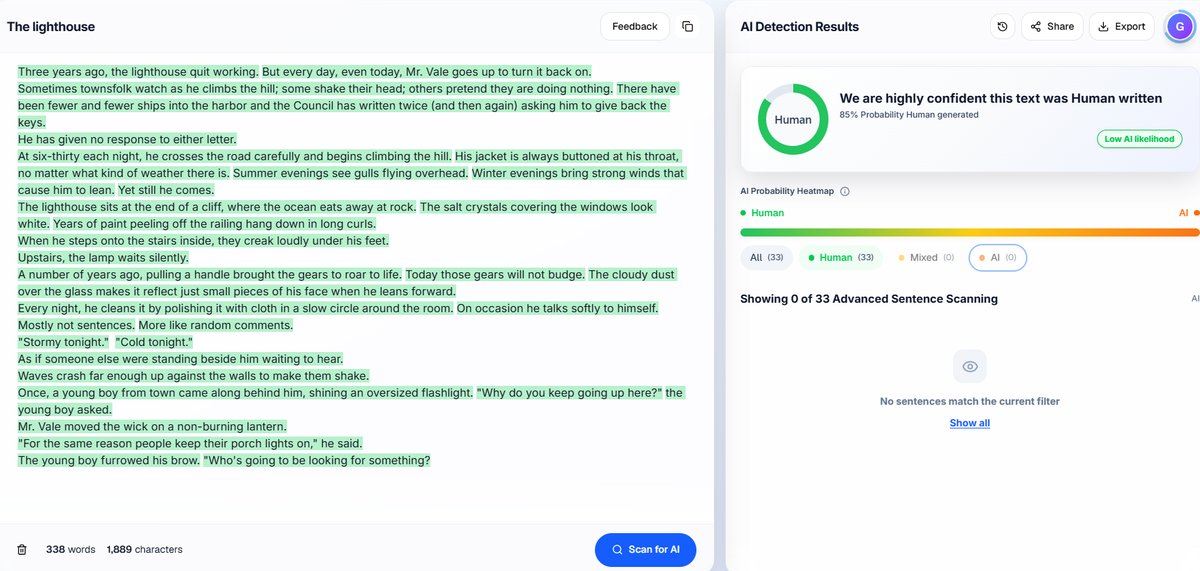
| Creative Writing | 1% AI ✅ | 15% AI ✅ | 8% AI | 20 / 30 (67%) ✅ |
| Average | 17.3% AI | 15.6% AI | 16.5% AI | 20.6 / 30 (69%) |
Walter Overall Performance Score: 76.25%
- Detection Evasion Score: 83.5% (100% minus 16.5%)
- Quality Score: 69%
- Overall: (83.5 + 69) / 2 = 76.25%
Detection Score Indicators:
- ✅ = Good (under 20% AI detected)
- ⚠️ = Moderate (20-40% AI detected)
- ❌ = Poor (over 40% AI detected)
Link to the Humanized samples of Walter AI:
- Academic Essay: Academic essay |Humanized| The Role of Power and Control in George Orwell’s 1984
- Blog Post: Blog Post |Humanized| Why a Clean Marketing List Matters More Than You Think
- Creative Writing: Creative Writing |Humanized| The Lighthouse Keeper
Academic Essay: Originality.ai Detection Results
Academic Essay: Proofademic Detection Results
Blog Post: Originality.ai Detection Results
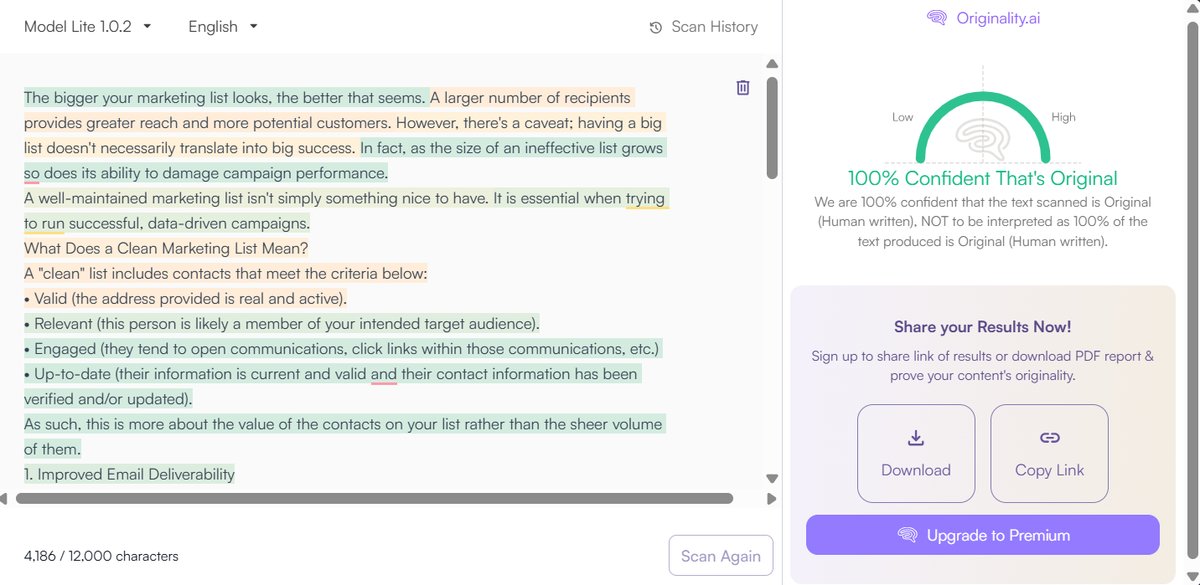
Blog Post: Proofademic Detection Results
Creative Writing: Originality.ai Detection Results
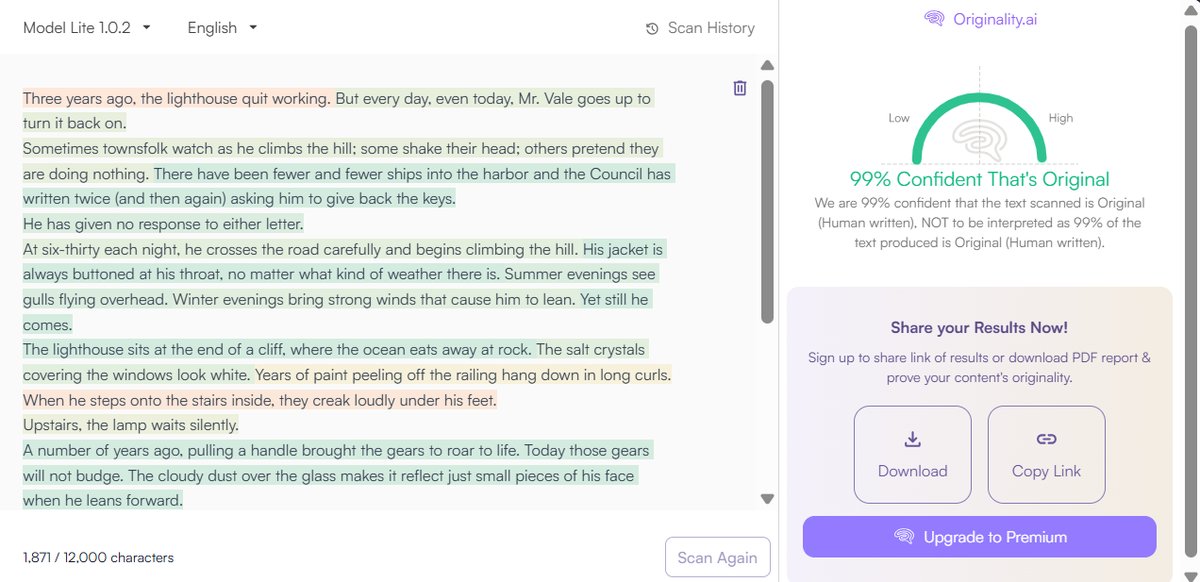
Creative Writing: Proofademic Detection Results
How We Calculated the Results of Walter AI:
Results were calculated using the same methodology applied to Writify AI, covering both the detection evasion score and the 30-point quality rubric.
Walter Quality Rubric Breakdown
| Rubric Criteria | Academic Essay Score | Blog Post Score | Creative Writing Score |
|---|---|---|---|
| Readability and Natural Flow | 3/5 | 3/5 | 3/5 |
| Accuracy and Meaning Preservation | 4/5 | 4/5 | 3/5 |
| Coherence and Logic | 4/5 | 4/5 | 4/5 |
| Grammar and Mechanics | 3/5 | 3/5 | 4/5 |
| Word Choice and Vocabulary Appropriateness | 3/5 | 3/5 | 3/5 |
| Tone Consistency | 4/5 | 4/5 | 3/5 |
| Total Score | 21 / 30 (70%) | 21 / 30 (70%) | 20 / 30 (67%) |
Average Quality Score= (21+21+20) divided by 3 = 20.6 / 30 (69%)
Detection Evasion Scorecard
- Average AI detection percentage calculated across all tests
- Converted to evasion success: 100% minus average detection %
- Example: 16.5% AI detected = 83.5% evasion success
Overall Performance Score
| Metric | Score | Calculation |
|---|---|---|
| Average AI Detection | 16.5% | From detection tests |
| Detection Evasion Score | 83.5% | 100% - 16.5% |
| Quality Score | 69% | (20.6 / 30) × 100 |
| Overall Performance Score | 76.25% | (83.5 + 69)÷ 2 |
Detection Evasion Comparison:
| Use Case | Detector | Writify Score | Walter Score | Winner |
|---|---|---|---|---|
| Academic Essay | Originality.ai | 100% AI | 51% AI | Walter ✅ |
| Academic Essay | Proofademic | 96% AI | 17% AI | Walter ✅ |
| Blog Post | Originality.ai | 100% AI | 0% AI | Walter ✅ |
| Blog Post | Proofademic | 99% AI | 15% AI | Walter ✅ |
| Creative Writing | Originality.ai | 100% AI | 1% AI | Walter ✅ |
| Creative Writing | Proofademic | 92% AI | 15% AI | Walter ✅ |
| Average | Both | 97.8% AI | 16.5% AI | Walter ✅ |
Quality Comparison:
| Use Case | Writify Quality | Walter Quality | Winner |
|---|---|---|---|
| Academic Essay | 20 / 30 (67%) | 21 / 30 (70%) | Both ✅ |
| Blog Post | 24 / 30 (80%) | 21 / 30 (70%) | Both ✅ |
| Creative Writing | 22 / 30 (73%) | 20 / 30 (67%) | Both ✅ |
| Average | 22 / 30 (73.3%) | 20.6 / 30 (69%) | Both ✅ |
Comparison Analysis
- Walter achieved 83.5% detection evasion compared to Writify’s 2.2%, a difference of over 81% across the same inputs and the same detectors
- On the blog post, Walter scored 0% AI on Originality.ai and 15% on Proofademic, making it the strongest result across all six tests from both tools
- Quality scores were close and comparable. The only difference being Writify has an average quality score of 73.3% versus Walter’s 69%.
- The consistency in quality throughout the three different content types for Walter (70%, 70%, 67%) is also notable. While Writify had some variation in its quality (67%, 80%, 73%)
- Writify produces high-quality, polished writing. But a humanizer has one core job: remove the AI signature from the content. Producing high-quality content that still identifies as 97.8% AI to two independent detectors is not humanizing, but rather reformatting. Ultimately, no amount of quality can overcome the fact that each time a student submits work, there will be an identifiable AI signature present.
- Walter provides both competitive quality and authentic detection evasion. It is the combination of these features that provides a humanizer with value to the student.
Overall Performance
| Metric | Netus | Walter |
|---|---|---|
| Detection Evasion Score | 2.2% | 83.5% |
| Quality Score | 73.3% | 69% |
| Overall Score | 37.75% | 76.25% |
Winner: Walter AI
- Detection evasion and quality were weighted equally at 50% each
- Writify scored higher on quality (73.3% vs 69%), but that advantage means nothing when its detection evasion sits at just 2.2%
- A humanizer that improves readability but leaves AI signals fully intact does not serve the student who needs it most
- Walter scored 76.25% overall versus Writify’s 37.75%, and the gap is driven entirely by doing what a humanizer is supposed to do
- Overall winner: Walter Writes
Can Writify AI Bypass Turnitin or GPTZero? What’s Realistic in 2026
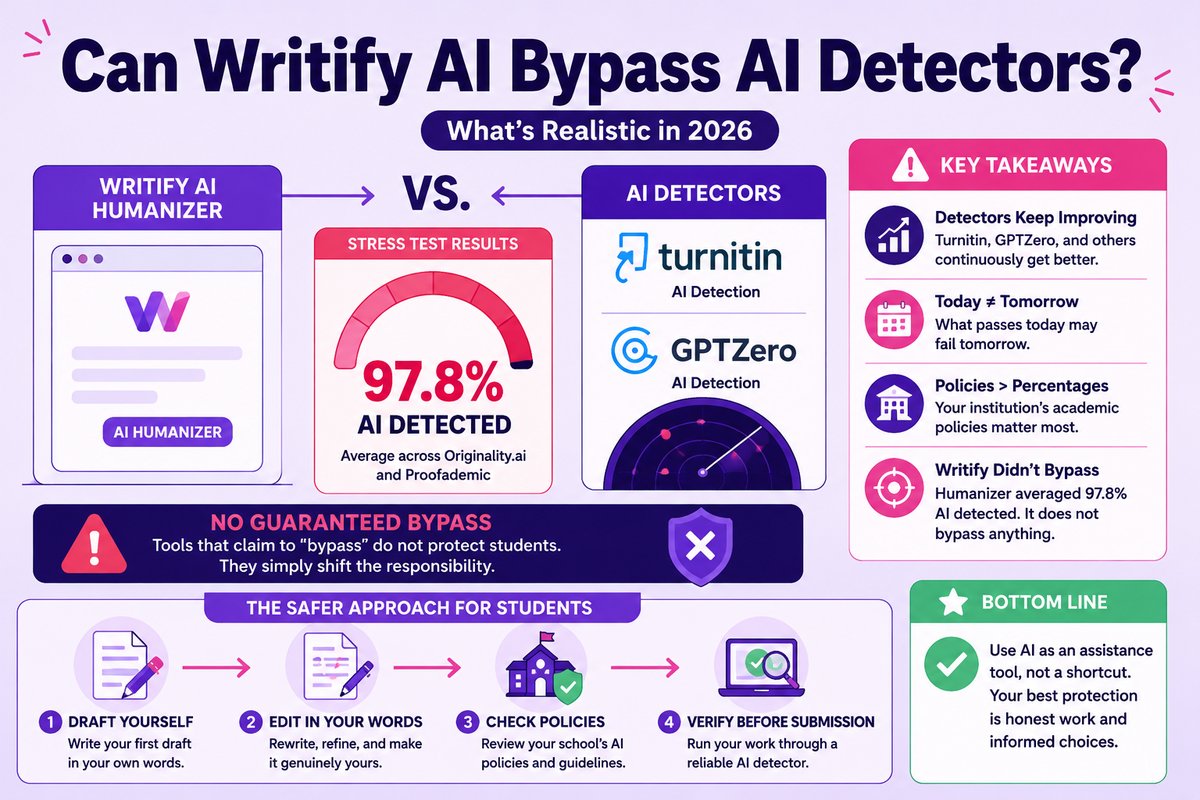
Many tools in this space claim to be able to “bypass” AI detectors. This description is worth pushing back on.
The developers continuously improve AI detectors like Turnitin and GPTZero. As such, what passes today will likely fail tomorrow. Moreover, the academic policies of your institution matter much more than any detection percentage. Tools that offer a “bypass” do not protect students. They simply shift the responsibility.
As for Writify specifically, our stress test results make this straightforward. The humanizer averaged 97.8% AI detected across Originality.ai and Proofademic. It does not bypass anything.
A safe way for students to protect themselves is not to try to get a clean detection score. It is to use AI as an assistance tool when you write your draft. Simply write your first draft, then rewrite in your own words, and be sure you have reviewed your school’s policies. Before submitting, run your work through a reliable AI detector for students to be able to clearly assess their position relative to the acceptable standards at your institution.
Does Writify AI Require an Account? Privacy + Submission Risk Checklist
One of Writify’s most cited advantages is that it works without signing up. Students can use it for short-term writing projects as long as they do not wish to have to enter their email.
Not requiring student registration also means there will be no written record of student submissions when the project is finished. This means students cannot save drafts or export what they wrote for future reference. If the session expires prior to completion, there will be no ability to retrieve your writing. For students working on a single short assignment, this could actually be beneficial, but for long-term projects, this is extremely limiting.
A few things to consider before copying and pasting content into any of these free web-based applications:
- Do not copy entire drafts of work that have been previously submitted for grading if the application’s policy regarding how they handle the user-submitted data is unclear.
- Refrain from entering any personal identifiable information like your name, ID number or any institutional identifiers.
- Avoid posting unpublished research or any other confidential and sensitive material which could be stored on a third-party server.
- Each session will be considered temporary because there is no assurance of retention for either the input or output from sessions.
Although the no-account model is simple to use, using a tool with an actual editor and session history will be much simpler if you plan on using the tool multiple times.
Writify AI Pros and Cons for Students
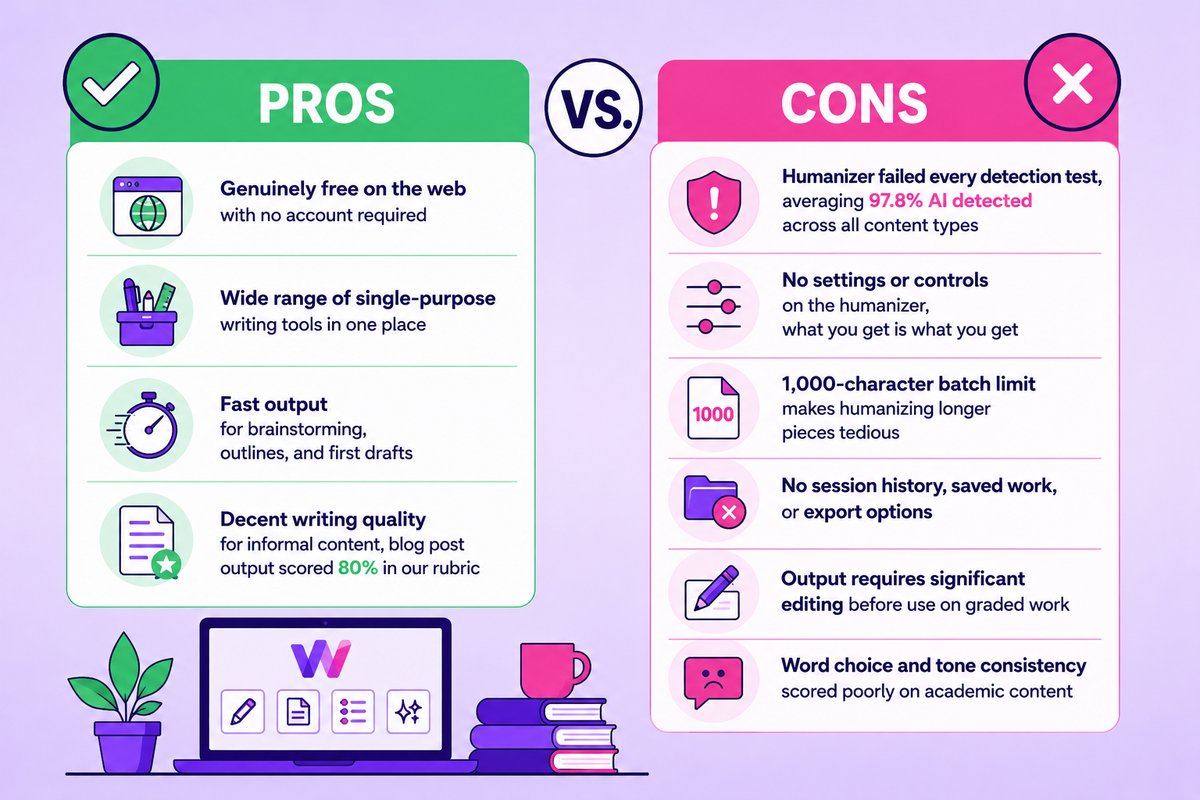
Pros
- Genuinely free on the web with no account required
- Wide range of single-purpose writing tools in one place
- Fast output for brainstorming, outlines, and first drafts
- Decent writing quality for informal content, blog post output scored 80% in our rubric
Cons
- Humanizer failed every detection test, averaging 97.8% AI detected across all content types
- No settings or controls on the humanizer, what you get is what you get
- 1,000-character batch limit makes humanizing longer pieces tedious
- No session history, saved work, or export options
- Output requires significant editing before use on graded work
- Word choice and tone consistency scored poorly on academic content
If You Are One of These Students:
- Time-crunched and need structure fast: Writify works well for outlines and first drafts, just plan to edit
- ESL student polishing clarity: The rewriter tools can help smooth awkward phrasing, though tone consistency is inconsistent
- Research-heavy with citation needs: Higher risk. Writify does not handle citations, and the humanizer will not protect you from detection on dense academic content
Writify AI vs Other Free AI Writing Tools
Writify provides two separate services that include an AI writing tool and an AI humanizer. Below, we will explore some of the top alternative writing tools for both of these services.
AI Writing Tools: Task-by-Task Alternatives
| Task | Alternative Tool | Cost | Best For |
|---|---|---|---|
| Essay outline | ChatGPT | Free | General structure and brainstorming |
| Paragraph generator | Rytr | Free tier available | Short-form content and rewrites |
| Thesis statement | Jasper | Paid | Academic and professional writing |
| Content summarizer | QuillBot | Free tier available | Summarizing and paraphrasing |
| Introduction builder | Copy.ai | Free tier available | Marketing and essay intros |
If you want an in-depth view of the academic comparison of premium AI writing tool options, our Jasper AI review and its alternatives would be a great starting point.
AI Humanizer For Students: Alternatives to Writify AI Humanizer
| Tool | Free or Paid | Best For |
|---|---|---|
| Walter Writes | Paid | Students needing quality humanization with detection evasion |
| Undetectable AI | Paid | Heavy humanization for long-form content |
| QuillBot | Paid | Light paraphrasing and readability |
| HIX Bypass | Paid | Academic content humanization |
Why Walter Writes Is the Better Choice for AI Humanization
- Detection evasion that actually works: Our stress test proved Walter Writes evaded detection and scored 83.5% versus Writify at just 2.2% using the exact same input and detector.
- Competitive quality with real results: On our quality rubric, Walter was able to achieve an average of 69% while achieving higher detection avoidance than Writify.
- Built for students: Walter combines humanization, detection checking and an editor-first flow in one place, designed around how students actually submit work
- Consistent across content types: Walter received scores of 70%, 70%, and 67% across academic, blog, and creative content submissions, indicating reliable output regardless of what you are working on.
Check out some of the top AI humanizer options in our round-up of the best AI humanizer tools. Or just head on over to the Walter Writes AI humanizer for students to use the tool now!
Verdict: Is Writify AI Worth It in 2026?
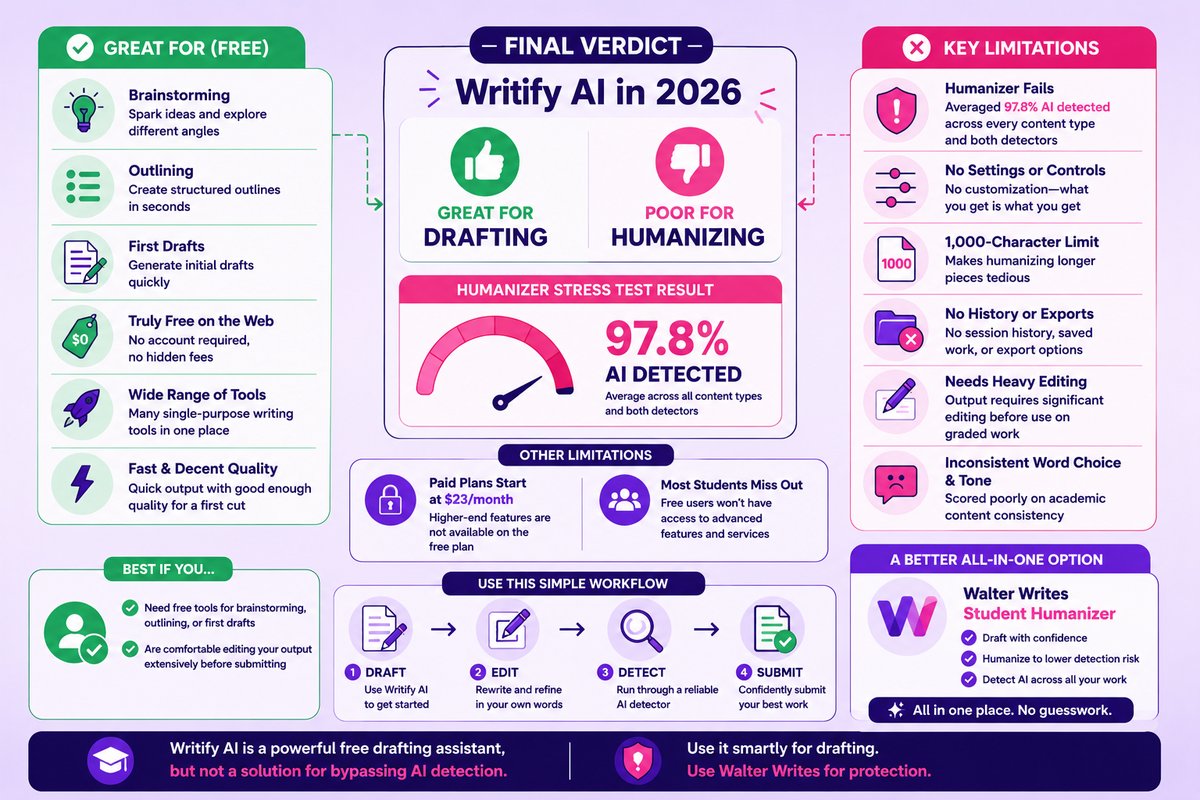
Writify AI is an excellent no-cost resource for students looking to create some form or another of an initial draft. It provides many types of writing help, for free to use, and the quality of the generated output is good enough to serve as a first cut or initial draft.
But there are two limitations which are significant for students.
- The first limitation is that while Writify has a humanizer feature, it fails in its purpose as a humanizer. In our stress test, it achieved an average of 97.8% AI-detection across every content type and both detectors. So, if you want to reduce your AI flag rate, using Writify will not be worthwhile.
- The second limitation is that the paid plans begin at $23/month. The majority of students who rely on the free version will never have access to the higher-end services available via a paid subscription.
If you need some good, free writing tools to help with brainstorming, outlining or first draft writing, and you are comfortable editing your output extensively before turning it in, then this could be worth trying.
If you want an actual humanizer that helps lower detection risk or a reliable grading workflow for all of your work, then this is not what you’re looking for.
The Walter Writes student humanizer is specifically designed for those who would like to have the capability of drafting, humanizing, and detecting AI in one area without having to do the guesswork.
Frequently Asked Questions
What Is Writify AI and How Does It Work?
Writify AI is a free web-based tool hub that offers individual AI writing utilities, including essay outlines, paragraph rewriters, thesis generators, and a humanizer tool. Each tool works independently, and most require no account to use.
Is Writify AI Actually Free to Use?
Writify’s base web tools are free of charge and do not require an account. The other side of that coin is that there are paid subscriptions starting from $23/month, which include many premium features such as real-time search, keyword research and higher credit limits.
How Does Writify AI Humanize Text?
When you run your AI-generated text through the humanizer, it changes your wording and organization in a way that makes it appear much more human. But based on our testing, we found that the output still averaged 97.8% AI across two separate independent detection engines, which shows it does not eliminate the presence of AI sufficiently.
Can Writify AI Bypass AI Detectors Like Turnitin or GPTZero?
No. According to our stress test, Writify’s humanizer was unsuccessful at each and every one of the tests provided by both Originality.ai and Proofademic. Beyond that, algorithm updates occur regularly, and there isn’t a single tool that could provide an assurance of reliable bypass. What you should be concerned with most is your institution’s academic integrity policy.
What Are the Best Features of Writify AI for Students?
The free writing tools are the strongest offering for students. Essay outlines, introduction builders, and paragraph rewriters are fast and accessible without any sign-up. The blog post humanizer output also scored 80% on our quality rubric, making it useful for informal content.
How Accurate Is the Content Writify AI Generates?
Writify AI’s average output quality was 73.3% in terms of all aspects tested by our rubrics. It did well on coherence and logic, but the academic outputs were poor in terms of using appropriate vocabulary and a consistent tone. Always double-check your facts and citations before you submit any paper.
What Are the Pros and Cons of Writify AI?
The main pros are: It is free to use, no need to create an account, and it provides many different types of writing tools. The main cons are: It has a humanizer that failed detection testing, limits your output to 1000 characters at one time, there is no record or history of sessions, and charged monthly $23.00 to get advanced features.
How Does Writify AI Compare to Other Free AI Writing Tools?
Writify is competitive in terms of the number of writing tools offered to users, along with free accessibility. It falls short based on the metrics for humanization, detection evasion, and maintaining a continuous flow of your work through the workflow process. Tools like Walter Writes provide similar quality writing and far outperform Writify in detection evasion, by achieving 83.5% evasion compared to Writify’s 2.2% evasion in our head-to-head comparison.
Does Writify AI Require You to Create an Account?
Most of the free web-based writing tools provided by Writify do not require creating an account. The trade-off is that there is no saved history, no export options, and no way to recover work after closing the session.
Is Writify AI Safe to Use for School Assignments?
The writing tools are safe for brainstorming and drafting, provided you edit the output and verify any factual claims. The humanizer is not reliable for reducing AI detection risk on graded work. Always check your institution’s policy on AI-assisted writing before submitting anything.