





Ever wondered why your essay suddenly gets flagged as AI? It can be stressful for students, marketers, and even researchers who know their work is genuine but still see that dreaded “AI detected” label. The truth is that AI detectors flag content when it looks too predictable, formulaic, or machine like, even if you wrote it yourself.
Quick Answer: Content gets flagged for AI when detectors spot patterns like low burstiness, repetitive sentence structures, or vocabulary that matches the training style of large language models. False positives happen often, which is why tools like Walter Writes AI Humanizer are becoming essential for anyone who wants their work to sound human and pass AI checks.
Why Was My Essay Flagged as AI?
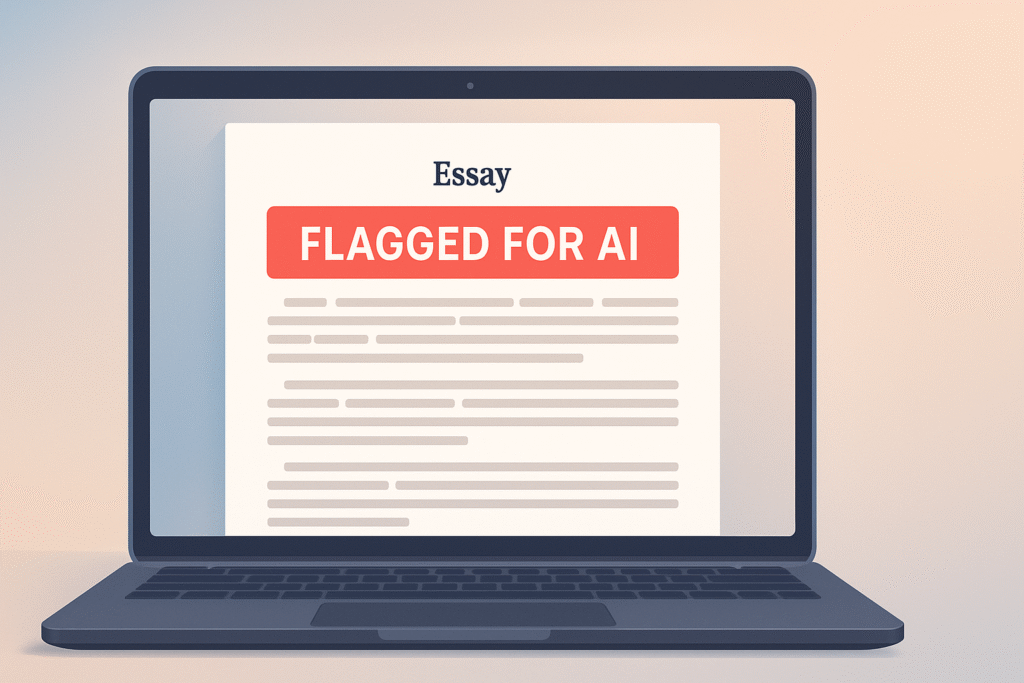
The most common search today is “why is my essay flagged as AI”, and with good reason. Platforms like Turnitin and GPTZero scan millions of assignments and flag essays when they detect writing patterns typical of AI generated text. That includes sentences that are too evenly structured, transitions that feel mechanical, and overuse of generic phrases.
Students often panic when they see Turnitin flagged me for AI or GPTZero flagged my essay. The reality is that these systems are far from perfect. Even polished human essays can get caught. Walter Writes for Students explains why false positives are common and how to respond calmly.
If you ever receive a flag, the first step is to review the feedback and check your draft history. Keep your notes, earlier drafts, and research references ready. This makes it easier to prove originality to your instructor. Universities are beginning to acknowledge that AI detection false positives happen regularly (Vanderbilt University guidance).
For added safety, students often run their essays through a humanizer. A quick pass with Walter Writes AI Humanizer can smooth out robotic phrasing and ensure your essay feels natural before resubmission.
How Do AI Detectors Work?
Understanding how AI detectors work makes it easier to see why content gets flagged. Most detectors use two main signals:
- Perplexity: how surprising or unpredictable each word choice is. AI writing tends to be more predictable.
- Burstiness: the variation between long and short sentences. Human writing is uneven, while AI often stays uniform.
Detectors like GPTZero, Copyleaks, and Originality AI combine these signals with model training to decide whether something is AI generated writing. While powerful, they are not flawless. Even Grammarly’s explainer on AI detectors admits that polished human essays can sometimes be flagged unfairly.
If you are aiming to make your content undetectable, the key is to introduce natural rhythm, variety, and personal insight. This is where Walter Writes Humanizer really shines. It adjusts sentence flow, varies transitions, and adds human like rhythm while keeping your meaning intact.
For a deeper dive into methods and testing, you can also read our Best AI Detector Tools review or see how AI humanizers bypass AI detectors in practice at this guide.
What Triggers AI Detection?
When people ask what triggers AI detection, the answer comes down to patterns. Detectors look for signals that suggest machine style writing:
- Low burstiness: every sentence is about the same length.
- Predictable phrasing: words follow statistical patterns found in AI training data.
- Repetition: reusing certain connectors like “furthermore,” “in addition,” or “overall.”
- Generic tone: lack of personal examples, emotion, or story.
If your essay feels too polished or mechanical, detectors may flag it with a high AI percentage. This does not mean the content is fake, just that the algorithm sees it as statistically similar to AI writing.
Writers who want to reduce this risk often use the Undetectable AI Content Guide, which shows practical steps like varying sentence rhythm, adding personal reflection, and breaking up uniform patterns. Walter Writes also helps rephrase flagged text so it reads more like authentic human writing.
Does Turnitin Really Detect AI Writing?
A huge concern for students is does Turnitin detect AI writing. Turnitin has integrated its own AI writing detector into the plagiarism checker, which means essays can get two types of flags: one for copied text and one for AI generated writing.
If you see Turnitin flagged me for AI, remember that their system relies on the same signals of perplexity and burstiness. This means even genuine human writing can sometimes be misclassified. Universities themselves are cautious: some, like Vanderbilt, have scaled back reliance on Turnitin’s AI checker because of false positives.
To handle this situation, students are advised to:
- Save drafts to show evidence of a natural writing process.
- Provide citations and sources to strengthen originality.
- Recheck content with a humanizer tool before submitting.
The Best AI Humanizer for Turnitin article explains how students use Walter Writes to smooth flagged essays without losing meaning. It is not about tricking the system but making your work reflect your authentic style.
GPTZero, Copyleaks and Originality AI: Why Do They Flag Human Writing?
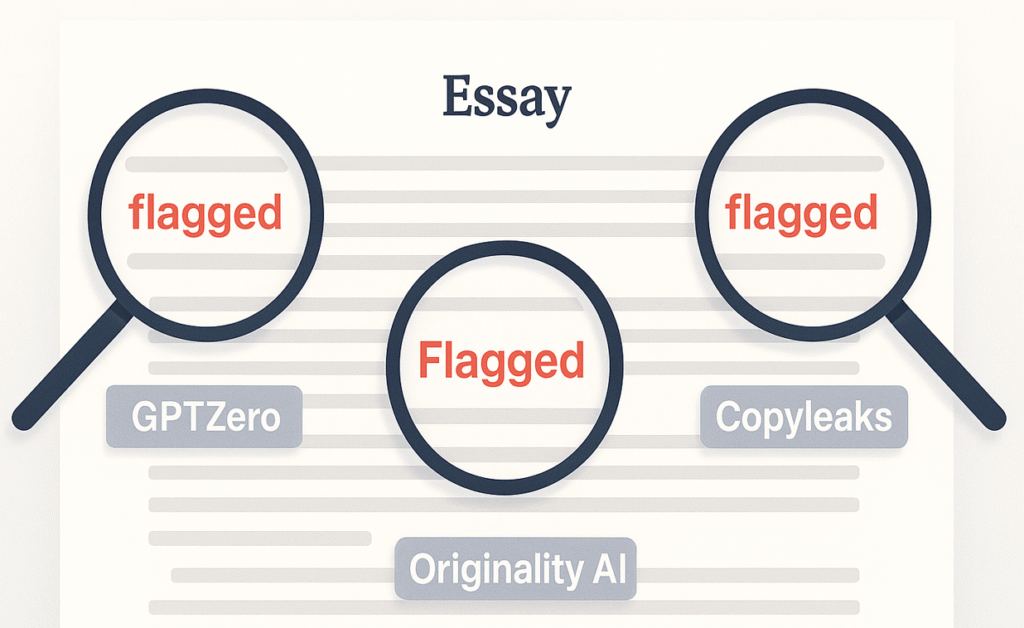
Tools like GPTZero, Copyleaks, and Originality AI are widely used by schools and publishers. A common frustration is when GPTZero flags human writing or Copyleaks AI detection shows high AI probability on a carefully written essay.
Why does this happen? Because these detectors are designed to err on the side of caution. If your work matches their pattern profiles too closely, they assume AI involvement. This leads to AI detection false positives where completely human content is flagged.
For students and professionals, this can be discouraging. The best response is to run your content through multiple tools and then refine the flagged parts. Walter Writes Review of GPTZero and Copyleaks Review both show side by side tests where text went from 100 percent AI to 100 percent human after being humanized.
Originality AI works in a similar way. Many writers use Walter Writes AI Humanizer as the final pass before submitting, ensuring essays, blogs, and research papers sound more human and pass these detectors consistently.
False Positives in AI Detection and How to Respond
A common frustration is when human writing still gets flagged. These are called false positives in AI detection. They happen when your essay or article accidentally matches the rhythm and phrasing detectors associate with AI writing. For example, if every sentence in a paragraph is neatly structured and transitions are repetitive, it can look machine written even if you wrote it yourself.
When this happens the best approach is not to panic. Save your drafts, notes, and outlines because they prove your thought process. If you are a student, you can share this evidence with your teacher. Universities know that AI detection mistakes are real and have published guidelines encouraging educators to consider supporting evidence before making decisions.
That documentation matters especially when you’re using paraphrasing as evidence, instructors want to see that the paraphrase reflects genuine engagement with the source, not just a surface rewrite.
Many writers also run their work through a tool like Walter Writes AI Humanizer to smooth out mechanical phrasing. Combined with version history and citations, this makes it easier to show your work is authentic and original.
How to Avoid Getting Flagged as AI
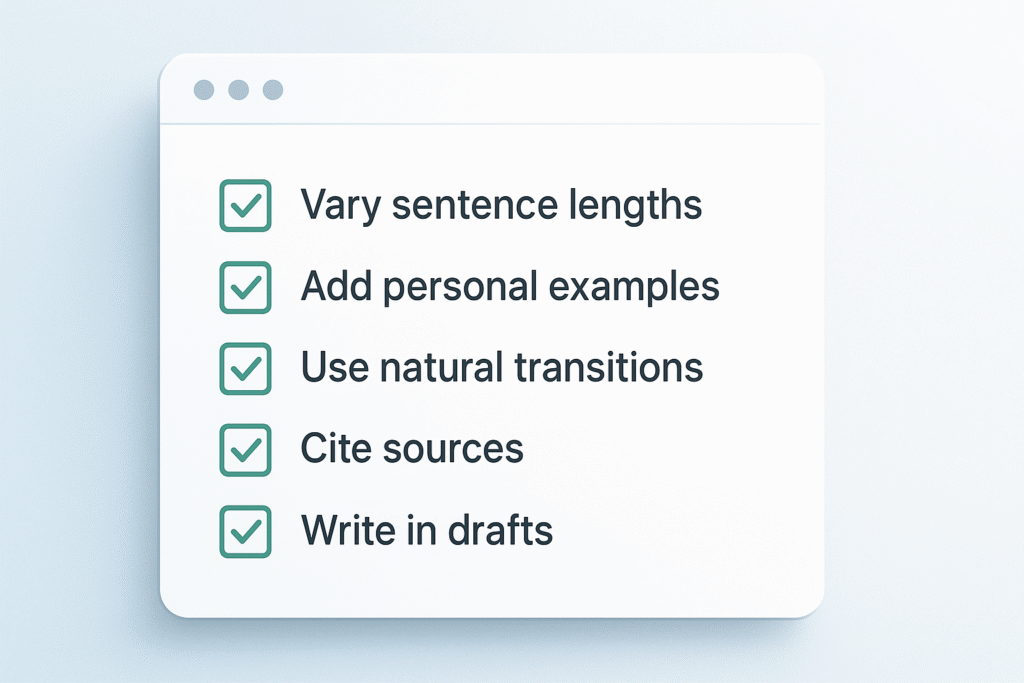
If you are asking how to avoid AI detection in writing, the answer is not about tricking detectors but about making your content sound naturally human. Detectors are designed to look for robotic patterns. By breaking those patterns, you reduce the risk of being flagged. Here are a few steps:
- Vary sentence lengths to increase burstiness
- Add personal examples or opinions to break formulaic flow
- Use natural transitions instead of repeating the same connectors
- Cite sources clearly and consistently
- Write in drafts and edit rather than producing one polished block of text
Students who want to make their writing undetectable often explore guides like How AI Humanizers Bypass AI Detectors and Walter Writes for Students. These resources show how to rewrite AI text to pass detectors while keeping the original meaning intact.
Writers in marketing and blogging also follow similar steps, relying on the Undetectable AI Content Guide to ensure long form content passes tools like GPTZero, Copyleaks, and Turnitin.
Real Tests With AI Detectors
The best way to see how detectors behave is to test them directly. In our own experiments we took a short essay and ran it through GPTZero, Copyleaks, and Originality AI. All three flagged the original text as AI written. After running the same essay through Walter Writes AI Humanizer, the results came back as fully human.
This shows how much difference small changes in rhythm and phrasing can make. For students, this means you can take a flagged essay, adjust it with humanisation, and submit with confidence. For content creators, it shows why pre checking your work matters before publishing online.
You can find detailed comparisons in our Best AI Detector Tools review, which breaks down accuracy and limitations for each platform.
Further read: Brightspace review
Frequently Asked Questions About Content Getting Flagged for AI in 2025
Why was my essay flagged as AI
Essays are flagged when detectors see predictable structure, uniform sentence length, or phrasing that resembles AI generated text. Even genuine writing can be flagged if it feels too formulaic. Using Walter Writes AI Humanizer helps reduce this risk.
Why was my essay flagged as AI
Essays are flagged when detectors see predictable structure, uniform sentence length, or phrasing that resembles AI generated text. Even genuine writing can be flagged if it feels too formulaic. Using Walter Writes AI Humanizer helps reduce this risk.
Can AI detectors be wrong
Yes, detectors can misclassify human writing as AI. These false positives are a known issue, especially for non native writers who use simple sentence structures. That is why it is important to keep drafts and evidence of your process.
How do I appeal an AI detection result
If your essay is flagged, save your drafts, research notes, and outlines, then share them with your instructor. Many universities, including those that use Turnitin, encourage teachers to look at supporting material before making decisions. Guidance from Vanderbilt University shows institutions are aware of the limitations.
Does Turnitin detect ChatGPT text
Turnitin claims to detect ChatGPT text using its AI writing detection feature, but it is not flawless. Reports show both false positives and missed AI content. Students often check essays with Best AI Humanizer for Turnitin before submitting.
How do I humanise AI writing without losing my voice
To humanise AI writing while keeping your style, focus on varying sentence rhythm, adding personal examples, and adjusting transitions. Tools like Walter Writes for Students make this easier by rephrasing text without changing meaning.
Avoiding AI Detection: Key Takeaways for 2025
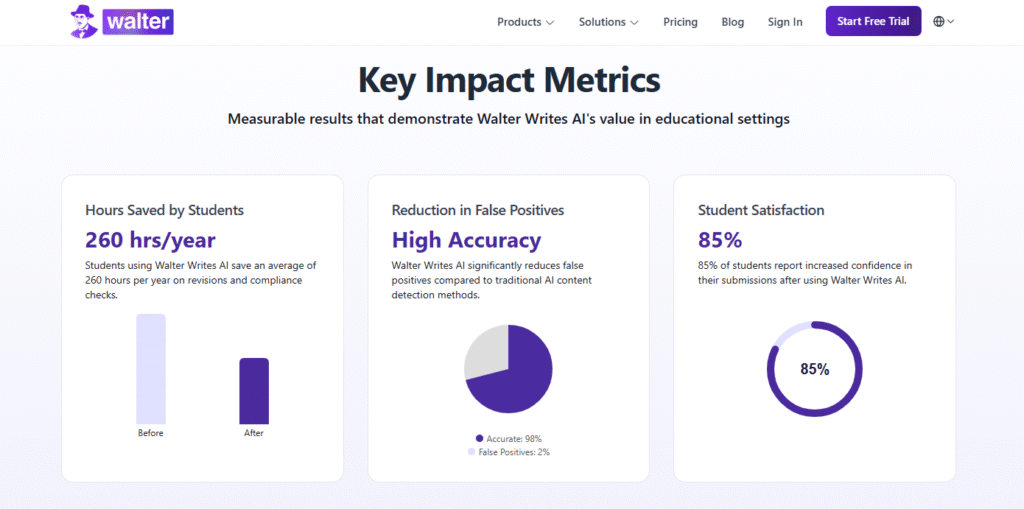
Being flagged for AI does not always mean your writing is fake. It usually means detectors found patterns that looked machine generated. These systems are helpful but far from perfect, which is why false positives are common.
The best way forward is simple. Write in drafts, use natural variety in sentence flow, and keep your process documented. Before submitting important work, run it through a humanizer like Walter Writes to smooth out robotic phrasing. This combination of authenticity and refinement ensures your content feels natural, avoids unnecessary flags, and gives you confidence when submitting essays, research papers, or online content.
If you want to explore more, check Walter Writes Undetectable AI Content Guide and the detailed Best AI Detector Tools review. Both will help you understand detection better and stay ahead of the curve in 2025.
Paraphrasing tools like QuillBot leave their own fingerprint that detectors recognize. See Does QuillBot Pass Turnitin? for our 2026 testing data across all QuillBot modes.
Curious what professors actually look at when grading? Read How Do Professors Detect AI Writing in 2026? for the manual signals faculty are trained on.
For developers and platforms that need to add AI detection to their own workflows, see Walter’s AI Detector API with multi-model detection support.