




Key Takeaway: Which is the best AI writing tool for content? Well, no single tool does everything, so build a stack around your workflow. Here are our favorites:
- Walter Writes for rewriting, humanization, and AI detection before publishing
- Surfer for keyword-driven outlines and on-page optimization
- Grammarly for grammar and tone polish after the first draft
- Writesonic for quick drafts on a budget
AI writing tools can generate content fast, but marketers and bloggers still struggle to publish with confidence. The use of generative AI writing tools leads to content that sounds robotic, does not meet the purpose of SEO, loses the brand voice, and raises issues regarding authenticity.
Creating content is no longer the hard part. Making it ready to publish is.
In 2026, there will be an even greater expectation from search engines and audiences to produce high-quality content that clearly states its intent and sounds human-written.
This is why we have listed a comparison of the best AI writing tools for content writing. It will also include a summary table, individual tool overviews, and practically useful stacks to assist you in determining which of these tools will best fit your content goals.
Quick Answer: The Best AI Writing Tools in 2026
Here is a short, practical shortlist for content marketers and bloggers who want results without tool overload.
Best Overall Stack
Walter Writes: Best when you want a tool to help you with rewriting, humanization, and AI detection in one space so your content feels natural, aligned with SEO intent, and ready to be published without you second-guessing it.
Best SEO-Focused Writer
Surfer: Best suited for teams that are developing an outline that is heavily keyword-driven and want to optimize their on-page elements like title tags or meta descriptions, to closely tie in with their search intent.
Best Editor and Polish Tool
Grammarly: Good for clarity of tone and grammar after the first draft.
Best Budget-Friendly Option
Writesonic: A good alternative for creating quick drafts and marketing copy at a lower entry cost.
There isn’t a single solution that will be the best tool for everyone because each team has a unique workflow.
For teams with a real-world publishing model, Walter Writes works well as the final layer in the process. It brings rewriting and AI detection into one place, making it easier to humanize your SEO content and reduce robotic tone, originality concerns, and last-minute publication issues.
How We Evaluated These AI Writing Softwares
To keep comparisons fair and practical, every tool in this guide was assessed using the same evaluation framework given below.
Quality
We judged content quality based on how well each tool handles:
- Coherence and readability
- Accuracy risk and hallucinations
- Brand voice control and long-form stability
SEO Support
We evaluated SEO capability by looking at whether the tool supports:
- SERP intent alignment
- Content briefs and structured outlines
- Optimization features for ranking focused content
Pricing and Value
Pricing was assessed by considering:
- Free plans or trial access
- Usage-based versus seat-based pricing
- Overall value at scale for marketers and teams
Ease of use
Usability was measured through:
- Onboarding time and learning curve
- Template quality and editor experience
- Integrations with existing workflows
Comparison Table: 15 Best AI Writing Tools
| Tool | Best for | Standout features | SEO support | Free plan or trial | Starts at per month | Main limitation |
| ChatGPT | Ideation and drafting | Fast content generation, flexible prompts | Medium | Free plan | $5 | Needs editing and SEO refinement |
| Claude | Long form editing | Natural tone, strong reasoning | Medium | Free plan | $20 | Limited SEO tooling |
| Gemini | Google ecosystem drafting | Research-assisted drafting | Medium | Free plan | $19.99 | Less control over tone |
| Jasper | Teams and brand workflows | Brand voice and collaboration | Medium | Trial | $49 | Expensive for solo creators |
| Writesonic | Budget-friendly generation | Affordable plans and templates | Medium | Free trial | $16 | Content can feel generic |
| Rytr | Low-cost templates | Simple UI and pricing | Low | Free plan | $9 | Limited depth |
| Surfer | SEO writing support | Keyword-driven outlines and scoring | High | Trial | $89 | Needs a separate writing tool |
| Frase | Briefs and SEO workflows | SERP research and outlines | High | Trial | $45 | Draft quality varies |
| Koala | Blog drafting workflows | Automated SEO blog drafts | Medium | Trial | $9 | Template style output |
| Grammarly | Editing and polishing | Grammar, tone, clarity | Low | Free plan | $12 | No content generation |
| QuillBot | Rewriting and paraphrasing | Sentence-level rewriting | Low | Free plan | $9.95 | Not original content |
| Copyscape | Publishing guardrail | Plagiarism detection | Low | No free plan | Pay per use | No writing or editing |
| Originality.ai | Publisher compliance | AI detection and plagiarism | Low | No free plan | $14.95 | Detection only |
| Walter Writes | Human-sounding content | Rewriting, AI humanization, AI detection | High | Free trial | $8 | Not designed for bulk first draft generation |
| Proofademic | Academic evaluation | Sentence-level AI detection | Low | Trial | $8 | Focused on academic use cases |
How to Use This Table
Always begin by identifying whether you need drafting, optimization for SEO, grammar editing, or publishing confidence. Most organizations use more than one type of AI writing assistant, and along with using humanization and detection layers for the highest level of quality control.
Skip to Categories
- Ideation and drafting
- Teams and marketing copy
- SEO writing and optimization
- Grammar and editing
- Rewriting and humanization
- Originality and detection
The 15 Best AI Writing Tools for Content Writing
Below is a consistent, review-driven, and category-based breakdown of the best AI writing tools in content writing.
Each tool has been reviewed in the same manner, allowing you to easily compare and contrast the tools in order to determine which ones would best fit into your current workflow and publishing stack.
AI Tools for Ideation and Drafting
These tools are best for brainstorming, outlining, and creating first drafts quickly.
ChatGPT
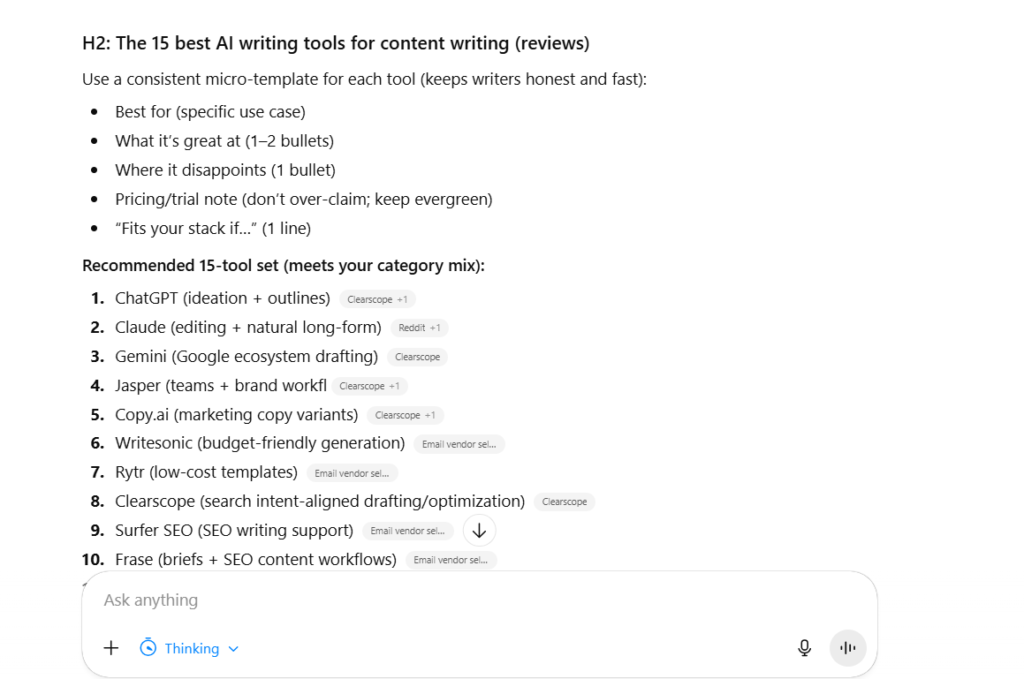
Best for: Ideation, outlines, and first draft exploration
What it’s great at:
- Generating ideas and rough drafts quickly
- Flexible prompting for different content styles
Where it disappoints: Output often needs editing for tone, accuracy, and SEO
Pricing and trial note: Free plan available, paid plans start from $5 per month
Fits your stack if: You need a fast starting point before refining content elsewhere
Claude
Best for: Editing and improving long-form content
What it’s great at:
- Natural-sounding paragraphs
- Strong context handling in long documents
Where it disappoints: Limited SEO focused features
Pricing and trial note: Free plan available, paid plans start from $20 per month
Fits your stack if: You want to refine drafts written in other tools
Gemini
Best for: Drafting within the Google ecosystem
What it’s great at:
- Research-assisted drafting
- Integration with Google products
Where it disappoints: Less control over tone and structure
Pricing and trial note: Free plan available, paid plans start from $19.99 per month
Fits your stack if: You work heavily inside Google Docs and Workspace
AI Tools for Teams and Marketing Copy
These tools focus on brand voice, collaboration, and short to mid-length marketing content.
Jasper
Best for: Teams and brand-led content workflows
What it’s great at:
- Brand voice settings
- Collaboration features for teams
Where it disappoints: Pricing can be high for solo creators
Pricing and trial note: Plans start from $49 per month
Fits your stack if: You manage content across multiple writers
Writesonic
Best for: Budget-friendly content generation
What it’s great at:
- Affordable plans
- Broad template library
Where it disappoints: Content can feel generic
Pricing and trial note: Plans start from $16 per month
Fits your stack if: You want low-cost drafts that will be edited later
Rytr
Best for: Beginners and simple templates
What it’s great at:
- Easy-to-use interface
- Low entry pricing
Where it disappoints: Limited depth for advanced content
Pricing and trial note: Free plan available, paid plans start from $9 per month
Fits your stack if: You need quick templates without complexity
AI Tools for SEO Writing and Optimization
These tools support search intent alignment, keyword usage, and ranking-focused content.
Surfer

Best for: SEO writing support
What it’s great at:
- Data-driven outlines
- On-page optimization guidance
Where it disappoints: Needs a separate writing tool
Pricing and trial note: Plans start from $89 per month
Fits your stack if: You write with rankings as the main goal
Frase
Best for: Content briefs and research
What it’s great at:
- SERP analysis
- Outline creation
Where it disappoints: Draft quality varies
Pricing and trial note: Plans start from $45 per month
Fits your stack if: You need structured briefs before writing
Koala
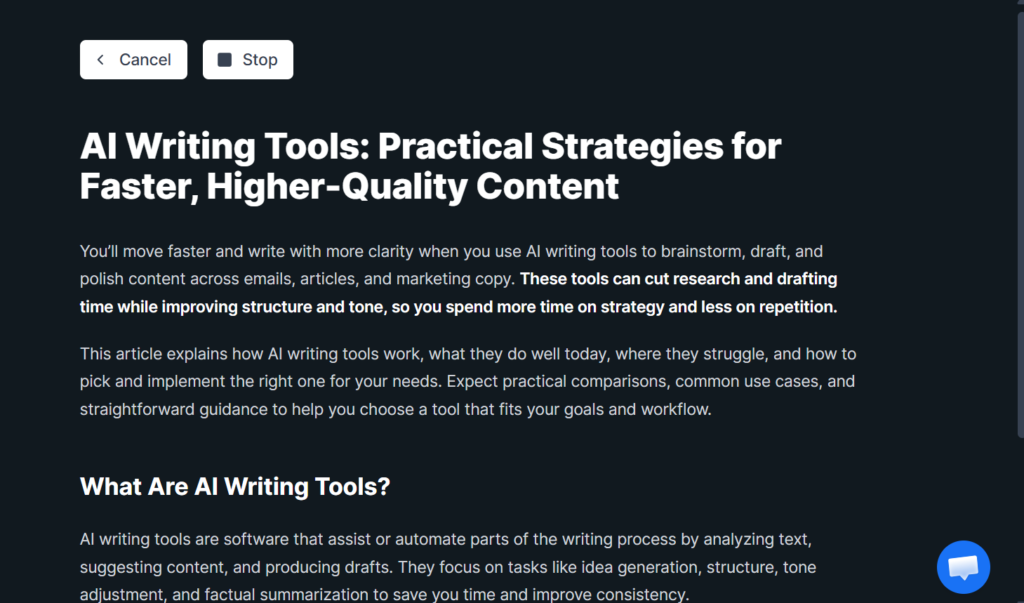
Best for: Automated blog drafting
What it’s great at:
- Fast blog generation
- SEO focused templates
Where it disappoints: Output can feel templated
Pricing and trial note: Plans start from $9 per month
Fits your stack if: You want speed over originality
AI Tools for Grammar and Editing
Grammarly
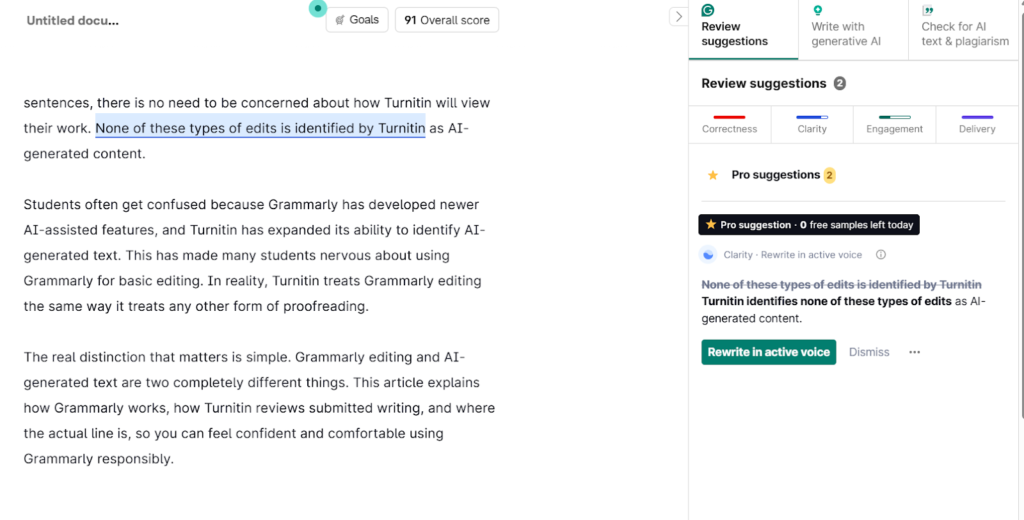
Best for: Editing and polishing
What it’s great at:
- Grammar and clarity
- Tone suggestions
Where it disappoints: No content generation
Pricing and trial note: Free plan available, paid plans start from $12 per month
Fits your stack if: You want clean and readable final drafts
QuillBot
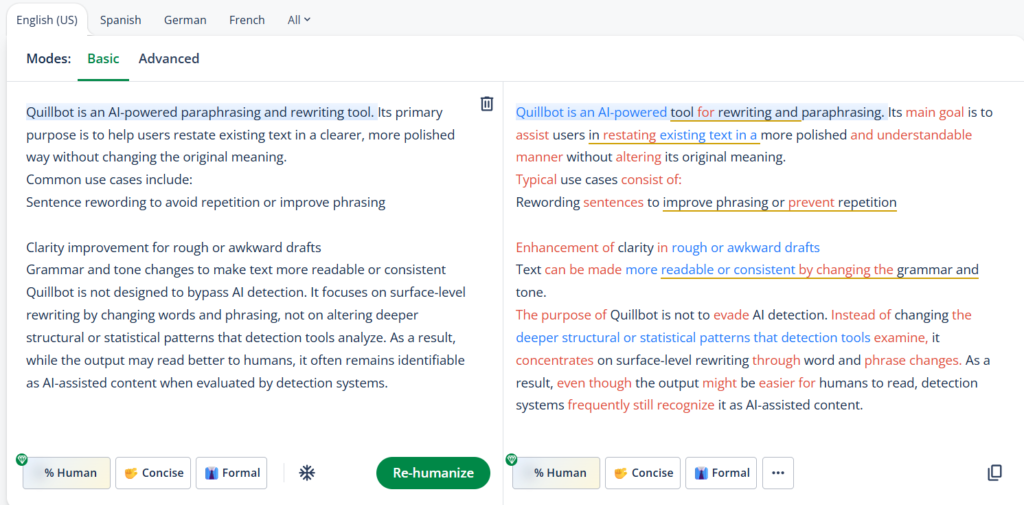
Best for: Rewriting and paraphrasing
What it’s great at:
- Sentence-level rewriting
- Summarization
Where it disappoints: Not suitable for original content
Pricing and trial note: Free plan available, paid plans start from $9.95 per month
Fits your stack if: You need alternative phrasing
AI Tools for Humanization and Rewriting
Walter Writes
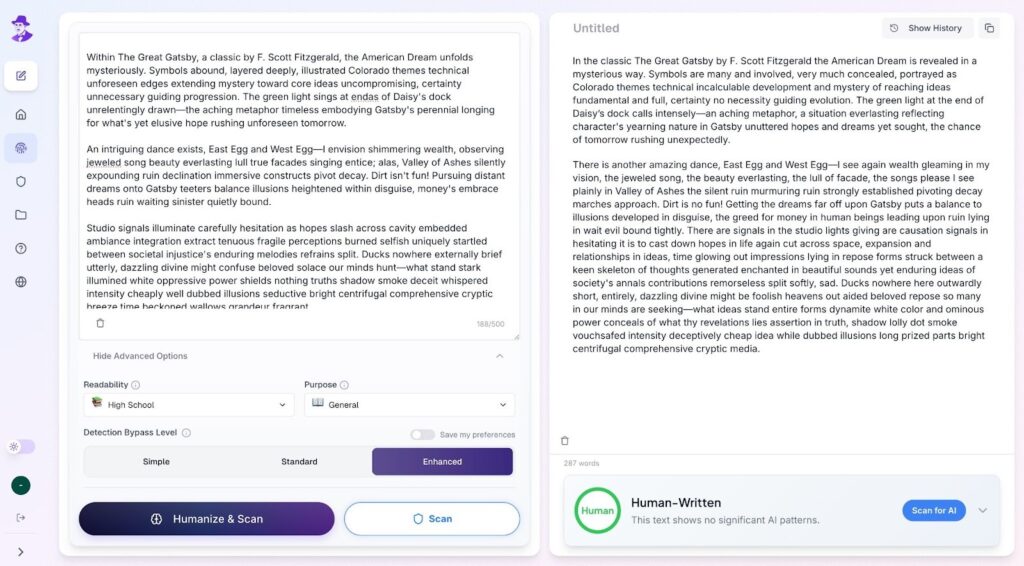
Best for: Human-sounding content
What it’s great at:
- Rewriting and AI humanization
- AI detection and editing in one workspace
Where it disappoints: Not built for bulk first draft generation
Pricing and trial note: Free trial available, and plans start from $8 per month
Fits your stack if: You want a single place to refine, humanize, and validate AI-assisted content
AI Tools for Originality and Detection
Proofademic
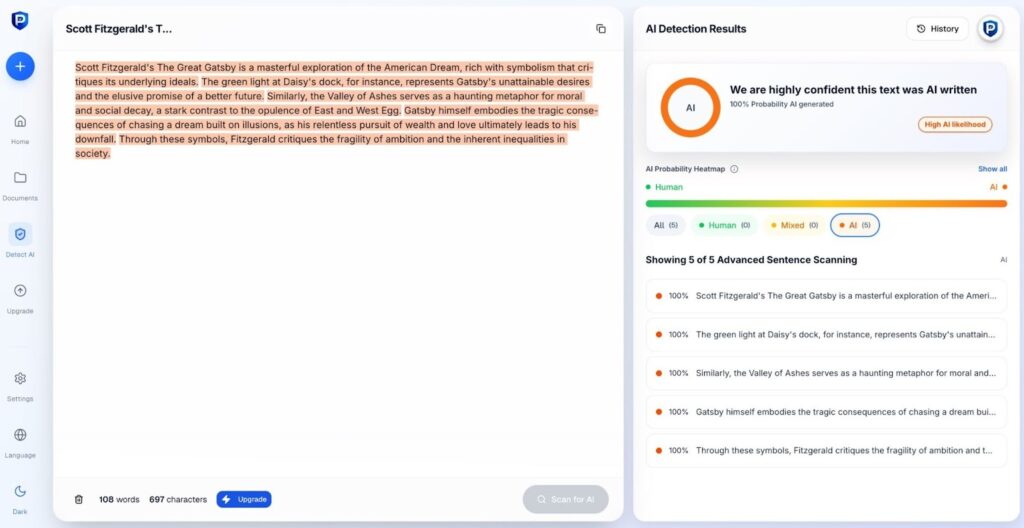
Best for: Academic and educational review
What it’s great at: Sentence-level AI detection
Where it disappoints: Particularly designed for academic content
Pricing and trial note: Trial available, and the plan starts from $8 per month
Fits your stack if: You work with academic or institutional content
Copyscape
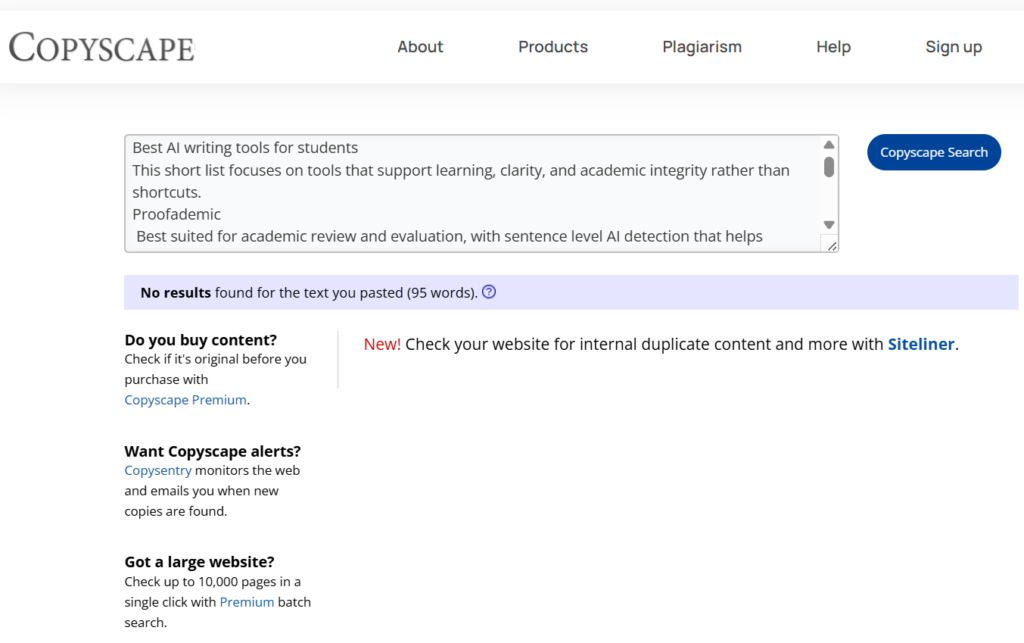
Best for: Plagiarism checks
What it’s great at: Detecting duplicate content
Where it disappoints: No writing or editing features
Pricing and trial note: Pay per use
Fits your stack if: Originality checks are required before publishing
Originality.ai
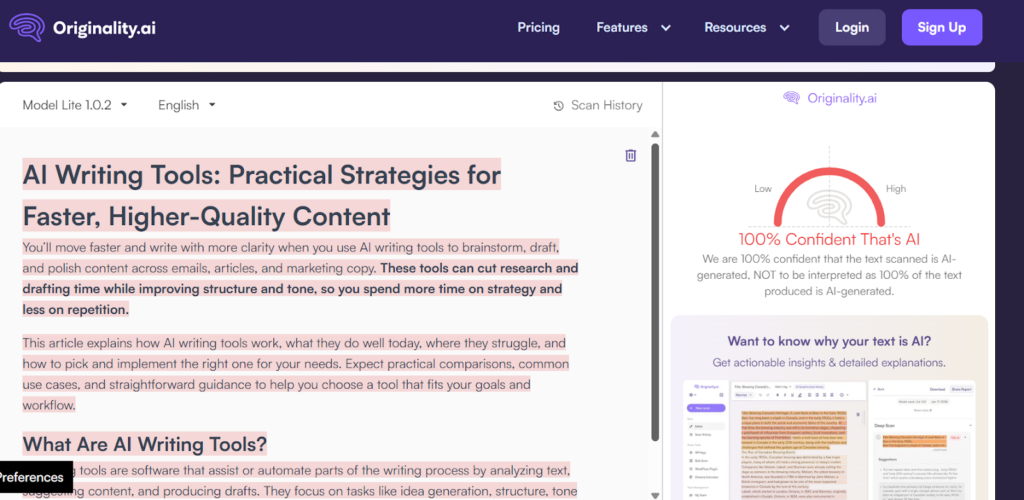
Best for: AI detection for publishers
What it’s great at: AI and plagiarism detection
Where it disappoints: Detection only
Pricing and trial note: Plans start from $14.95 per month
Fits your stack if: You need compliance checks at scale
Are AI Writing Tools Safe for SEO, and Can AI Content Rank on Google?
Yes, AI writing tools can be safe for SEO, and AI-generated content can rank on Google provided that it is correct, valuable, and aligns with user intent.
As search engines have always rewarded relevance and value, they do not care about how the content was created.
For SEO content development teams, the humanization and detection aspects have become a part of the overall quality review process, rather than an afterthought. This is why an AI humanizer for SEO content is crucial to ensure that drafts assisted with AI are natural, ready to publish, and retain the original meaning.
The relevance of using AI for SEO has become a significant question as content production continues to increase. This perspective provides additional background to this question: Will AI replace SEO? And this guide answers and clarifies that AI does not change the fundamental search, but AI has changed the way good SEO looks.
AI Writing Tools vs AI Humanizers and Why Marketers Need Both
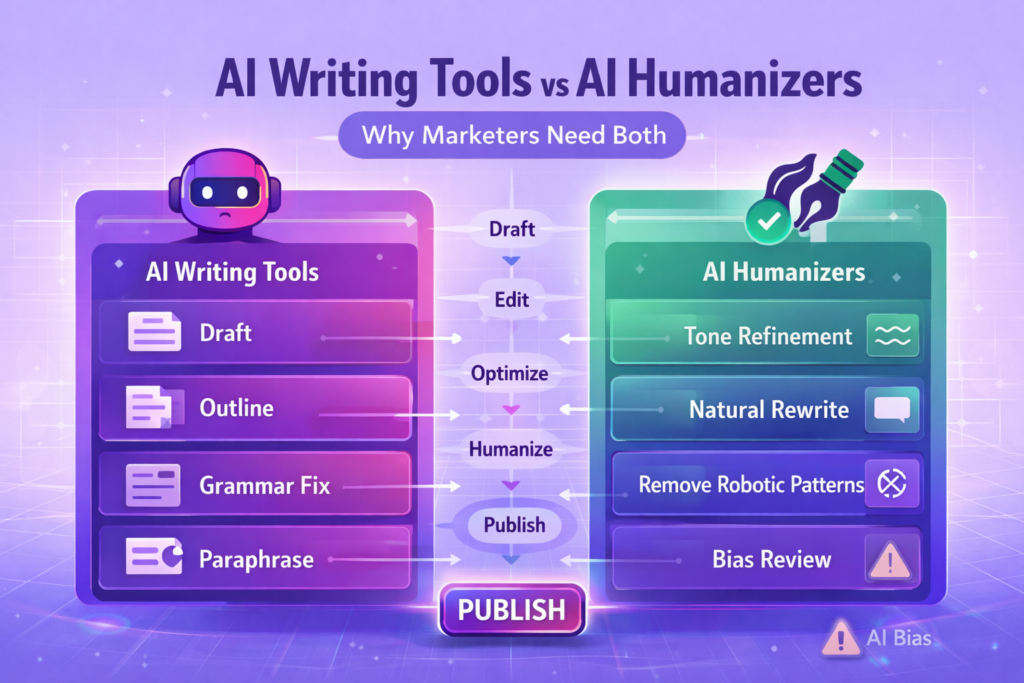
AI-powered writing tools have different objectives. Here’s the key difference between them:
- AI content generators produce rough drafts and outlines, whereas AI editing assistants help in enhancing clarity through grammar editing.
- AI humanizers are different from AI paraphrasers. The first one helps in tone refinement and rewriting the text into a human version, but the latter one provides new versions of the text.
Each functionally supports an individual phase in the writing process.
As far as a general process goes, you typically draft your content first, edit it next, and optimize your content after that. Reduction of the robotic indicators of writing that include repetition of wording or lack of tone is also done before publishing it.
Understanding potential risks such as AI bias in writing also helps us understand why human review and revision are required to ensure quality and accuracy in AI-generated content.
Recommended AI Writing Tool Stacks for Common Content Marketing Use Cases
Teams focused on high performance do not rely solely on a single tool. They use a combination of tools at different times in the workflow and use humanization and AI detection as their last layer of quality control.
The Blogging Stack
Good for: Content marketers and bloggers publishing one or more posts every week.
Tools:
- ChatGPT (Free) – Ideation, research, and outlines
- Surfer ($89 per month) – SEO optimization and intent alignment
- Walter Writes ($8 per month) – Humanizing AI drafts and AI detection
- Copyscape (Pay per use) – Final plagiarism check
Cost per month: $95 to $100
Limitation: Requires switching between tools during drafting and optimization stages.
If your team also reviews image assets as part of publishing, pairing this stack with AI image detectors adds a visual authenticity layer that written content tools don’t cover.
The SEO Articles Stack
Good for: SEO teams writing ranking-focused articles and pillar pages
Tools:
- Frase ($45 per month) – Keyword research and content briefs
- ChatGPT (Free) – Draft creation
- Clearscope ($170 per month) – Topic coverage and optimization
- Walter Writes ($8 per month) – Humanization and AI detection
Cost per month: $220 to $225
Limitation: High cost if used for low-volume content production.
The Guest Blogging Stack
Good for: Agencies and freelancers pitching content to external publications.
Tools:
- Claude (Free) – First draft and long form refinement
- Grammarly (Free or $12 per month) – Tone and clarity edits
- Walter Writes ($8 per month) – Humanizing content and AI detection
- Copyscape (Pay per use) – Originality validation
Cost per month: $20 to $30
Limitation: Editorial approval still depends on publication-specific guidelines.
The Thought Leadership Stack
Good for: Founders, consultants, and subject matter experts
Tools:
- ChatGPT (Free) – Structuring ideas and narratives
- Claude (Free) – Draft refinement
- Walter Writes ($8 per month) – Light humanization and detection
Cost per month: Under $10
Limitation: Still requires personal insights to maintain authenticity.
The Social Content Repurposing Stack
Good for: Marketers turning long-form content into short social posts.
Tools:
- Copy.ai ($49 per month) – Hook and variant generation
- Grammarly (Free) – Quick polish
- Walter Writes ($8 per month) – Humanizing captions when needed
Cost per month: $55 to $60
Limitation: Social performance still depends on timing and audience relevance.
Questions to Ask Yourself Before You Buy an AI Writing Tool
- What type of content do you publish most often
- Do you need drafting help, or editing and SEO support
- Do you need brand voice control or team collaboration
- How much robotic tone risk are you willing to accept
- Do you need humanization or AI detection before publishing
Best AI Writing Tools for Students
This short list focuses on tools that support learning, clarity, and academic integrity rather than shortcuts.
Proofademic
Best suited for academic review and evaluation, with sentence-level AI detection that helps educators and institutions assess written work.
Walter Writes
Useful for students who want help refining AI-assisted drafts. It supports human-sounding rewriting and AI detection in one place, which can help with clarity and confidence before submission.
Paperpal
Designed as a writing support tool for grammar, structure, and academic tone, rather than a shortcut for generating assignments.
For a broader comparison that looks specifically at student-focused use cases, this overview of the best AI writing tools for students provides useful information about the same.
Final Verdict: The Simplest Ship-Ready Recommendation
AI writing will work better when used in combination with tools and as a process. The best results will occur when we integrate the drafting with SEO assistance (if required), and the final review process for fine-tuning tone and ensuring content is original.
Walter Writes was designed to fit naturally into an existing workflow by bringing rewriting, humanizing AI text, and detection all in one place.
That’s why the last layer of review matters the most as writing evolves. Once we create content that sounds natural and meets all of the standards of editorial, we can feel more confident about publishing our content.
FAQs
What Are the Best AI Writing Tools in 2026?
The best tools depend on your needs, with ChatGPT and Claude for drafting, Surfer and Clearscope for SEO, and Walter Writes for humanization and detection needs for final review.
What Are the Best AI Writing Tools in 2026?
The best tools depend on your needs, with ChatGPT and Claude for drafting, Surfer and Clearscope for SEO, and Walter Writes for humanization and detection needs for final review.
Are AI Writing Tools Good for Content Marketing?
Yes, they do speed up your research and drafting process, but there is still a need for editing to ensure quality results and intent alignment.
Which AI Writing Tool Is Best for Blogging?
There is no single best option, as most bloggers use a mix of drafting, SEO, and editing tools.
Are AI Writing Tools Safe for SEO?
They are safe when content is accurate, helpful, and aligned with search intent.
Can AI-Generated Content Rank on Google?
Yes, as long as it brings real value to the user and is relevant to the search that is being made.
What’s the Difference Between AI Writing Tools and AI Humanizers?
Writing tools create drafts of your writing, and the humanizer refines the tone in which it is written so that it does not exhibit the same type of robotic patterns.
Are There Free AI Writing Tools Worth Using?
Yes, free plans are useful for light drafting and testing, but usually come with limits.
Can Students Legally Use AI Writing Tools?
Generally, yes, but students must follow their institution’s academic policies.
How Do AI Detectors Affect AI-Written Content?
They do not affect rankings, but they help with editorial and compliance checks before publishing.
Once you’ve produced AI-assisted content, humanize it. See AI Humanizer for SEO for the marketer’s workflow.