



Key Takeaway: AI is not replacing SEO. It’s changing what good SEO looks like.
- AI owns execution. Humans own strategy, judgment, and creativity
- Being cited by AI is the new “rank zero”
- AI hallucinates, so human fact-checking is non-negotiable
- SEO fluency plus AI fluency is now the baseline expectation
- If your skills are only repetitive, entry-level tasks, that’s what’s at risk
If you’re an SEO specialist, a content marketer, or run a small business, you’ve probably felt that gnawing anxiety. Google’s AI Overviews are everywhere. AI SEO tools can write content in seconds. ChatGPT can fan out long tails before you can type “listicle.”
It’s a bit scary, so let’s look at the evidence to see the honest answer. Just the reality of what’s actually happening to SEO in 2026.
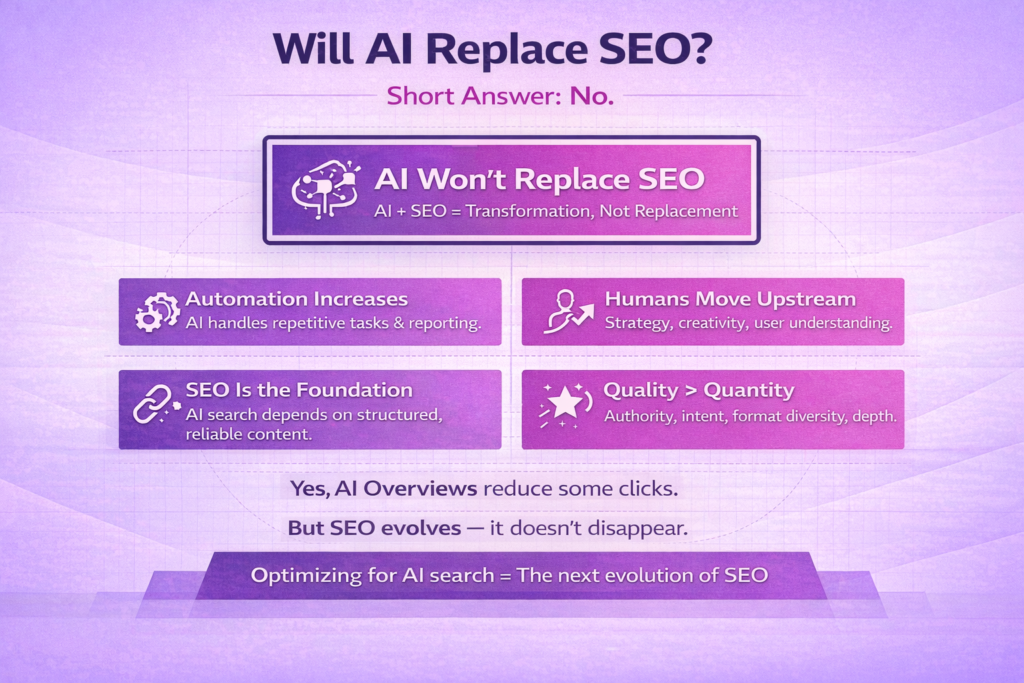
TL;DR - Will AI Replace SEO? Short Answer, No.
In a hurry? Here are your quick answers:
- No, AI won’t replace SEO. The relationship between AI and SEO is transformational, not replacement. They augment each other.
- The boring stuff gets automated. Repetitive tasks and reporting are handled by AI, freeing you up for strategy.
- Human roles are shifting upward. Think higher-level SEO strategy, creativity, and user understanding.
- SEO is still the foundation that AI-driven search is built on. No SEO, no reliable content for AI to pull from.
- Modern SEO is focused on quality over quantity. Brand authority, search intent, diverse content formats, and comprehensive value.
- Yes, some clicks are being reduced by Google AI search and AI Overviews. But that doesn’t mean SEO is less valuable.
- Optimizing for AI search engines is just the next evolution of SEO, not a separate industry.
Bottom line: Will AI replace SEO? Nope! It’s just changing what “being good at SEO” means.
Where to level up: Focus on strategy, creativity, and learning to use AI to augment your work.
Why People Think AI Will Replace SEO
It’s not an irrational fear. There are legitimate reasons why people are worried about AI replacing SEO.
AI Can Already Do Many “SEO Tasks”
Here’s the thing that freaks people out. You can open ChatGPT or Claude right now and ask it to:
- Cluster hundreds of keywords by intent in seconds
- Write meta titles and descriptions that sound decent
- Draft entire blog posts on any topic you throw at it
- Run technical audits and spot issues faster than most humans
Modern AI SEO tools are incredibly powerful. SEO automation is real, and it’s impressive. It’s also a bit terrifying if you’ve spent years learning these skills.
But here’s what we need to understand: AI does execution tasks, not strategic ownership. AI can write a meta description, sure. But it can’t tell you which pages matter for your business goals. It can’t decide whether you should target bottom-of-funnel buyers or build top-of-funnel awareness first. And it can’t understand why your competitor is outranking you despite having “worse” content.
The creativity and decision-making? That’s still yours. And honestly, if you hand these strategic tasks over to AI without human checks, you’ll fail spectacularly.
The AI Hallucination Problem
Here’s something that doesn’t get talked about enough: AI makes things up.
This isn’t a bug that will be fixed next month. It’s fundamental to how large language models work, predicting the most likely next word based on patterns, not verifying actual truth.
This means every piece of AI-generated content needs human fact-checking and verification. You can’t just hit generate and publish. Your reputation, your brand authority, and your EEAT signals all face potential damage when you publish factually incorrect content, no matter how well-written it sounds.
What The Data Actually Shows
Let’s look at the job market. Numbers tell another story.
In February 2024, Statista reported that 42% of marketing leaders were already using AI tools in their content creation process. Not replacing their teams, using AI as a tool.
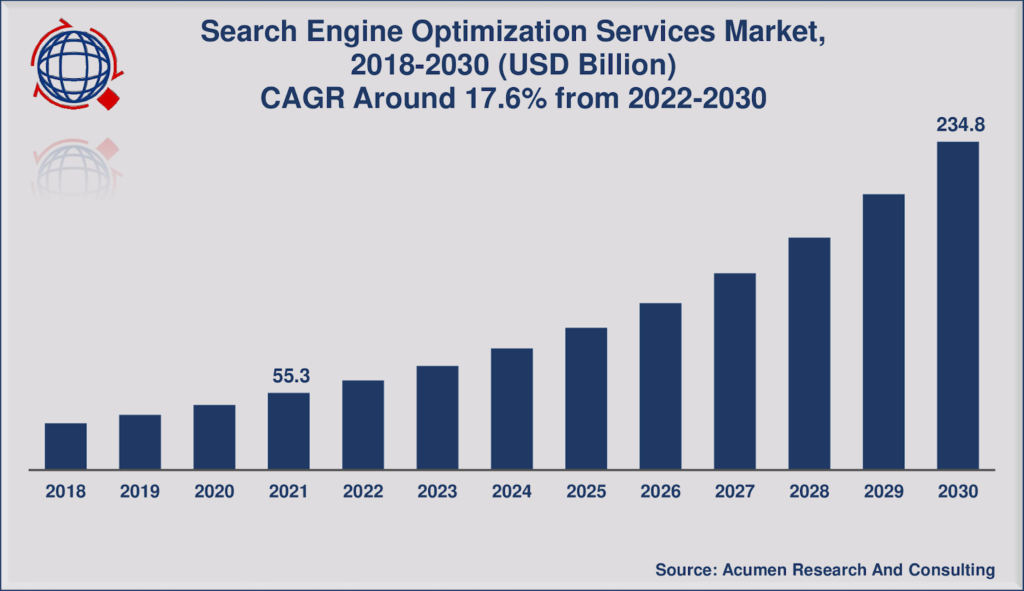
Meanwhile, the SEO services market itself is booming. AI-related skill requirements in SEO job postings are up 21%, signaling that employers want SEOs who can work with AI, not replace them with it.
Here’s the kicker: The global SEO services market is projected to grow from $46.7 billion in 2021 to $234.8 billion by 2030. That’s a 5x increase in less than a decade. More jobs for you.
If AI were truly replacing SEO, we wouldn’t see this kind of market growth.
Google AI Overviews and the Fear of Fewer Clicks
You know what we’re talking about. Those AI-generated summaries that appear at the top of Google search results answer questions before you even click on anything.
If you’re running a website, this feels threatening. Feels like no one would click through to your carefully crafted content if Google AI search just served up the answer in a pretty little box.
Here’s the reality: reduced clicks don’t equal reduced SEO value. Think about it. Google’s AI gets those answers from indexed, well-optimized content. From websites that have done their SEO homework. In 2026, being the source that the AI cites is the new “rank zero.”
Why AI Will NOT Replace SEO
Let’s get to the heart of it. When people ask, “Is SEO dying?” they’re looking at the wrong indicators. Here’s why AI isn’t going to replace SEO.
SEO Is the Foundation AI Search Is Built On
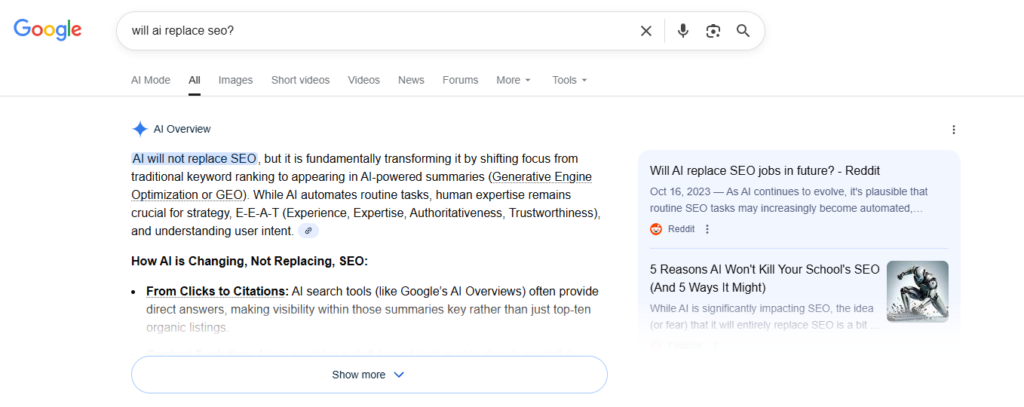
AI search crawls the web, indexes content, evaluates authority and relevance, and synthesizes information from trusted sources. This directly challenges the question of “will AI replace SEO” in any meaningful way. It’s literally built on SEO principles.
AI doesn’t create information out of thin air. It summarizes and reorganizes what’s already out there. It finds that information through the same discovery mechanisms that traditional search uses: crawling, indexing, and ranking based on authority signals.
Without SEO, there’s no reliable content for AI to pull from. Without proper site structure, AI can’t navigate your information. Without EEAT signals, search engines (and by extension, AI) won’t consider your content credible enough to cite.
Google itself has said this pretty clearly: AI doesn’t replace the need for SEO. It amplifies the importance of getting SEO right. The websites that win in AI search are the ones that were already winning at SEO.
AI Lacks Business Context and Judgment
Imagine you’re running a local Shopify pet store for cat lovers. You have limited resources and need to decide: should you create content targeting “best cat food” or “grain-free cat food for senior cats with kidney issues”?
AI can give you search volumes (ha, sometimes this even fails). It can analyze competition. It can even draft content for both topics. But it can’t weigh these factors against your specific business context:
- Your revenue priorities this quarter
- Your inventory surplus and what products you need to move
- Your brand positioning and whether this content fits
- What your market needs that competitors aren’t providing
- What’s buzzing through word of mouth that search data completely misses
- Your risk tolerance between competitive keywords or niche plays
- How does this align with your product roadmap
These are judgment calls that require understanding your business, your customers, your market dynamics, and your strategic goals. AI can inform these decisions, but it can’t make them for you.
This is why SEO professionals aren’t going anywhere. The job is evolving from “person who does keyword research” to “strategist who uses AI-powered tools.”
How AI Is Changing SEO and How It’s Not
AI isn’t replacing SEO. Like complementary dishes, they augment each other.
AI is not taking over the discipline. It’s throttling certain parts of it while making other skills more valuable than ever. The future of SEO is about human and AI collaboration.
Automation of Repetitive SEO Work
Most parts of SEO have always been tedious. You know the drill: pulling reports, analyzing massive datasets, optimizing hundreds of product pages with similar structures, checking meta tags across your entire site. Boring and repetitive.
That’s where AI genuinely shines. It’s going to free you from work that doesn’t require strategic or creative thinking.
What used to take days now takes hours, or even minutes. And that’s a good thing, because it means you can spend more time on the stuff that actually matters.
Humans Move Up the Stack: Strategy, Creativity, UX
Here’s our opinion: As AI handles more menial tasks, human SEOs become more valuable, not less. We’re moving toward higher-level work that AI genuinely struggles with.
What AI can’t handle:
- Search intent interpretation: Sure, AI can tell you that “best coffee maker” is a commercial intent keyword. But it can’t tell you that your audience is struggling to choose between convenience and quality, and that’s the real question your content needs to address. That requires empathy and user understanding. And lots of brewed caffeine.
- SERP analysis: AI can tell you what’s ranking. But it can’t spot the subtle pattern of why Google is favoring that ugly, low-quality website vs your premium, well-loved baby.
- Conversion alignment: AI can optimize for rankings, but it can’t balance SEO with conversion goals, brand voice, and user experience. It can’t decide when to sacrifice a keyword for better readability and conversion. That requires business judgment.
These are the skills that matter now.
If your skill set only includes keyword research and writing meta descriptions, then we’ve got some bad news for you. But if you’re doing strategy, creative problem-solving, user experience optimization, pattern analysis? You’re more valuable.
Why AI Can’t Handle Everything: The Backlink Reality
Let’s talk about something AI absolutely cannot do: build real relationships for link building.
Sure, AI can write outreach emails. It can generate pitch templates. It can even analyze which sites might be good link prospects. But it can’t navigate the human dynamics of earning a backlink from another human. It can’t build genuine relationships. And it can’t understand the unwritten rules of each niche’s linking culture. Not even close.
And here’s what’s changing: as ChatGPT, Gemini, and Claude become more prominent, they’re bringing in a shift toward a new kind of backlinks: brand mentions. Building that kind of authority is pure human territory. It requires thought leadership, original research, genuine expertise, and the kind of networking that can’t be automated.
What Google’s Leadership Says About This
Look at what the people running search engines are saying.
John Mueller (Google Search Advocate):
- “Technical SEO stuff definitely continues to make sense regarding all of the AI things happening. All of the different kinds of large language models that are trying to train off of the internet, they need that foundation of technical SEO.”
- “Retrieval augmented generation is basically what SEO works on, like making crawlable and indexable content for search, and that kind of flows into all of these AI overviews.”
- AI Overviews are built on top of traditional SEO principles. No SEO means no content for AI to pull from.
Sundar Pichai (Google CEO):
- “In a world in which you’re flooded with a lot of content, if anything, something like search becomes more valuable. In a world in which you’re inundated with content, you’re trying to find trustworthy content, content that makes sense to you in a way that you can use it, I think it becomes more valuable.”
- As AI floods the internet with more content, SEO becomes MORE valuable, not less.
Local SEO and E-commerce: Where AI Falls Short
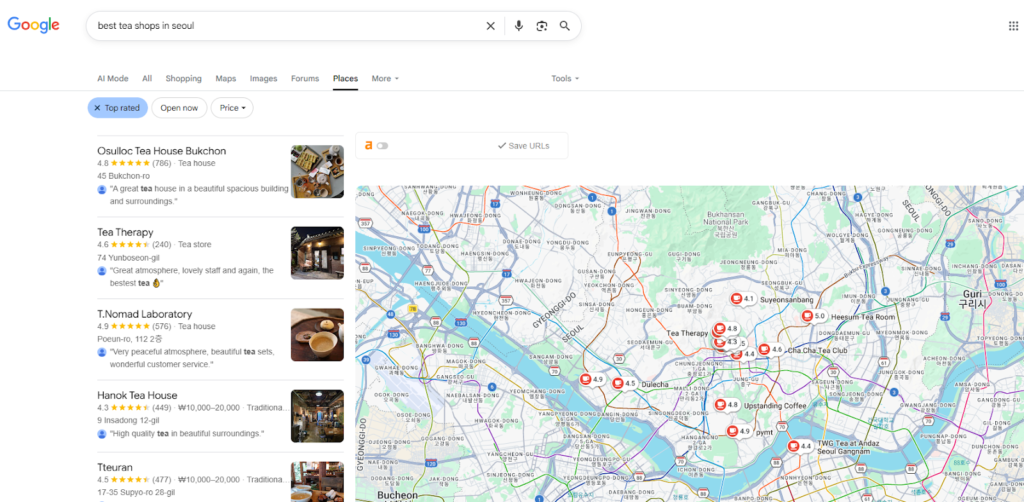
John Mueller specifically called out two areas where websites and SEO remain essential: local businesses and e-commerce.
What AI can’t replicate in local SEO:
- Local flavor. Community context.
- Neighborhood dynamics and what locals actually prefer.
- Cultural nuances you only get if you’re from there.
- Secret spots and stores that you can only know if you ask a local.
- The difference between “best family-friendly Italian in Brooklyn Heights” vs “romantic date spot in Williamsburg.”
- Build relationships with local businesses for citations
- Attend local networking events
- Understand hyperlocal changes (new construction, neighborhood gentrification)
A human SEO who knows the area can optimize for audiences and contexts because they understand and can interact with the community.
For e-commerce, the gap is even more obvious. As Mueller points out: “If you want a t-shirt, you don’t want a description of how to make your own t-shirt. You want a link to a store where it’s like, ‘Oh, here’s t-shirt designs.'”
AI can answer informational queries. It can even recommend products. But it definitely cannot complete transactions or make your shopper feel like they scored something one of a kind. Your product pages, your checkout flow, your inventory, all of that requires a functional, well-optimized website. Getting people to that website is SEO. Real people getting other people to buy.
The New SEO Skill Set in an AI-Driven Internet
Let’s talk about what SEO skills 2026 and beyond require.
1. Prompt Engineering: The New Fundamental Skill
Here’s a skill that didn’t exist five years ago but is now becoming as fundamental as keyword research: prompt engineering. If you’re going to work with AI tools, and you absolutely should, learn how to instruct AI to give you good output and not steaming garbage.
People who are good at prompting AI can do in hours what used to take weeks. Extract competitive insights, generate content briefs that capture search intent, rewrite content so it ranks in Google AI search, and analyze SERP patterns at scale. This skill compounds your skills.
2. Brand Authority, Trust, and EEAT Matter More Than Ever
Anyone can generate passable content in seconds with ChatGPT. What sets you apart is authority, trust, and genuine expertise. EEAT. They’re the difference between content that gets cited by AI and content that gets ignored.
You have to earn it the old-fashioned way: building real brand recognition, demonstrating actual expertise through original research, and creating content that shows first-hand experience.
3. You Need to Think Beyond Traditional Search
Search is now everywhere. It’s not just Google anymore. It’s ChatGPT, Gemini, Instagram, even TikTok, where Gen Z (and younger) searches for everything from Creepypasta to career advice.
Modern SEO means thinking about optimization across multiple platforms and formats. The core principles remain the same (valuable content and user experience), but the playing field is bigger. That’s opportunity.
How to Future-Proof Your SEO Career
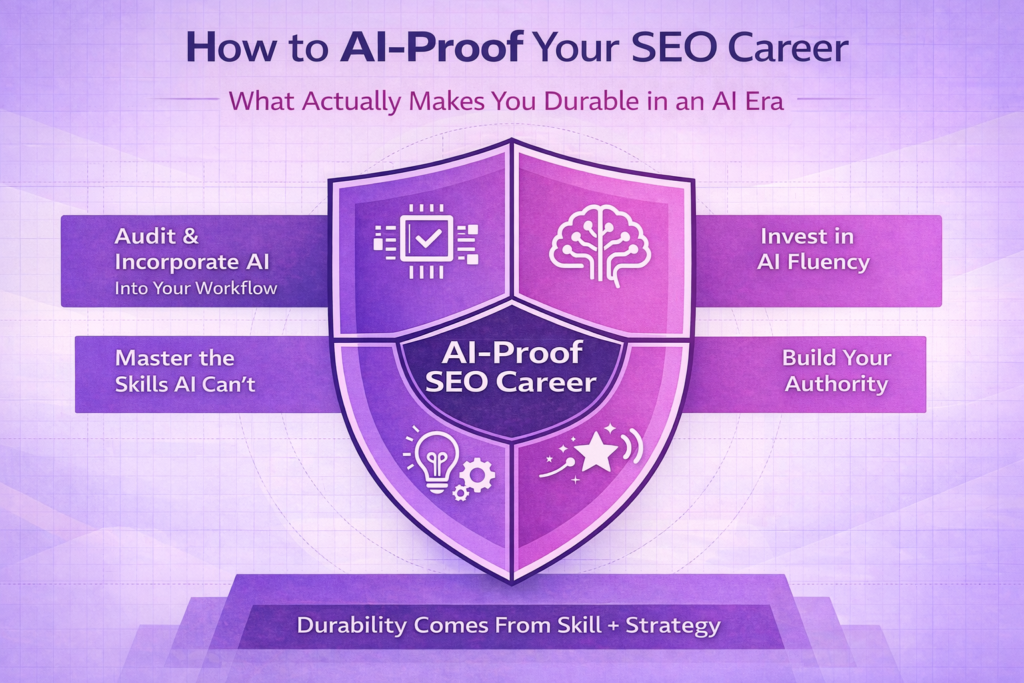
Let’s talk about what you need to do to stay relevant and valuable.
Audit and Incorporate AI Into Your Workflow Right Now
Take a look at how you spend your time. Identify ten hours weekly in tasks that AI tools could automate within the next 30 days. Look at menial, unenjoyable, SEO tasks: pulling ranking reports, checking for broken links, or drafting meta descriptions.
That’s your opportunity zone. Find a way to automate them. Even if you don’t tell your boss you saved them ten hours, you still had practice.
Invest in AI Fluency
You don’t need to become a data scientist, but you do need baseline competency with AI tools. This means enrolling in at least one program that gives you those skills.
Test three AI-powered SEO platforms this month (lots of free trials today). Document which tasks each handles best and where human review remains critical. Learn their strengths, their limitations, and more importantly, how it makes your job easier.
If you need a starting point, this comparison of the best AI SEO tools breaks down the top options by category, budget, and team size.
Your goal is to become an SEO who knows how to leverage AI strategically.
Master the Skills AI Can’t Replace
Remember the skills that machines cannot duplicate, like strategy and creativity? Identify your core expertise that falls under those skills. Things like data visualization and storytelling, cross-functional stakeholder communication, conversion rate optimization, and product analytics integration.
These skills let you translate SEO into business impact. Get better at those competencies and use AI to grow its effects (and your pay grade).
Build Your Authority
Genuine expertise and original thinking become premium assets. Start creating content that demonstrates first-hand experience, publishing original research or case studies, and contributing to discussions in professional communities.
We are not talking about narcissism. It’s career insurance. When everyone can generate decent content with AI, the people who stand out are the ones with proven track records and recognized expertise.
Are You Using an LLM to Create Your Article Drafts? Walter AI Can Help.
You’re using AI like ChatGPT and Claude to create article drafts. It’s fast and easy, but there’s a real issue: most of the time, it sounds robotic. There’s the fear that Google will probably penalize it (they said they won’t, but they’ree also self-contradictory). And you’re going to end up with factual inaccuracies or awkward phrasing that screams “AI-generated.”
Why The Situation Gets Worse:
When you use AI for speed, your article has the potential to blend into the sea of identical, generic-sounding articles all over the internet. This dilutes your brand voice and fails to show off your expertise. Those AI hallucinations we discussed earlier can also slip through unnoticed, damaging your credibility and EEAT signals.
Manually checking your work takes a lot of time. You have to review your entire document for awkward transitions, factual inconsistencies, and every place where the AI defaults to “corporate speak” instead of your authentic voice.
Walter AI is Designed to Help:
Walter AI assists you with:
- Checking if your AI-generated content sounds natural - Walter AI scans your drafts to detect robotic phrases, awkward transitions, and generic language that doesn’t reflect your brand voice
- Instantly humanizing AI text - Walter AI converts stiff, formal AI-written content into conversational content that sounds like it came from a real person
- Quality checks at scale - Use AI for speed without sacrificing the human element that develops trust and authority
Walter AI is your editorial partner. It lets you leverage AI’s speed while ensuring your content still reflects your voice, meets quality standards, and develops the authority that gets referenced by AI search engines.
Stop worrying about whether your AI-assisted content passes the sniff test. Try Walter AI Humanizer for SEO for free and write your content with confidence.
FAQs
In 2026 and after, will people continue to do SEO work?
Yes. Although some jobs may completely change to new roles and other jobs may be augmented by AI search, people will always be needed to complete the required work. People will always be needed to do SEO work.
Really, will AI replace SEO?
We are sure of this. No. While AI search will change the way that SEO is completed, it will never completely remove the need for SEO. The same quality of content will be needed for search engine results. Search engines will continually seek out methods to improve their results due to user behavior. As users begin to rely more heavily on alternative forms of search (like image search and voice search or searching in Facebook), the role of SEO specialists will change significantly, but will not cease to exist.
Will SEO exist in 5 years?
Yes. SEO will still exist, but it will be augmented and used alongside AI search. You can even say AEO/GEO/AIO (or whatever optimizing for AI is called now, because the name keeps changing) is the “next frontier” in SEO. Not a replacement, but an evolution of the same principles.
What will I need to be able to do in the future as an SEO specialist?
You’ll need to optimize for both traditional and AI search engines, analyze data from different sources and platforms, develop and implement strategies to gain visibility across all channels, determine if a given strategy is effective and adjust accordingly, and then report on those findings to your clients or management. Like we’ve previously mentioned, while the role will be changing, there will still be a need for SEO specialists.
What is the biggest difference between doing traditional SEO and working in an AI-driven environment?
As an SEO specialist performing traditional SEO, your main responsibility was to perform daily optimization tasks. With the rise of AI search, your responsibilities shift to a strategic role. Many AI SEO tools will automatically complete tasks such as keyword research, backlink analysis, and meta tag optimization. You’ll focus on making strategic decisions, long-term planning, finding growth opportunities, and increasing your company’s overall digital marketing performance.
What technical skills and strategic skills will I need?
You’ll need to have knowledge of how to work within AI search engines, the ability to use AI SEO tools, analytical skills to assess large amounts of data, and familiarity with technologies used to generate content. Strategically, you’ll need to know how AI is affecting SEO, think strategically, problem-solve, innovate, communicate and collaborate, and prioritize the many competing demands of a business.
How soon should I expect to see AI’s impact on my SEO work?
Immediately. AI search engines are currently providing quicker and more accurate search results than ever before. AI SEO tools are available today. But it could take anywhere from a few months to one full year to see AI’s full potential. You should anticipate seeing improved search results, increased efficiency in completing tasks, improved personalization of search results, and additional revenue opportunities for businesses. If you fail to incorporate AI into your SEO efforts, you run the risk of being left behind.
What steps can I take today to prepare?
Research existing AI SEO tools and evaluate which tools best fit your needs. Develop a plan for incorporating AI in your SEO work. Learn how to utilize AI SEO tools effectively. Make the necessary investments in the proper equipment and infrastructure. Track your progress and adjust as you go.
For the practical side of AI in SEO content production, see AI Humanizer for SEO - Walter’s humanizer is built for the content marketer workflow.