



Key Takeaway: ChatGPT has a recognizable vocabulary fingerprint. Words like “delve,” “pivotal,” “robust,” and “leverage” appear so consistently in AI output that they now trigger detectors and signal generic writing to human readers alike.
- Cut abstract verbs: delve, leverage, utilize, harness, streamline, underscore
- Replace inflated adjectives: pivotal, robust, innovative, seamless, cutting-edge
- Drop filler nouns: landscape, realm, tapestry, synergy, testament, underpinnings
- Avoid AI transitions: furthermore, moreover, consequently, notably, importantly
- Vary sentence length deliberately; flat rhythm is as much a red flag as the words themselves
ChatGPT has a fingerprint. It shows up in specific words, phrases, and sentence patterns that appear so consistently across AI output that readers sense something is off, even when they can’t explain why. By 2026, that fingerprint is more recognizable than ever.
These overused words and phrases aren’t wrong. They’re grammatically correct, they sound professional, and they make sense in context. The problem is they’ve become so repetitive that they now scream “this was written by ChatGPT.” Even when humans use them, detectors like Turnitin, GPTZero, and Originality AI may raise false flags, simply because the writing style looks too machine‑like.
Educators and journalists have noted this same issue, with studies reported by The Verge showing that AI‑influenced vocabulary is shaping not only academic writing but casual speech. This means even genuine human work is sometimes flagged as AI, frustrating both students and professionals. That’s why guides like how to make your essay undetectable have become increasingly important for anyone who relies on AI tools in their workflow.
Overview: If you’ve ever worried that your essay sounds too polished, or that your blog post might get caught by an AI detector, this guide is for you. We’ll break down the most common ChatGPT words to avoid in 2026, explain why they’re a problem, and show you natural alternatives that make your writing sound authentic again.
The Rise of “AI Vocabulary”
Language is always evolving, but the last three years have accelerated that change in unexpected ways. Instead of new slang spreading from TikTok or Twitter, we’re seeing a shift driven by AI tools themselves.
Researchers at the Max Planck Institute published a 2024 study showing that certain words like delve, robust, and pivotal have spiked in usage by over 50% in published essays and online articles since ChatGPT’s release. Interestingly, many of these texts were written by humans, not machines. This means people are unconsciously copying AI vocabulary because it feels polished, formal, and safe.
This effect is called AI linguistic imprinting. Think of it like this: if everyone in your circle started using a new catchphrase, eventually you would too without even noticing. That’s what’s happening on a global scale with AI‑influenced words.
The problem? What feels polished to you sounds predictable to everyone else. Readers, teachers, and employers can now recognize these AI “tells” instantly. And since AI detectors like Originality AI and ZeroGPT are trained to pick up on them as well, using too many of these words can backfire. Students risk being flagged on Turnitin’s AI detection, while professionals risk publishing content that feels generic and untrustworthy.
Writers and educators alike are now turning to strategies that help bypass these pitfalls, such as AI humanizers that rewrite content in a way that keeps it original, natural, and authentic.
Quick thought experiment: when was the last time you casually told a friend, “Furthermore, we should delve into the pivotal transformations of this landscape”? Probably never. But if you use ChatGPT, chances are you’ve seen sentences just like this dozens of times.
Why Does AI Default to These Words?
AI language models generate text by predicting the most statistically likely word at each step. That sounds useful, but it creates a problem: the model gravitates toward the same high-probability words every time. Ask any LLM to write about change, and it will probably reach for “transform” or “shift.” Ask it to describe a product, and you get “robust,” “innovative,” or “seamless.” These are the safe middle of the word distribution curve, chosen not because they’re the best fit but because they’re the most common in training data.
The result is writing that looks polished but feels hollow. The words are technically correct. They just don’t say anything specific, and they appear in every piece of AI-generated content regardless of topic, tone, or audience. That’s the fingerprint.
The Full List: ChatGPT Words to Cut
These words appear in AI output at significantly higher rates than in human writing. Most of them aren’t wrong on their own. They’re overused to the point where they register as a signal. The list below is organized by category.
Buzzwords and inflated vocabulary
| Delve / Delving | Pivotal | Leverage |
| Elevate | Empower | Unlock |
| Unleash | Harness | Foster |
| Bolster | Amplify | Streamline |
| Revolutionize | Transform | Enhance |
| Illuminate | Facilitate | Cultivate |
| Underscore | Resonate | Embark |
| Navigate | Explore | Unravel |
| Elucidate | Encompass | Discern |
| Adhere | Promote | Emphasize |
| Recognize | Refine | Differentiate |
| Surpassing | Impacting | Aligns |
| Harnessing | Conceptualize | Supercharge |
Academic and formal words
| Pivotal | Crucial | Vital |
| Essential | Paramount | Integral |
| Profound | Nuanced | Multifaceted |
| Comprehensive | Holistic | Systemic |
| Inherent | Pertinent | Cognizant |
| Synergy | Interplay | Underpinnings |
| Implications | Perspectives | Complexity |
| Significant | Robust | Innovative |
| Transformative | Groundbreaking | Cutting-edge |
| Scalable | Bespoke | Nascent |
| Invaluable | Relentless | Unwavering |
| Stark | Noteworthy | Insights |
Filler and vague words
| Vibrant | Bustling | Keen |
| Realm | Landscape | Tapestry |
| Testament | Nestled | Metamorphosis |
| Endeavor | Firstly | Moreover |
| Furthermore | Additionally | Subsequently |
| Consequently | Nonetheless | Similarly |
| Notably | Essentially | Ultimately |
| Arguably | Importantly | Indeed |
| Thus | Alternatively | Actually |
Overused Verbs
Verbs are the engines of sentences. They add motion and energy, and they’re one of the clearest markers of writing style. Unfortunately, AI tends to lean on the same handful of abstract verbs again and again.
The most common ChatGPT verbs in 2026:
- Delve / Delving into
- Leverage
- Utilize / Utilise
- Facilitate
- Optimize
- Embark
- Underscore
- Empower
- Harness
- Streamline
- Elevate
These words are flexible enough to work in many contexts, which is why AI favors them. But humans rarely use them in everyday speech. Instead of sounding helpful, they often come across as inflated or generic.
Human alternatives you can try:
- Delve → explore, dig into, look into
- Leverage → use, draw on, take advantage of
- Utilize → use
- Facilitate → help, guide, make easier
- Optimize → improve, fine‑tune, enhance
- Embark → start, begin, kick off
- Underscore → highlight, point out, stress
- Empower → give, help, let
- Harness → use, draw on, tap into
- Streamline → simplify, cut down, speed up
- Elevate → improve, raise, strengthen
Example rewrite:
- AI version: “In this essay, we will delve into the pivotal strategies that optimize efficiency.”
- Human version: “In this essay, we’ll look at the key strategies that actually save time.”
Notice how the second version uses simpler verbs, feels more natural, and still communicates the same idea. The overuse of verbs like delve and optimize has become such a common tell that even AI detection tools look for these markers when scanning text.
Related: ZeroGPT vs GPTZero
Overused Adjectives
If verbs are the engine, adjectives are the paint job. They give color to your writing, but when they’re overused, they make every sentence look like it rolled off the same factory line.
Adjectives AI uses too often:
- Pivotal
- Vital
- Robust
- Innovative
- Seamless
- Exemplary
- Ever‑evolving
- Comprehensive
- Nuanced
- Cutting-edge
- Groundbreaking
- Transformative
These words were once powerful, but in 2026 they’ve lost their impact. “Robust” used to mean strong and reliable. Now, when readers see it, they think: ah, probably ChatGPT. A Medium article on AI vocabulary points out that these adjectives have become so predictable that they often trigger suspicion.
Better alternatives that feel human:
- Pivotal → key, turning point, game‑changing
- Vital → necessary, essential, important
- Robust → solid, reliable, strong
- Innovative → new, creative, fresh
- Seamless → smooth, easy, effortless
- Exemplary → excellent, great, outstanding
- Ever‑evolving → changing, shifting, always growing
Example rewrite:
- AI version: “This innovative and robust platform delivers seamless solutions.”
- Human version: “This new platform works smoothly and reliably.”
The second version doesn’t try too hard. It’s simple, natural, and easier to trust. Writers working on academic or professional pieces often rely on tools like Walter Writes for students to humanize this kind of language without losing credibility.
Overused Nouns
Nouns should ground your writing; they give readers something solid to picture. But AI often leans on grand, sweeping nouns that feel abstract and overdramatic.
The worst culprits in 2026:
- Landscape
- Realm
- Tapestry
- Efficiency
- Transformation
- Testament
- Synergy
- Underpinnings
These words sound impressive but don’t actually add clarity. “Landscape,” for example, used to mean “the big picture of an industry.” Now, everything is a “digital landscape,” “political landscape,” or “business landscape.” It’s filler, not detail.
Natural swaps:
- Landscape → field, industry, sector, space
- Realm → area, world, environment
- Tapestry → picture, web, mix, network
- Efficiency → productivity, speed, effectiveness
- Transformation → change, shift, evolution
- Testament → proof, sign, evidence
- Synergy → combination, overlap, shared benefit
Example rewrite:
- AI: “The digital landscape has undergone a significant transformation.”
- Human: “The tech industry has changed fast in the last two years.”
The second version is shorter, clearer, and feels like something you’d say in conversation. Readers trust it more. Publications such as the Wall Street Journal have reported that students are getting flagged for essays filled with this kind of vague AI vocabulary, even when the work is original. To avoid this, many writers are turning to AI humanizers to refine their drafts into something truly personal.
Transitional Words That Scream “AI”
Transitions are vital for flow, but humans usually keep them simple: “also,” “but,” “so.” AI, on the other hand, tends to lean on old‑school, textbook connectors that sound overly formal.
Most overused AI transitions in 2025:
- Furthermore
- Moreover
- Consequently
- Thus
- Accordingly
- Nonetheless
- Additionally
- Subsequently
- Importantly
- Notably
Why they stand out: They’re grammatically correct, but when every new paragraph begins with “Furthermore” or “Moreover,” your writing starts to sound like a high school essay. Readers skim right past them because they’re predictable and add little personality. Studies on AI‑generated writing published have shown that these connectors are some of the most common red flags that give away ChatGPT‑style drafts.
Better swaps for a natural tone:
- Furthermore / Moreover → also, plus, another thing
- Consequently → so, as a result, that’s why
- Thus → so, which means
- Nonetheless → but, still, even so
- Additionally → also, on top of that, and
- Notably → worth mentioning, interestingly, one thing to flag
Example rewrite:
- AI: “Furthermore, the team leveraged innovative solutions to optimize results.”
- Human: “Also, the team used new ideas to get better results.”
The second version still connects ideas, but it doesn’t sound like it came straight from a grammar workbook. This difference is critical, especially for students submitting essays to platforms like SafeAssign or professionals creating SEO content. Overly formal connectors increase the likelihood of being flagged by AI detection tools.
Writers who want to keep their flow natural without losing clarity often turn to tools such as Walter Writes. It reshapes transitions so they feel conversational while still maintaining logical flow, something most generic AI tools fail to do.
AI‑Style Phrases
If you’ve read enough AI‑generated text, you’ll start spotting entire phrases that show up like broken records. They’re not just single words, they’re sentence templates that AI reuses endlessly.
Most common ChatGPT phrases to avoid:
- “It is worth noting that…”
- “One might argue that…”
- “In today’s world…”
- “In conclusion…”
- “Based on the information provided…”
- “A testament to…”
- “Navigating the landscape of…”
- “The transformative power of…”
- “Play a pivotal role in…”
- “Underscore the importance of…”
- “In today’s fast-paced world…”
- “Seamless integration…”
- “Robust solution…”
- “Treasure trove…”
- “Rich tapestry…”
- “Game changer / game-changing…”
Why they matter: They’re the equivalent of clichés in conversation. Nobody talks like this. If you wouldn’t say it out loud to a friend, it’s probably not the best choice for writing.
Human‑sounding alternatives:
- “Here’s the thing…”
- “Some people say…”
- “Right now…”
- “To wrap up…”
- “From what we know…”
Example rewrite:
- AI: “In today’s world, one might argue that efficiency is a pivotal goal.”
- Human: “Right now, most people agree that saving time matters most.”
The second version feels conversational. You can imagine someone saying it out loud.
AI Sentence Patterns to Break
Word choice is only part of the problem. AI also defaults to a small set of sentence shapes and rotates through them evenly. The result is prose that varies technically but doesn’t vary rhythmically. These are the four most common structural patterns.
The setup-payoff pair
One short declarative sentence followed by one longer explanation. Once per paragraph is fine. When every paragraph does it, the rhythm flatlines.
AI version: “Content is king. High-quality content is the backbone of all digital marketing strategies, whether outbound or inbound.”
Better: “Good content doesn’t just rank. It’s the reason people stay, share, and come back.”
The three-item list sentence
AI groups things in threes constantly. “Fast, reliable, and affordable.” “Build trust, drive engagement, and increase conversions.” When every sentence has three items, none of them land.
AI version: “Our platform helps you save time, reduce costs, and improve team collaboration.”
Better: “Most teams waste hours on status updates that could be one dashboard. That’s the problem this fixes.”
The hedge chain
One hedge is fine. A chain of them makes the writing feel evasive and uncommitted.
AI version: “It’s worth noting that in many cases, it may be beneficial to consider a more holistic approach to content strategy.”
Better: “A narrower content strategy usually outperforms a broad one. Pick a lane.”
The reframe construction
“It’s not X, it’s Y” and “Not only X but Y” are AI’s way of sounding analytical. One use per article is fine. More than that and it reads like a verbal tic.
AI version: “It’s not just a tool. It’s a competitive advantage. It’s not only about saving time, it’s also about improving quality.”
Better: “It saves time. It also closes the quality gap that manual editing leaves behind.”
AI Paragraph Patterns to Break
AI tends to build every paragraph the same way: introduce the idea, explain it, give an example, summarize it. When every paragraph follows this shape, the piece feels mechanical even if individual sentences are fine. Two patterns to watch for:
The summary closer
AI ends paragraphs by restating what was just said. It treats the reader like they weren’t paying attention.
AI version: “Consistency is key in content marketing. Publishing regularly builds trust and keeps your audience engaged. In summary, a consistent publishing schedule is essential for success.”
Better: “Consistency is key in content marketing. Miss a few weeks and the audience you spent months building starts drifting. There’s no recovering that quietly.”
The identical opening pattern
When every paragraph opens with the subject followed by a verb, the writing loses texture. AI does this by default because it’s structurally safe.
AI version: “Content marketing builds trust. Social proof increases conversions. Email marketing drives repeat purchases.”
Better: “Trust is built slowly, through content. Conversions move when social proof removes the last bit of hesitation. And once someone buys, they’re probably brought back by email.”
How to Prompt ChatGPT to Avoid These Words
Knowing which words to avoid is useful. Being able to stop ChatGPT from using them in the first place is more useful. Here are three prompt approaches that work:
1. Ask ChatGPT to identify its own defaults
Before writing, run this prompt:
“List 20 words or phrases ChatGPT commonly uses when writing about [TOPIC] in a professional tone. Group them by function: verbs, adjectives, transitions, and value claims.”
This surfaces the defaults so you can include them as constraints in your next prompt.
2. Use a soft constraint in your writing prompt
Add this to your prompt:
“Be mindful of common AI buzzwords like [LIST], and vary the language so they aren’t overused.”
This gives direction without over-restricting the output.
3. Block specific words if the soft approach doesn’t work
“Avoid these words: [LIST]. Use specific, concrete language and vary sentence structure to sound more natural.”
Note: Avoid asking ChatGPT to reach for unusual words to replace them. The result often sounds forced. The goal is natural variation, not unusual vocabulary.
Visual: Before vs After AI Detox
To see the difference in action, here’s a quick comparison of sentences before and after replacing AI‑heavy words with natural alternatives:
| AI‑Generated Style | Human‑Friendly Rewrite |
|---|---|
| “In today’s world, it is pivotal to leverage innovative strategies.” | “Right now, the smartest move is to use fresh strategies that actually work.” |
| “Furthermore, one might argue that optimizing efficiency is vital.” | “Also, people often say saving time is the real win.” |
| “The digital landscape has undergone a seamless transformation.” | “The tech industry has changed fast and in big ways.” |
| “It is worth noting that robust solutions facilitate growth.” | “Strong tools help businesses grow.” |
The left column feels stiff and formulaic, while the right column feels simple, clear, and human. That’s the essence of avoiding overused ChatGPT words.
Expert Insight
Writers, linguists, and educators have been noticing the same thing: AI words are starting to lose their power. What once felt polished now feels suspicious.
“Words like robust and innovative are no longer impressive. They are signals of AI writing. Readers want personality, not predictability.”
- Linguistics Researcher, 2025
This observation matters because language is about more than accuracy. It is about connection. When readers see the same words repeated across essays, reports, and blogs, they stop paying attention. Instead of engaging with your ideas, they focus on how your writing feels like it was stamped out of a machine.
Good writing is not about stuffing big words into every sentence. It is about choosing the right words for the moment and making your reader feel like you are speaking directly to them. Research from The Verge has shown that overuse of AI‑style vocabulary is already changing how people write and even how they speak.
How to Make Your Writing Sound Human
Avoiding overused ChatGPT words is only the first step. To make your writing feel authentic, you need to focus on rhythm, specificity, and personality. Here are three strategies to bring your work back to life.
Vary your sentence lengths
AI often creates medium length sentences that all sound similar. Humans mix things up. A short sentence grabs attention. A longer one adds depth and detail. When you read your work out loud, it should sound like you are telling a story, not reciting an essay. This approach is often recommended in guides like how to make ChatGPT sound more human.
Be specific, not vague
AI tends to be abstract. It says “a pivotal transformation” instead of describing what actually changed. Humans bring in real examples. Instead of “a seamless shift in the digital landscape,” write “companies moved from email campaigns to TikTok ads almost overnight.” Specifics make your writing memorable.
Add emotion or anecdotes
Humans naturally bring in perspective. Even a small note of personal experience makes text feel alive. For instance: “I still remember when my professor flagged my essay for sounding too polished. The irony was, I wrote it myself.” That detail is unique to you and no AI can replicate it. Adding this human layer is one of the most reliable ways to avoid AI detection false positives.
Why This Matters for Students and Professionals
For students, overusing ChatGPT and ChatGPT plus can be risky. Detection tools like Turnitin and SafeAssign look for patterns, not just copied text. If your essay is filled with words like delve, optimize, and pivotal, there is a higher chance your work will get flagged, even if you wrote it yourself. That can mean unnecessary stress and time spent proving your originality.
For professionals, the problem is different but just as important. When your blog posts, reports, or LinkedIn updates sound like everyone else’s, your brand voice disappears. Clients and colleagues do not connect with robotic writing. They connect with writing that feels approachable, confident, and human. Harvard Business Review has highlighted this same risk for professionals: overreliance on AI vocabulary weakens brand credibility and trust.
For businesses, there is another risk. If every report or marketing campaign sounds like it came from ChatGPT, it weakens your credibility. Companies that want to stand out need a voice that feels real. Avoiding these AI patterns is not just about dodging detectors, it is about keeping your message authentic and maintaining authority. That is why many teams are turning to tools like Walter Writes to rewrite AI‑generated drafts into content that feels genuinely human.
Walter Writes: Your AI Humanizer
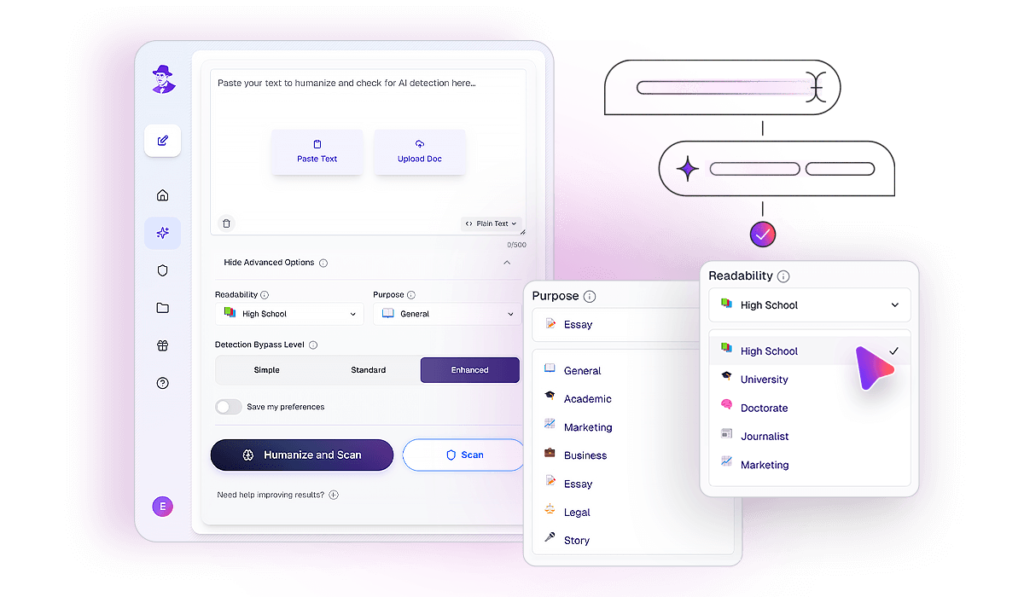
This is where Walter Writes steps in as a solution. Walter is built to humanize AI generated content and rewrite it so it sounds natural, conversational, and unique.
Unlike typical rewriting tools that simply replace a few words with synonyms, Walter rewrites with rhythm, variety, and flow. The result feels like something you would have written yourself on your best day.
How Walter helps you
- Bypasses AI detectors: Text rewritten with Walter consistently passes GPTZero, Originality AI, and Turnitin.
- Keeps your voice: The output does not sound generic. It adapts to the tone you want, whether academic, professional, or casual.
- Optimized for purpose: Whether you are working on an essay, a blog, or a research paper, Walter adapts.
- SEO smart: For content creators, Walter makes sure keywords are used naturally, without robotic repetition.
Example in action
- Raw AI: “In today’s world, it is pivotal to leverage innovative strategies.”
- Walter Rewrite: “Right now, the smartest move is to use fresh strategies that actually work.”
That difference is subtle yet powerful. The rewritten version flows like something you would naturally say, building trust and connection with your reader.
If you want your writing to pass AI detectors and still sound unmistakably like you, Walter Writes makes it effortless. Give it a try and see the transformation for yourself.
FAQs About ChatGPT Writing and AI Words
How to tell if an email was written by ChatGPT?
A few patterns give it away. ChatGPT emails tend to open with “I hope this message finds you well” or similar filler, use formal transitions like “furthermore” and “additionally” in casual contexts, and lean on words like “leverage,” “streamline,” and “ensure.” The structure is typically identical across emails: a polite opener, a main point broken into three bullet items, and a closing CTA. If the email reads like it could apply to anyone and has no specific details, there’s a good chance it was AI-generated. Tools like GPTZero and Walter AI’s detector can confirm it.
Is ChatGPT the best AI for writing?
It’s one of the most capable, but whether it’s the best depends on what you’re writing. For raw drafts, research summaries, and long-form outlines, ChatGPT is hard to beat on speed. The limitation is output quality: raw ChatGPT writing tends to rely on the overused words and patterns covered in this guide, which means it requires significant editing before it’s publishable. For content that needs to sound natural and pass AI detectors, running the output through a humanizer like Walter Writes is the most reliable approach.
Is Jasper better than ChatGPT?
For marketing copy and branded content, Jasper has built-in templates and brand voice settings that make it easier to maintain consistency at scale. ChatGPT is more flexible but requires more prompting to match a specific tone. In terms of AI vocabulary habits, both tools share many of the same overused words. Jasper output frequently includes “leverage,” “robust,” and “seamless” just as ChatGPT does. Neither is inherently “better” without editing. The real differentiator is what you do with the output after generation.
How to humanize text from ChatGPT?
The most effective approach is to vary sentence length, cut the overused words listed in this guide, and add at least one specific detail or personal angle that the AI couldn’t have generated. If you want to automate the process, Walter Writes rewrites ChatGPT output so it passes detectors like Turnitin and GPTZero while keeping the original meaning intact. For a manual approach, read the output out loud. If it sounds like a presentation rather than a conversation, it needs more work.
Can ChatGPT humanize AI text?
You can ask ChatGPT to rewrite AI-generated text in a more natural tone, and it will often improve the surface-level language. The problem is that ChatGPT tends to replace one set of AI patterns with another. The output still scores high on detectors because the underlying sentence structure and vocabulary habits remain. Tools built specifically for humanization, like Walter Writes, are more reliable because they’re trained specifically to reduce the signals that detectors target.
What app humanizes ChatGPT?
Walter Writes is the most effective option for humanizing ChatGPT output. It restructures sentence rhythm, removes AI vocabulary patterns, and adjusts tone so the final text reads naturally and scores as human on tools like GPTZero, Turnitin, and Originality.AI. Other tools like Undetectable AI and StealthGPT offer similar functionality, though in our testing Walter consistently outperforms them on mixed content samples.
Which AI writing tool is best?
It depends on the use case. ChatGPT is best for flexible drafting and ideation. Jasper is better for marketing copy with brand voice constraints. For writing that needs to sound human and pass AI detection, Walter Writes is the strongest option because it combines a humanizer and detector in one tool. No AI writing tool produces publish-ready content without some editing: the goal is to find one that gets you closest to a natural, credible final draft.
How to make ChatGPT text undetectable?
The most reliable method is to run your ChatGPT output through a dedicated humanizer like Walter Writes. It restructures sentence rhythm, removes overused AI vocabulary, and adjusts tone so the text scores as human on GPTZero, Turnitin, and Originality.AI. If you want to do it manually, vary your sentence lengths, cut the words listed in this guide, add at least one specific detail that couldn’t have come from a prompt, and read the result out loud. If it sounds like a presentation, it still needs work. The same approach applies whether you’re trying to make an essay, a blog post, or a paper undetectable.
How to check if ChatGPT was used? (Free ChatGPT checkers)
Several free tools can check for ChatGPT use. GPTZero is one of the most widely used free ChatGPT detectors, offering AI probability scores with sentence-level highlighting. ZeroGPT is another free option that gives an overall AI percentage. Walter AI’s detector is free for up to 300 words and checks against the benchmarks used by GPTZero, Turnitin, and Originality.AI in one pass. For plagiarism specifically, these tools check for AI patterns rather than copied text. If you want to check both, you’ll need a separate plagiarism checker alongside an AI detector.
Is Grammarly better than ChatGPT?
They do different things. Grammarly is an editing and grammar tool; it improves writing you already have. ChatGPT generates writing from scratch. For checking and refining existing content, Grammarly is more focused and accurate. For drafting, ideation, or producing long-form content quickly, ChatGPT has no equivalent in Grammarly. The overlap is in their AI writing features: Grammarly’s generative suggestions and ChatGPT’s rewriting prompts can both improve a draft, but neither produces fully human-sounding output without additional editing.
What are the best ChatGPT extensions?
The most useful ChatGPT browser extensions depend on your workflow. For writing quality, Walter Writes integrates with your browser and lets you humanize and check content without leaving your draft. For prompt management, tools like AIPRM add pre-built prompt templates directly into the ChatGPT interface. For detection, GPTZero’s Chrome extension lets you highlight and scan text on any page. If your main concern is producing output that doesn’t read as AI-generated, a humanizer extension will do more for you than any prompt template.
Can ChatGPT check for plagiarism?
No. ChatGPT cannot check for plagiarism. It has no access to a database of published content to compare against, and it doesn’t scan the web in real time. If you ask it whether text is plagiarized, it will guess based on pattern recognition, not actual source matching. For real plagiarism checking, use a dedicated tool like Turnitin, Copyscape, or Quetext. For AI detection specifically, use GPTZero, Walter AI’s detector, or Originality.AI.
How do AI text detectors work?
AI text detectors analyze two main signals. The first is perplexity: how predictable each word choice is given the words before it. AI-generated text tends to be highly predictable because models choose statistically likely words at each step. The second is burstiness: how much sentence length varies throughout the text. Human writing naturally mixes short and long sentences; AI writing tends to stay uniform. Detectors like GPTZero and Turnitin combine these signals with pattern databases built from millions of known AI and human texts to produce a probability score. The limitation is that both signals can be disrupted by human editing, which is why humanized AI text often scores as human even when the original draft was machine-generated.