


The short version for students: yes, your school can detect ChatGPT, and the detectors are noticeably better than they were a year ago. Turnitin AI Detection, GPTZero, Originality.ai, Copyleaks, and Proofademic are all in active use across colleges and universities in 2026. The good news: with the right approach, you can use AI assistance for school work without getting flagged. The wrong approach (paste ChatGPT output, light paraphrase, submit) gets caught nearly every time.
This guide covers exactly how AI detectors work, what triggers a flag, which workarounds still function in 2026, what false-positive rates look like, and the specific workflow students use to write AI-assisted essays that pass detection. Updated for 2026.
Key Takeaway: ChatGPT detection works by measuring how predictable and uniform your writing is, and the most reliable way to avoid being flagged is combining manual edits that add personal voice with a humanization tool that restructures the underlying patterns detectors analyze.
- Detectors measure two core signals: perplexity (how unpredictable word choices are) and burstiness (how much sentence length varies). AI text scores low on both
- Signature phrases like “delve,” “navigate the complex landscape,” and “it is worth noting” are known red flags for both detectors and professors
- AI detectors aren’t infallible. Well-written human content can trigger false positives, and heavily edited AI content can pass undetected
- ChatGPT hallucinations are a separate risk. Fake citations and made-up statistics can get you caught faster than writing style alone
- Rewriting 30-40% of AI-generated content, adding personal anecdotes, and varying sentence length significantly reduces detection risk
- Walter Writes AI is recommended as a final pass to restructure sentence patterns and remove the uniformity that detectors are trained to catch
Some days writing is like pulling teeth. You’re staring at a blank screen, the deadline is getting closer, and inspiration is nowhere in sight. For that, enter ChatGPT: your digital lifesaver. It’s fast, it’s easy and, I’ll be honest, it can be a bit addictive once you see how fast it cranks out content. But here’s the kicker: people are waking up. Professors, employers and even online platforms are employing AI detectors that can sniff out ChatGPT-generated content like bloodhounds on a scent trail.
If you’ve ever thought, “what if someone finds out I used AI?” you’re not alone. The good news? And there are simple but effective ways to help you make AI-verbiage sound natural, conversational, and (above all) undetectable.
In the following guide, we walk you through how AI detection works, what you can do to avoid being flagged, and how Walter Writes AI can rescue you from the agony of constantly revising your text. Let’s get into it.
How ChatGPT AI Detection Works
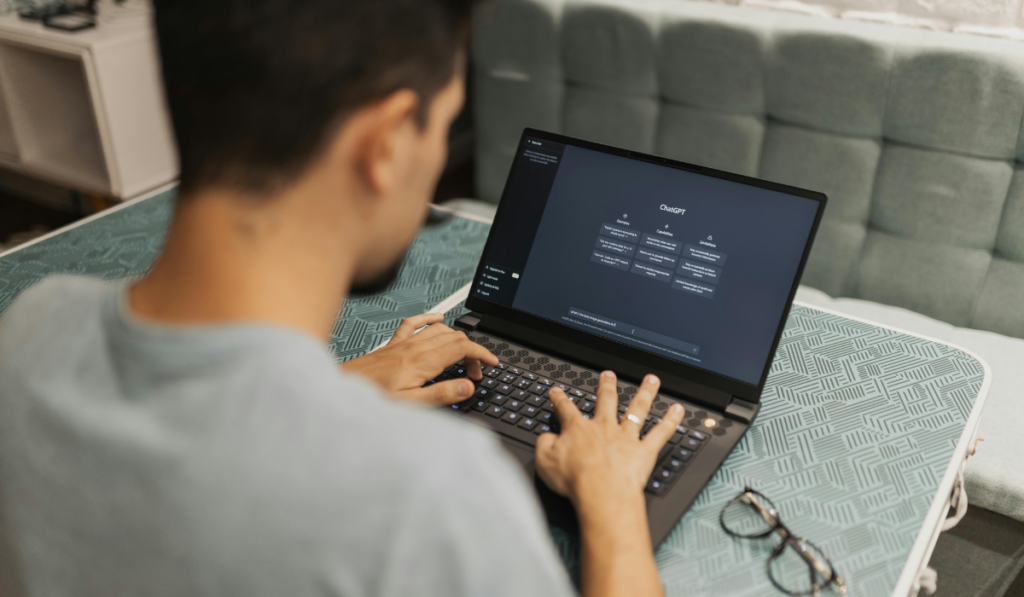
AI detectors aren’t magic, they’re algorithms looking for patterns that AI-generated text tends to follow. The problem? ChatGPT, as brilliant as it is, has certain habits that give it away. Sentences that are too perfect, oddly formal vocabulary, and a general “smoothness” that reads a little too… robotic.
Most detectors measure two things: perplexity (how unpredictable the word choices are) and burstiness (how much sentence length varies). AI text tends to score low on both. Humans naturally write with more chaos. Sentence lengths jump around. Word choices get weird. AI keeps everything neat and uniform, and that uniformity is exactly what detectors are trained to catch.
Here’s what typically triggers AI detectors:
- Repetitive Phrasing: AI often reuses the same words or phrases, especially in longer texts.
- Even Sentence Lengths: Humans write with variety, AI tends to keep things neat and consistent.
- Lack of Personality: AI-generated text is usually missing that quirky, human touch.
- Overly Formal Tone: ChatGPT sometimes sounds like it’s writing a college essay when you just wanted a casual email.
- Signature phrases: Words like “delve,” “navigate the complex landscape,” and “it is worth noting” appear constantly in AI output. Detectors and professors both know to look for them. Check the list for ChatGPT words and phrases here.
How to Not Get Caught Using ChatGPT
The fix? Make your content sound more like you and less like a machine. Here’s how:
- Rewrite and Edit: Don’t just copy and paste. Change up sentence structures, use synonyms, and rephrase awkward bits.
- Add Your Voice: Include personal anecdotes, opinions, and casual expressions.
- Use Walter Writes AI: This tool helps humanize your text, giving it a natural flow that passes detection.
Quick Tip: Even small tweaks, like adding “Honestly,” at the beginning of a sentence, can make a world of difference.
Can You Really Get Caught Using ChatGPT?
In short? Yes. But it’s not inevitable. AI detectors are smart, but they’re not infallible. They look for patterns that most people don’t consciously notice, unless you know what to look for.
What Happens If You Get Caught?
The stakes are real, and they vary depending on the context. Here’s what you’re actually risking:
- In school: Most institutions treat undisclosed AI use as academic dishonesty. Consequences range from a failing grade on the assignment to suspension or expulsion, depending on the school’s policy.
- At work: Some companies have made using AI-generated reports a fireable offense, especially in industries where authenticity and original analysis matter.
- Freelance and client work: Clients pay for your expertise and your voice. If they find out you submitted AI output without disclosure, it can damage the relationship permanently.
- False accusations: Even if you wrote everything yourself, a flat, overly polished writing style can trigger a false positive. More on how to protect yourself below.
What AI Detection Tools Look For
Here’s how they catch you:
- Predictability: AI likes neat, uniform sentences. Humans? Not so much. Limited Vocabulary: ChatGPT likes to stay safe in word choices.
- Flat Tone: No excitement, sarcasm, or “um, what?” moments.
- Too-Perfect Grammar: Ironically, perfect prose might look suspicious.
I had a friend whose essay was flagged, but not because it was AI-generated; it was too perfect. We added a couple of informal phrases, changed some sentences around, and no flags anymore. In a way, imperfection is your best friend.
Are AI Detectors Always Right?
Not at all. In fact:
- False Positives: Well-written human content can get flagged.
- False Negatives: With enough editing, AI-generated text can pass undetected.
Bottom line: AI detectors aren’t perfect, but why take chances when you can easily outsmart them?
Related: ZeroGPT vs GPTZero
The Best Ways to Avoid ChatGPT Detection
Alright, but how do I actually do this? If you’re thinking this, don’t worry. Below are simple steps that would grant your AI-generated content a sound human.
1. Rewrite and Personalize
Though AI text often is clean, this is the problem, it’s not messy and charming like human writing.
Ways to Humanize Your Text:
- People speak on mixed sentence lengths. There are some long and short sentences. You get the idea.
- Speak with Conversational Language: Think how you would explain something to a friend.
- Filler Words: Including words such as “well,” “so,” or “honestly”, makes any writing sound a bit more natural.
- Strip AI cliches: Search your text for words like “delve,” “crucial,” “comprehensive,” and “it is worth noting” and delete or replace them. These alone can tank your detection score.
Example:
- Original Version: “Exercise constitutes a great health enhancer and should be a part of everyday life.”
- Humanized Version: “I’m not saying you have to go to the gym every day, but if you can walk for even five minutes, it really contributes to that.” Trust me, I’ve been there.”
We can see how the second version sounds like a person talking. That’s what you’re aiming for.
2. Add Personal Stories and Opinions
AI can’t replicate your life experiences. Use that to your advantage.
Ideas to Add a Personal Touch:
- Mention something that happened to you recently.
- Share your thoughts, even if they’re silly or sarcastic.
- Include pop culture references or inside jokes (where appropriate).
Instead of: “Many people enjoy coffee,”
Try: “Not gonna lie, my day doesn’t officially start until I’ve had my first cup of coffee, preferably with way too much creamer.”
No AI can fake that kind of specificity.
3. Test Before You Submit
Don’t wait for someone else to flag your content. Run your own checks first.
How to self-test:
- Generate your content with ChatGPT.
- Paste it into an AI detector (GPTZero, Turnitin, or Walter Writes AI’s built-in detector).
- Note any sections flagged as high-probability AI.
- Rewrite those sections manually or run them through Walter Writes AI.
- Test again until it passes cleanly.
It’s like proofreading, but for AI detection. Make it part of your workflow before you hit send.
4. Use AI Humanizer Tools Like Walter Writes AI for a Final Touch-Up
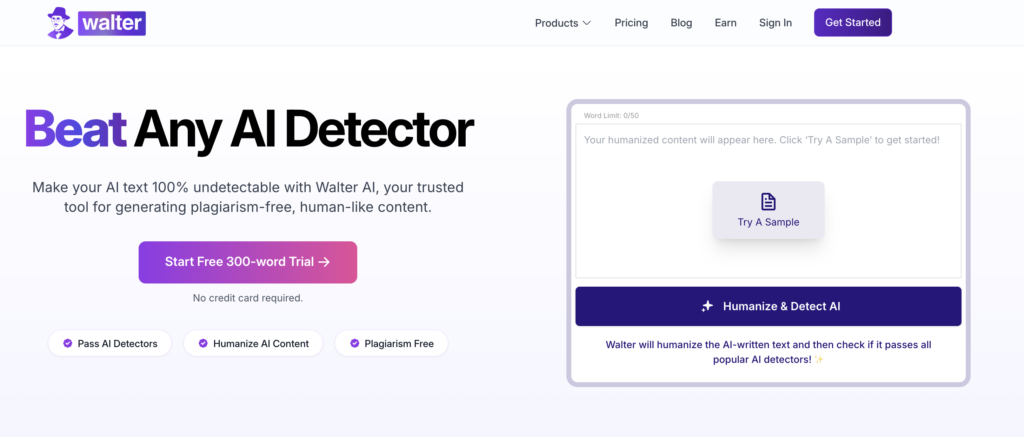
If you don’t have hours to spend rewriting everything, Walter Writes AI can help. It takes your AI-generated text and makes it sound natural, conversational, and (most importantly) undetectable.
What It Does:
- Reworks sentences to sound more human.
- Swaps out generic words for more engaging alternatives.
- Adds subtle variations in tone and structure.
Advanced Techniques to Stay Undetectable
Want to go the extra mile? These strategies can provide you an added layer of protection.
Test Your Work Before Submitting
Who wants to wait and let someone else catch up? Conduct your own AI detection with tools.
How to Self-Test:
- Generate your content
- Pass it through any AI detector (such as Turnitin or GPTZero).
- Change anything that is highlighted.
- Pass cleanly once again after some retests
It’s like proofreading, but for AI detection.
Blend AI Content with Your Own Writing
AI can help lay the groundwork, but your signature touch is what matters.
Tips to Blend Seamlessly:
- Take your own words and experiences to rewrite sections.
- Make it funny, informal, conversational, rhetorical.
- Rewriting 30-40% can significantly reduce detectability.
Watch Out for AI Hallucinations
One of the fastest ways to get caught isn’t the writing style. It’s the facts. ChatGPT will confidently cite sources that don’t exist, quote statistics it made up, and reference studies that were never published. This is called hallucination, and it trips up a lot of students and professionals who submit AI content without checking it first.
Before submitting anything AI-assisted:
- Verify every statistic and claim against a real source.
- If ChatGPT cites a paper or article, search for it manually before including it.
- Replace any citation you can’t verify with one you can.
Getting caught with a fake citation is arguably worse than getting caught with AI writing, because it signals you didn’t engage with the material at all.
Is It Ethical to Use ChatGPT? Let’s Be Real
Look, just because you can deploy AI doesn’t mean you should. There is a fine line between working smarter and crossing ethical lines.
When Can You Get in Trouble?
- In School: Most schools treat it as cheating unless you’ve been cleared.
- At Work: Some companies have made using AI-generated reports a firing offense.
- Freelance gigs: Clients want originality, they’re buying your expertise, not a bot’s. When in doubt, ask. Better safe than sorry as they say.
How to Use AI Responsibly?
AI has to be a tool, not a crutch. Here’s how to keep things above board.
- Use ChatGPT for brainstorming, not for writing the final draft.
- Always retain your voice and perspective as part of the mix.
Tools like Walter Writes AI help you walk that line, giving you the benefits of AI without the risks.
Frequently Asked Questions (FAQ)
Q1: Can AI detectors always catch ChatGPT content?
Not always. With proper editing, especially when using Walter Writes AI, you can easily avoid detection.
Q2: What’s the easiest way to avoid getting caught?
Edit your text. Weave in anecdotes, mix up the lengths of your sentences, and let AI humanizer tools do the polishing.
Q3: Can Walter Writes AI really make my content undetectable?
Walter Writes AI significantly reduces AI detection scores by reworking sentence structure, swapping out common AI phrases, and adding natural variation in tone. No tool can guarantee 100% undetectability across every detector, but Walter gives your content the best shot at passing.
Q4: Is using AI for writing considered plagiarism?
Not if you personalize it. Plagiarizing is about claiming someone else’s work as your own. AI is just a tool, it depends on how you use it.
Q5: What if my content gets flagged?
Don’t panic. Revise the flagged sections, retest, and use Walter Writes AI to ensure you’re in the clear.
Q6: Can I be falsely accused of using AI even if I wrote it myself?
Yes. Highly polished, formal writing can trigger false positives. If this is a concern, keep drafts and revision history (for example, by writing in Google Docs, which saves edit history automatically). That paper trail is your best defense.
Conclusion: Outsmart AI Detection Without the Stress
AI tools like ChatGPT are genuinely useful, and AI detection is genuinely getting better. The good news is that a few intentional habits put you well ahead of most people: vary your sentence structure, cut the cliches, add something personal, and run your content through Walter Writes AI before you hit publish or submit.
Quick recap:
- Don’t copy-paste raw ChatGPT output. Always revise.
- Add personal anecdotes, opinions, and conversational phrasing.
- Strip AI cliches and vary your sentence lengths.
- Check for hallucinated facts before submitting.
- Run your content through Walter Writes AI for a final pass.
Ready to ditch the stress and start writing? Try Walter Writes AI today
For institution-by-institution detail on what colleges and universities use to detect ChatGPT (Turnitin, Proofademic, GPTZero, Originality.ai, Copyleaks, plus LMS behavioral signals), see our updated 2026 reference guide.
If your strategy involves paraphrasers, read our 2026 test results first: QuillBot vs Turnitin shows the actual AI detection scores across Standard, Fluency, Academic, and Creative modes.
FAQ: Avoiding AI detection as a student (2026)
How can I avoid AI detection as a student in 2026?
The most reliable approach has three parts: use ChatGPT for outlining and brainstorming (not drafting), write the actual essay yourself, then run a final pass through a purpose-built AI humanizer if you want to make sure subtle AI patterns don’t trigger false positives. Raw ChatGPT output gets caught nearly every time. Light paraphrasing with QuillBot reduces detection but rarely brings scores under the 20% review threshold. See Does QuillBot Pass Turnitin? for the testing data.
What AI detector do most schools use?
Turnitin AI Detection is the most widely deployed (16,000+ institutions). Originality.ai, GPTZero, Proofademic, and Copyleaks are common secondary tools. See Can Colleges and Universities Detect ChatGPT? for the full breakdown.
What’s the safest AI percentage on a Turnitin report?
0% is ideal. Scores under 20% are usually dismissed as noise. Above 20% triggers institutional review. Detailed thresholds: How Much AI Is Acceptable in Writing in 2026?
Will using Grammarly or auto-correct trigger AI detection?
Grammar and spelling suggestions don’t trigger AI detectors. Grammarly’s AI writing features (paragraph generation) do. See Can Turnitin Detect Grammarly?
What happens if I get falsely flagged?
Document everything: your draft history (Google Docs revision log, OneDrive autosave), research notes, source PDFs you consulted, and previous writing samples. False positive rates of 4 to 6% on Turnitin mean innocent students do get flagged, especially ESL writers. Most schools require corroborating evidence before discipline.
Can teachers tell I used ChatGPT just by reading my essay?
Often yes. Faculty who grade hundreds of essays recognize ChatGPT patterns by sight: uniform sentence length, generic phrasing, fabricated citations, voice that doesn’t match your prior writing. See How Do Professors Detect AI Writing in 2026? for the full pattern guide.
For the underlying concept, see our explainer What Is an AI Humanizer? covering perplexity, burstiness, and how detection bypass actually works.
Using Google Classroom? See the dedicated does Google Classroom detect AI guide covering Originality Reports vs third-party detectors.