




Key Takeaway: The best AI humanizers for Turnitin in 2026 work at the structural level, rewriting sentence rhythm, burstiness, and paragraph flow rather than swapping synonyms, because Turnitin’s segment analysis and monthly model updates now catch most surface-level rewrites.
- Turnitin breaks text into overlapping 250-word windows and scores each independently, which means editing just a few sentences is not enough to avoid detection
- Walter Writes AI ranks first for Turnitin bypass, combining structural rewriting with a built-in detector so users can verify their score before submitting
- Undetectable AI performs well against ChatGPTZero and moderately well against Turnitin, but output can feel mechanical and often needs a manual editing pass
- QuillBot changes wording but preserves the underlying sentence structure and rhythm that Turnitin analyzes, making it unreliable for academic submissions
- Most institutions treat anything above 20% AI probability as a flag worth investigating, and Walter Writes’ built-in detector lets users rewrite until they reach a safe range
- No tool can guarantee a 0% AI score on every submission since Turnitin updates its detection model monthly, and combining a structural humanizer with manual edits gives the best results
If you’ve ever pasted AI-written content into Turnitin and got flagged, even after editing, you’re not the only one. Tools like Turnitin, ChatGPTZero, and others are getting very good at spotting AI-generated patterns.
Today, you need smarter tools that rewrite your content with natural flow, varied structure, and a tone that actually sounds human.
In this guide, we’ll walk through how Turnitin’s AI detection works, why it catches so much reworded content, and what you can do to avoid false flags.
We’ll also look at a few tools designed to help you rewrite AI text in a way that feels more human, and passes the test.
Whether you’re working on essays, resumes, or any other content, you’ll find helpful advice here to keep your writing sounding real and flying under the radar.
How Turnitin’s AI Detection Works
Before choosing a humanizer, it helps to know what you’re up against. Turnitin doesn’t just scan for copied text. It uses a multi-layer system that analyzes the statistical patterns underneath your writing.
Specifically, it measures:
- Perplexity: how predictable your word choices are. AI models tend to pick the most statistically likely word, which makes text too smooth and too consistent.
- Burstiness: how much your sentence lengths vary. Humans naturally mix short punchy sentences with longer ones. AI output tends to stay uniform.
- Segment analysis: Turnitin breaks your text into overlapping 250-word windows and scores each one independently, so editing just a few sentences isn’t enough.
- Cross-reference database: it compares your writing against billions of academic papers to detect structural patterns common in AI-generated academic text.
This is why basic synonym swappers no longer work. Turnitin updates its model monthly and now catches reworded AI text that older tools would have passed. A real AI humanizer needs to rewrite at the structural level, not just the surface level.
Why Using an AI Humanizer Matters for Turnitin
Turnitin’s AI detection tools are getting better every year, and they don’t just catch obvious AI-generated writing anymore. Even content that’s lightly edited or paraphrased often gets flagged.
That’s where an AI humanizer comes in. It helps you rewrite text in a way that flows naturally, avoids robotic phrasing and passes as original to tools like Turnitin.
Here’s why that matters:
- Avoid getting flagged for AI: Turnitin can detect common patterns in AI-written content, even if you’ve reworded it a little.
- Protect your academic credibility: Submitting content flagged as AI-generated can raise serious red flags at school or work.
- Make your writing sound more natural: Humanized content doesn’t just beat detectors, it’s easier to read and more engaging for real people too.
Whether you’re writing essays, reports, or resumes, using an AI humanizer gives your content a better chance of sounding like you and staying clear of detection.
What to Look for in a Good AI Humanizer for Turnitin
Not all AI humanizers are built the same.
If you’re trying to pass Turnitin’s AI detection, you need more than just a synonym-swapping tool.
Here’s what actually matters when choosing the right one:
Rewrites That Sound Like You
A strong humanizer doesn’t just change words, it reshapes your content so it reads like natural writing. It should preserve your original ideas while smoothing out awkward AI phrasing.
Quick tip: Try pasting the humanized version into Turnitin or ChatGPTZero to see if it actually sounds human and scores well.
Customization Options
The best tools let you adjust the tone, length, and formality of your output. Whether you’re writing an essay, a research paper, or a resume, you should be able to tweak it to match your style.
Look for tools that let you select an academic tone or a professional voice.
Built-in AI Detector Testing
Some tools now include detection scoring after rewriting. This helps you know right away if the content passes Turnitin or Originality, without needing to switch apps or copy-paste.
Fast and Reliable
If you’re under deadline pressure, you need something that works fast. Great AI humanizers give you polished, ready-to-submit content in seconds, not after multiple edits.
Simple to Use
No need for complicated steps. A clean, intuitive interface saves time and makes rewriting less stressful.
Top 7 AI Humanizers for Turnitin 2026
Here’s a curated list of the top tools that can help you humanize AI-generated content:
1. Walter Writes AI
Best for: High accuracy, structural rewriting, and detection-proof results for academic and professional content.
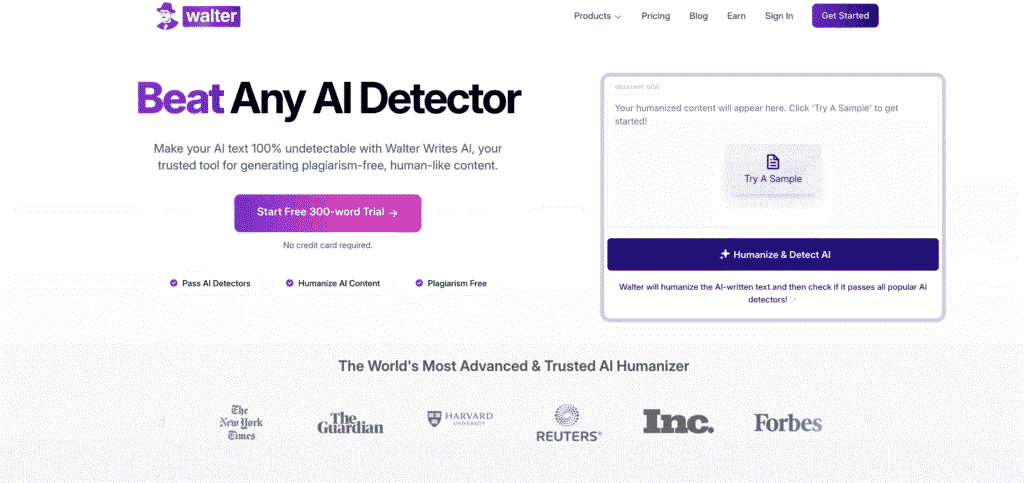
Walter Writes is the top-rated tool for making AI-written content undetectable in 2026. Unlike basic paraphrasers, it rewrites at the structural level: adjusting sentence rhythm, burstiness, and paragraph flow to eliminate the patterns Turnitin analyzes. It’s beginner-friendly, supports 80+ languages, and includes a built-in AI detector so you can verify your score before submitting.
Why users love it:
- Structural rewriting, not just synonym swapping
- Rewrites sound truly human
- Customizable tone for essays, blogs, or professional writing
- Built-in AI detection scoring so you can check results before submitting
- Supports 80+ languages, useful for international students
Heads up: The free version has some word limits, but you can try it free here.
2. Undetectable AI
Best for: Deep AI detection evasion across multiple detectors
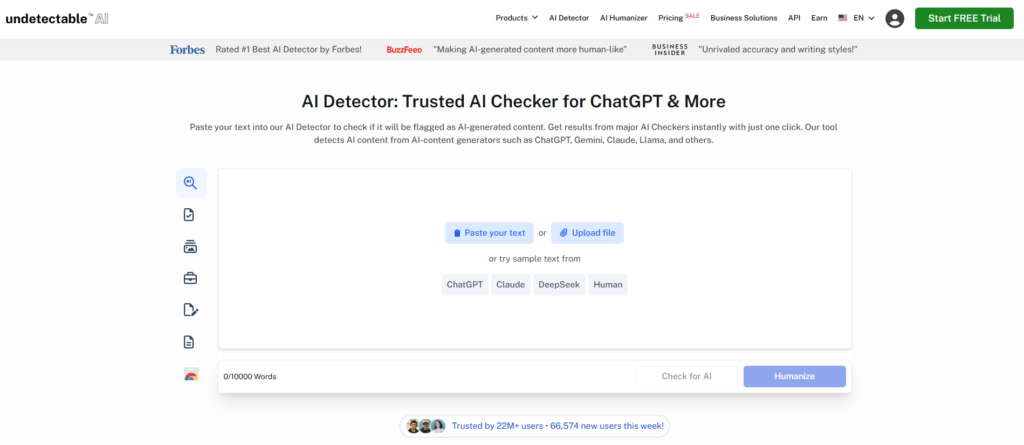
Undetectable AI is one of the most widely used bypass tools and regularly appears in independent roundups for 2026. It offers multiple humanization modes and targets detection evasion as its primary goal. In testing, it performs well against ChatGPTZero and moderately well against Turnitin, though output quality can be uneven and may require a manual pass to smooth out awkward phrasing.
Why users use it:
- Multiple humanization intensity levels
- Strong bypass rates on most major detectors
- What to keep in mind: Output can feel mechanical and may need editing. Less reliable on Turnitin than on lighter detectors.
3. Ryne AI
Best for: Structural sentence rewriting and natural rhythm variation
Ryne AI positions itself as a next-generation humanizer that goes beyond synonym swapping. It focuses on rebuilding sentence structure, adjusting clause order, and introducing natural rhythm variation, which makes its output noticeably less mechanical than surface-level rewriters. It appears in the top 10 SERP for this keyword and has a growing user base among students.
Why users use it:
- Sentence-level restructuring, not just word replacement
- Good performance on Turnitin for academic content
- What to keep in mind: Newer tool with less of a track record than Walter Writes or Undetectable AI.
4. WriteHuman
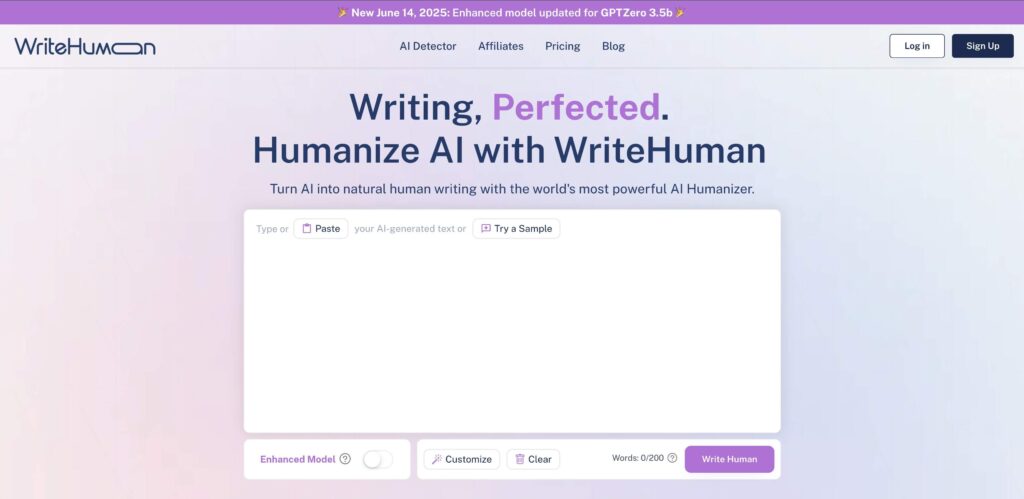
Best for: Reducing robotic phrasing on blogs and early drafts
WriteHuman is an affordable option that does a solid job of reducing obvious AI phrasing for general writing tasks. It’s good enough for blogs and professional drafts if you plan to do a quick human edit afterward. For academic submissions where Turnitin is in play, it’s less reliable than Walter Writes or Undetectable AI.
Why users use it:
- Affordable pricing
- Good for non-academic content
What to keep in mind: Inconsistent results against strict academic detectors like Turnitin. Best paired with a manual review.
5. QuillBot
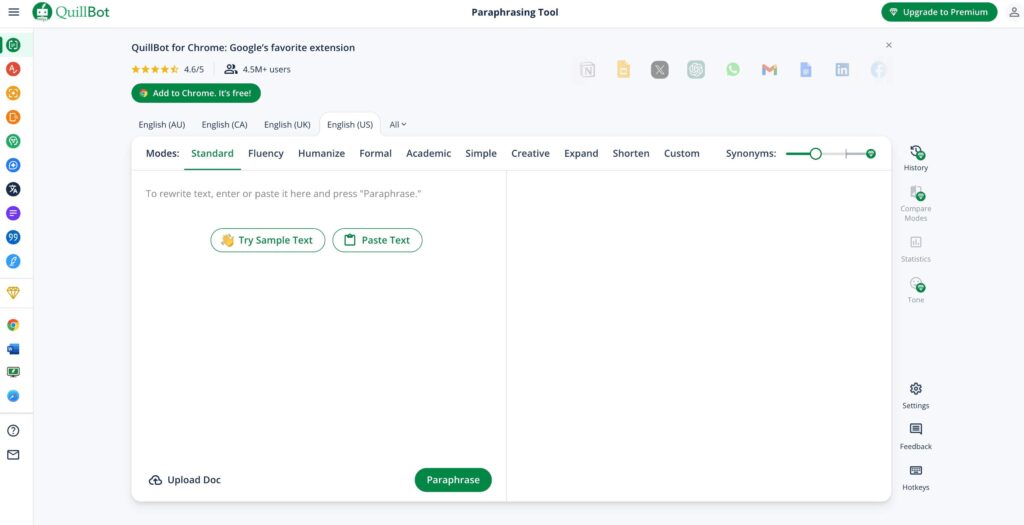
Best for: Basic paraphrasing
QuillBot is a popular choice among students who want quick edits or different wording. It’s often included in “best grammar checker” lists. It comes with several rewrite modes and grammar tools that can polish up AI-generated drafts. While it’s great for everyday rewriting, it doesn’t always fool advanced AI detectors like Turnitin.
Why users like it:
- Multiple paraphrasing styles
- Affordable pricing and Chrome extension
What to keep in mind: It may not consistently pass strict AI checks, especially for academic use. See our full QuillBot for students review for details.
7. Paraphraser.io
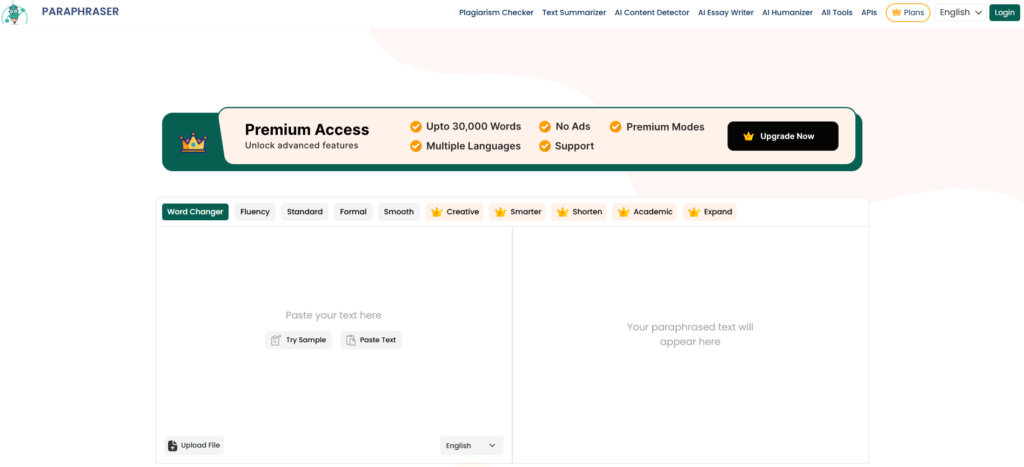
Best For: Quick rewrites
This tool specializes in fast, straightforward text rephrasing, suitable for less complex tasks.
- Pros: Speed, simplicity.
- Cons: Limited AI detection evasion.
8. Grammarly’s Rewrite Suggestions
Best For: Improving readability
While not an AI humanizer per se, Grammarly’s rewrite suggestions enhance text quality and humanize AI-generated content.
- Pros: Readability improvements.
- Cons: Not designed to bypass AI detection.
Related: Can Turnitin Detect Grammarly
AI Humanizer Comparison 2026
Updated for 2026. Tools ranked by Turnitin bypass reliability based on independent testing.
| Tool | Best For | Key Advantages | Drawbacks | Turnitin Bypass | Price |
|---|---|---|---|---|---|
| Walter Writes | Detection bypass + academic humanizing | Structural rewriting, built-in detector, 80+ languages | Free plan has word limits | High | Free trial |
| Undetectable AI | Deep AI detection evasion | Multiple humanization modes, strong bypass rates | Output can feel mechanical | High | Paid |
| Ryne AI | Sentence restructuring | Natural rhythm variation, clause-level rewriting | Newer, less established | High | Free trial |
| WriteHuman | Blogs and early drafts | Affordable, reduces robotic phrasing | Inconsistent on strict academic detectors | Medium | Paid |
| QuillBot | Basic paraphrasing | Affordable, multiple styles, Chrome extension | Not reliable for AI detection evasion | Low | Free/Paid |
| Paraphraser.io | Quick rewording | Fast, free trial available | Weak against advanced AI checkers | Low | Free/Paid |
| Grammarly | Grammar and readability | Great for clarity and polished writing | Not designed to bypass AI detection | None | Free/Paid |
How to Make AI-Generated Content Undetectable
If you’re using tools like ChatChatGPT or Claude to draft content, you’re not alone. But to avoid getting flagged by Turnitin or other AI detectors, you’ll need to do more than just hit “copy and paste.”
Here’s how to turn AI-written text into something that actually sounds like you, and passes detection.
- Start With a Trusted AI Humanizer
Use a tool built specifically for this task. Walter is designed to rewrite AI-generated text so it reads like a real human wrote it…tone, flow, rhythm, everything.
- Don’t Skip the Edits
Even the best tools benefit from a quick once-over. Read your rewritten content and tweak phrases that still feel too robotic or generic. This step adds authenticity.
- Mix Up Your Sentence Length
Humans don’t write in perfect patterns. Varying sentence structure (short, long, and everything in between) so it makes your content more natural and harder to flag.
- Add Your Own Voice
One of the easiest ways to humanize content? Make it yours. Add a personal story, perspective, or specific example that no AI would think to include.
- Double-Check With an AI Detector
Before submitting, run your final draft through an AI detection tool to be sure it passes. This gives you peace of mind and confirms your edits did the job.
Turnitin AI Content Tips: Best Practices
Before you hit submit, here are a few smart practices to help your humanized content stay undetectable and compliant on Turnitin:
- Avoid Keyword Stuffing: Use your keywords naturally. Repetition can feel forced and might raise red flags with AI detectors.
- Run a Plagiarism Check: Even rewritten content needs to be scanned to ensure originality. Always check for accidental matches.
- Prioritize Clarity: Clean, readable writing is less likely to trigger detection—and much easier for reviewers to trust.
- Cite Your Sources: Proper citations protect you from unintentional plagiarism and add credibility to your work.
Final Thoughts: Making AI Content Truly Your Own
AI humanizers are most valuable when used to improve and refine writing, not to replace your own thinking. Using one to edit a draft, improve clarity, or reduce false AI flags on work you genuinely wrote is a legitimate use. Submitting content you didn’t write as your own, even after humanizing it, is academic dishonesty regardless of what a detector says. If you’re unsure about your institution’s policy on AI-assisted writing, check with your instructor before submitting.
Whether you’re writing an essay, a report, or a blog post, one thing is clear, getting flagged by Turnitin for AI-generated content can cause real problems. But with the right approach, it’s totally avoidable.
Choosing the right AI humanizer isn’t just about finding a tool that rewrites your text. It’s about choosing one that actually understands how people write so your content flows naturally, sounds like you, and clears detection every time.
It’s fast, accurate, easy to use, and built specifically to help you bypass AI checkers like Turnitin without sacrificing your voice or credibility.
A Note on Responsible Use
AI humanizers are most valuable when used to improve and refine writing, not to replace your own thinking. Using one to edit a draft, improve clarity, or reduce false AI flags on work you genuinely wrote is a legitimate use. Submitting content you didn’t write as your own, even after humanizing it, is academic dishonesty regardless of what a detector says. If you’re unsure about your institution’s policy on AI-assisted writing, check with your instructor before submitting.
Frequently Asked Questions
What is the best AI humanizer for Turnitin?
Walter Writes AI is currently the top-rated tool designed to make AI generated content sound human and bypass detection by Turnitin and other platforms. It goes beyond synonyms to rewrite sentence flow and tone, helping you pass checks naturally.
Does Turnitin detect humanized AI content?
It depends. Basic paraphrasers may still trigger AI flags, but tools like Walter Writes AI restructure your content to sound like something a real person wrote—making it much harder to detect.
Can Turnitin detect AI-written content?
Yes, Turnitin can detect AI writing. That’s why many rely on AI humanizers to rewrite their content in a more natural, human tone that help avoid false flags.
How do AI humanizers help beat Turnitin detection?
AI humanizers restructure the flow, tone, and syntax of AI-generated text so it sounds more natural and less robotic, making it harder for Turnitin to flag it as AI-written.
Is it safe to use an AI humanizer for school essays or papers?
Yes, when used responsibly. Tools like Walter Writes AI rewrite content to make it sound authentic while preserving your original meaning. It’s ideal for editing, improving clarity, or adjusting tone.
Is a paraphrased AI essay still detectable by Turnitin?
If you’re only using basic paraphrasing, then yes, Turnitin might still detect it, but if you humanize it using a tool like Walter Writes AI, your essay will sound more natural and is more likely to pass AI detection more easily.
Can Turnitin catch AI if it’s rewritten or reworded?
It depends on how it’s reworded. If you’re just swapping words, Turnitin might still flag it. But if you use an AI humanizer that rewrites for tone, sentence structure, and rhythm, then you’re much more likely to pass.
Is there a free AI humanizer for Turnitin?
Yes. Walter Writes AI offers a free trial to test how well it humanizes your text before paying. It’s designed specifically to rewrite AI-generated content and help it pass tools like Turnitin.
Does QuillBot work for Turnitin AI detection?
QuillBot helps rephrase text, but it doesn’t always fool AI detectors. If you want something truly undetectable, use an advanced AI tool like Humanize, similar to Walter Writes AI, which is built to restructure your content in a human-like way, not just reword it.
What is the best AI humanizer in 2026?
Walter Writes is the top-rated AI humanizer in 2026. Unlike basic paraphrasers, it rewrites at the structural level, adjusting sentence rhythm, burstiness, and paragraph flow to eliminate the patterns AI detectors analyze. It includes a built-in detection checker so you can verify your score before submitting, and it supports over 80 languages. For students, professionals, and content creators who need reliable Turnitin bypass, it’s the strongest option available.
Is there a free AI humanizer?
Paste your AI-generated text into Walter Writes, select your preferred tone mode (Academic works best for essays and assignments), click Humanize, then run the built-in detector to check your score. Aim for under 20% AI probability before submitting. The free trial covers this full workflow with no credit card required.
How do I humanize AI text for free?
Paste your AI-generated text into Walter Writes, select your preferred tone mode (Academic works best for essays and assignments), click Humanize, then run the built-in detector to check your score. Aim for under 20% AI probability before submitting. The free trial covers this full workflow with no credit card required.
How to 100% humanize AI text?
No tool can guarantee a 0% AI score on every piece of content, but you can get close. Start with Walter Writes to handle the structural rewriting. Then do a manual read-through to add personal perspective, vary sentence lengths further, and remove any phrases that still sound formulaic. Running the result through a built-in detector before submitting confirms you’re in a safe range.
What does it mean to humanize AI text?
Humanizing AI text means rewriting it so it no longer carries the statistical patterns that AI detectors flag. AI models tend to produce text that is too uniform: predictable word choices, consistent sentence lengths, and flat tone. Humanizing changes the underlying structure, not just the vocabulary, so the output reads like something a real person wrote.
What percentage of AI is acceptable on Turnitin?
Turnitin doesn’t publish an official threshold, but most institutions treat anything above 20% as a flag worth investigating. Some set the bar lower. The safest target is under 20% AI probability on the Turnitin report. Walter Writes’ built-in detector gives you a score before you submit so you can rewrite until you’re in a safe range.
Can AI detectors detect humanized AI text?
Basic paraphrasers often still get caught because they only change words, not structure. Tools like Walter Writes that rewrite at the sentence and paragraph level are much harder for detectors to flag. No tool provides a 100% guarantee since detectors update their models regularly, but structural humanizers consistently outperform synonym swappers across Turnitin, ChatGPTZero, and Originality.
How does Turnitin detect AI writing?
Turnitin is an institutional tool. Students can’t access it directly unless their school has a subscription. If your institution uses it, your instructor submits work through it or you submit through a student portal. Walter Writes has a dedicated guide on how to access Turnitin for free as a student if you need to check your own work before submitting.
Can Turnitin detect paraphrasing from QuillBot?
Yes, in many cases. QuillBot changes wording but preserves the underlying sentence structure and rhythm that Turnitin analyzes. For low-stakes content it may pass, but for academic submissions Turnitin often still flags QuillBot-paraphrased text. For reliable bypass, you need a tool that rewrites structure and flow, not just vocabulary.
Which AI humanizer works best for essays?
Walter Writes is the most reliable option for essays specifically because it performs well on long-form content where consistency and natural flow matter most. It preserves your argument structure while changing the phrasing patterns that detectors flag. The built-in detector lets you check the full essay before submitting rather than guessing.
Does humanized AI text get detected?
It depends on the tool. Basic paraphrasers get caught regularly because they don’t change the underlying patterns. Structural humanizers like Walter Writes are significantly harder to detect because they modify sentence rhythm, vocabulary distribution, and paragraph flow rather than just swapping words. No tool is guaranteed, but the gap between a good structural humanizer and a basic paraphraser is significant.
Comparing approaches? Our independent testing of QuillBot versus Turnitin shows why paraphrasers consistently fail where purpose-built humanizers succeed.
For a closer look at one of the bigger-name alternatives, see our Undetectable.ai Review 2026 with independent Turnitin and ChatGPTZero testing.