





Key Takeaway: What is self-plagiarism? It’s less about theft and more about misrepresentation, and the difference between a violation and acceptable reuse almost always comes down to one thing: disclosure.
- Self-plagiarism is reusing your own prior work and presenting it as new without disclosure
- The violation is deceiving the reader about originality, not who owns the words
- Students are most often caught resubmitting old papers or recycling paragraphs across assignments
- Researchers face added risk through salami slicing, duplicate submissions, and uncited data reuse
- Internal university databases can flag self-plagiarism even when free public checkers pass it
- Ethical reuse requires upfront disclosure, self-citation, and genuine new content
- Walter Writes helps reformulate old passages into new writing, reducing similarity flags and integrity risk
Can you plagiarize your own work? Most students assume the answer is no. It is your writing, after all.
But academic institutions treat self-plagiarism as a real policy violation, and students get caught off guard by it every semester.
This article will help you understand exactly what constitutes self-plagiarism, why institutions consider it a serious case of academic dishonesty, and how to avoid being penalized because of this.
What Is Self-Plagiarism?
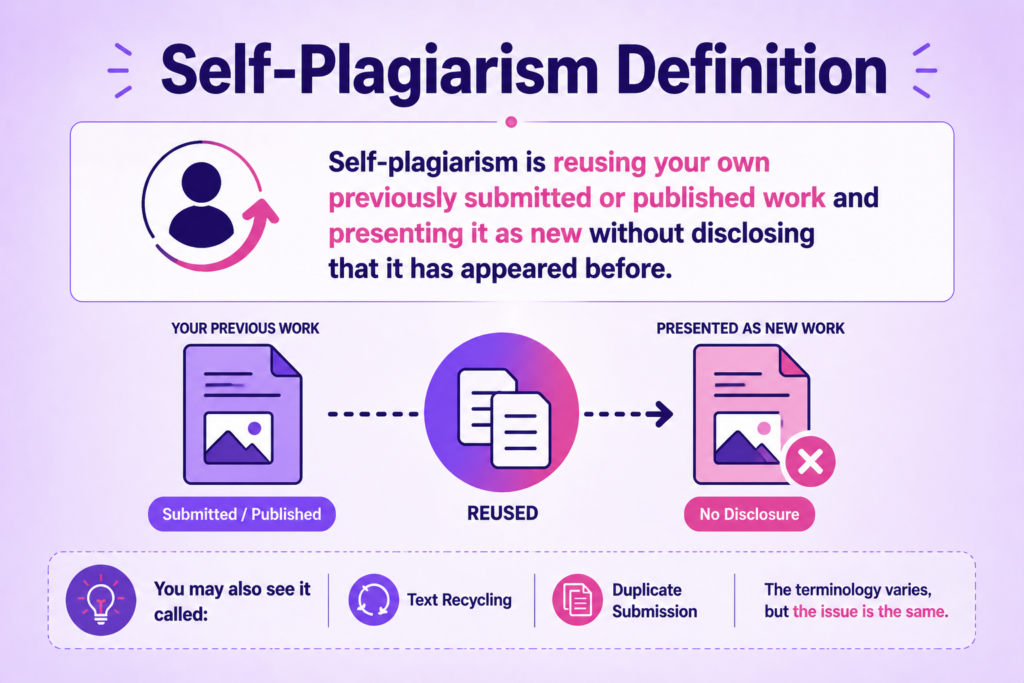
Self-Plagiarism Definition
Self-plagiarism is reusing your own previously submitted or published work and presenting it as new without disclosing that it has appeared before.
You may also see it called text recycling or duplicate submission. The terminology varies, but the issue is the same.
What Self-Plagiarism is Really About?
Self-plagiarism isn’t stealing. Misrepresentation is self-plagiarism. Your teacher wants to see original work from their class when they ask you to write something. If you take a piece of writing from another time or place and don’t tell them it’s been there before, that is misrepresenting to them. Even though all of the words are your own.
Browse our student academic integrity resources for more context on what colleges expect.
Self-Plagiarism vs Plagiarism vs Reusing Your Work
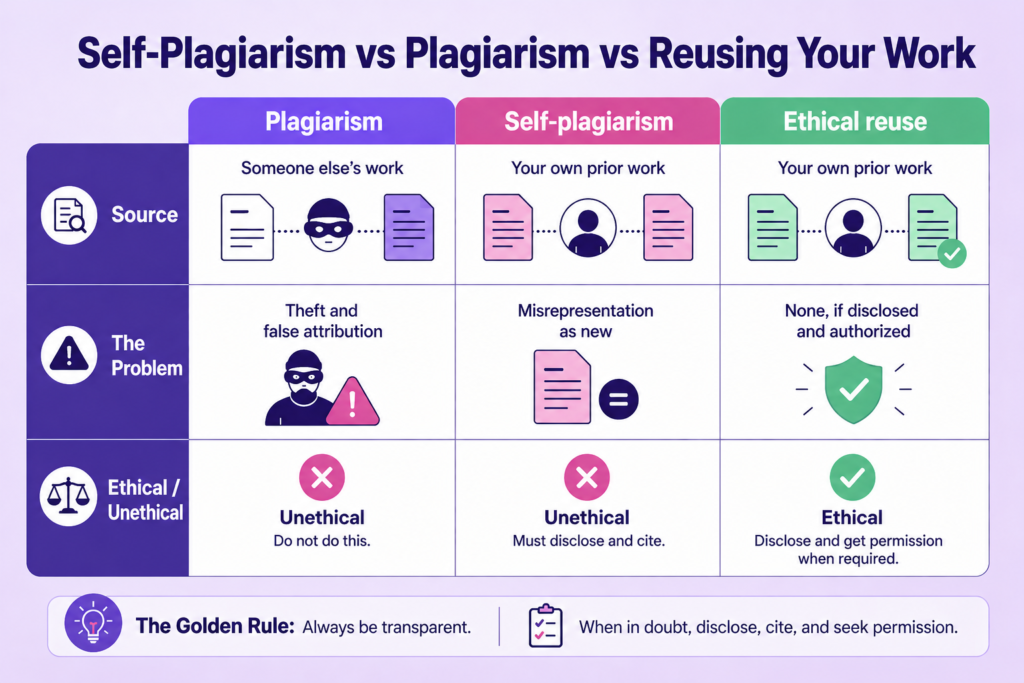
- Plagiarism uses someone else’s work. The problem caused is theft and false attribution.
- Self-plagiarism reuses your own prior work. The problem here is presenting it as new.
- Ethical reuse also draws on your own work, but carries no violation as long as it is disclosed and authorized.
The key distinction between acceptable reuse and self-plagiarism boils down to disclosure and transparency.
Using material you have already written in a new way is not always wrong. Self-plagiarism occurs when you use that material again as original work for another assignment without disclosing this to anyone. Transparency will turn an act of misconduct into an accepted method of using previous works.
Examples of Self-Plagiarism
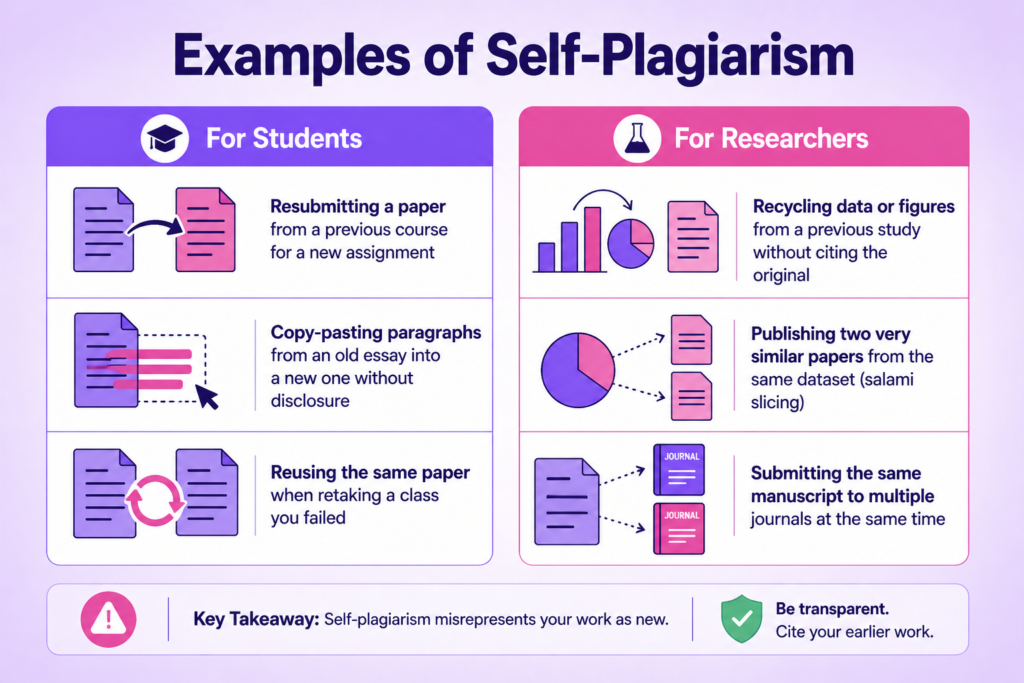
Whether you’re a research scholar or a university student, self-plagiarism can show up in different ways.
For students:
- Resubmitting a paper from a previous course for a new assignment
- Copy-pasting paragraphs from an old essay into a new one without disclosure
- Reusing the same paper when retaking a class you failed
For researchers:
- Recycling data or figures from a previous study without citing the original
- Publishing two very similar papers from the same dataset (sometimes called salami slicing)
- Submitting the same manuscript to multiple journals at the same time
Regardless of how self-plagiarism appears to an institution, the fundamental violation for both students and researchers is that the reader or evaluator has been misled into believing that the information being presented is new, when it is not. The failure of the expectation regarding the originality of content by the person evaluating your work constitutes misconduct.
Why Self-Plagiarism Is Considered Academic Dishonesty (Even If You “Own It”)
The most common pushback is: “I wrote it, so how can it be dishonest?” But there are two reasons for treating it as academic dishonesty:
- First, submitting old work for a new assignment gives you credit without doing the new work. That is an unfair advantage over every student who completed the assignment from scratch.
- Secondly, academic assessments are based on the idea that each submission shows original thinking. When you recycle without disclosure, you are deceiving the reader about the originality of what you hand in, regardless of who wrote it first.
According to the University of Missouri, the distinction lies in whether you deceive the reader as to its novelty. Ownership of the words does not change the deception.
The Debate: “Is Self-Plagiarism Even a Thing?”
The most frequently argued point is that plagiarism involves stealing someone else’s ideas, so no one can plagiarize themselves.
This position misdefines plagiarism in an academic context.
In an academic setting, plagiarism encompasses all forms of misattribution, such as any representation made by a student with the intention of passing off another person’s work as their own, not simply acts of theft. Self-plagiarism is therefore not about theft, but rather it is about misrepresenting previously published work as new.
All academia requires is for students to acknowledge when they build upon previous work. This could include telling an instructor what was used again from prior work or what new information and ideas were added. Transparency about the reuse of prior material will ensure compliance.
What Happens If You Self-Plagiarize?
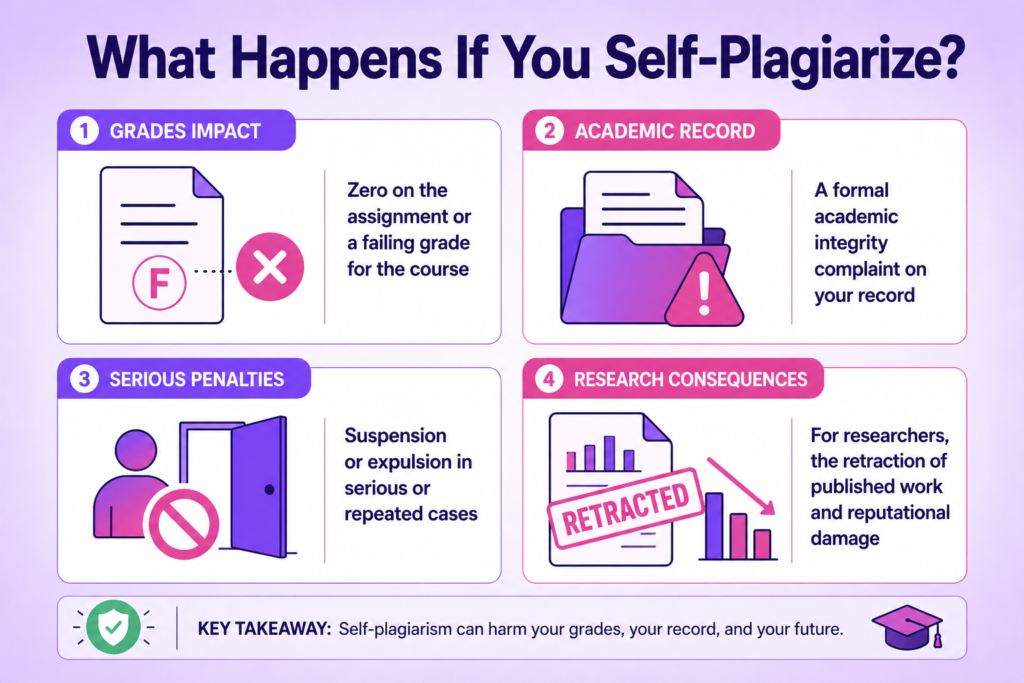
Self-plagiarism can be dealt with in many different ways depending upon the university you attend, but there are a few common methods of dealing with it as follows:
- A zero on the assignment or a failing grade for the course
- A formal academic integrity complaint on your record
- Suspension or expulsion in serious or repeated cases
- For researchers, the retraction of published work and reputational damage
The severity of those penalties depends upon how many parts were plagiarized, if the plagiarized material was properly attributed, and if this is your first offence. Many students assume that they can reuse anything when writing papers because using something in one paper automatically makes that material acceptable to use again.
How Teachers and Institutions Detect Self-Plagiarism
Detection works on two levels:
- Plagiarism software like Turnitin matches your submission against a broad database of text, including previously submitted student papers
- Institutional repositories store past submissions, so the same paper submitted twice at the same school is likely to flag
The important caveat: Most free public checkers cannot access internal university databases. Passing a plagiarism test with a free public plagiarism detector does not guarantee that you are safe and clear.
To get a better idea of how AI screening works, take a look at how professors detect AI writing.
Blackboard institutions run the same checks through SafeAssign - our SafeAssign review explains how institutional scoring works and why passing a free public checker is not the same as clearing the system your school actually uses.
How to Reuse Your Own Writing Ethically
Before reusing anything, run through these questions:
- Was it previously submitted or published?
- Does your instructor or the journal allow for the reuse of writing?
- Have you disclosed that you are going to use this previous writing and have properly cited yourself where required?
- Is there enough new content to accompany your reuse of previous writing?
If reuse is allowed, three safe patterns:
- Ask permission and disclose the prior submission upfront
- Self-cite and clearly label any reused sections
- Rewrite and expand rather than copy-paste, turning old material into a genuinely new contribution
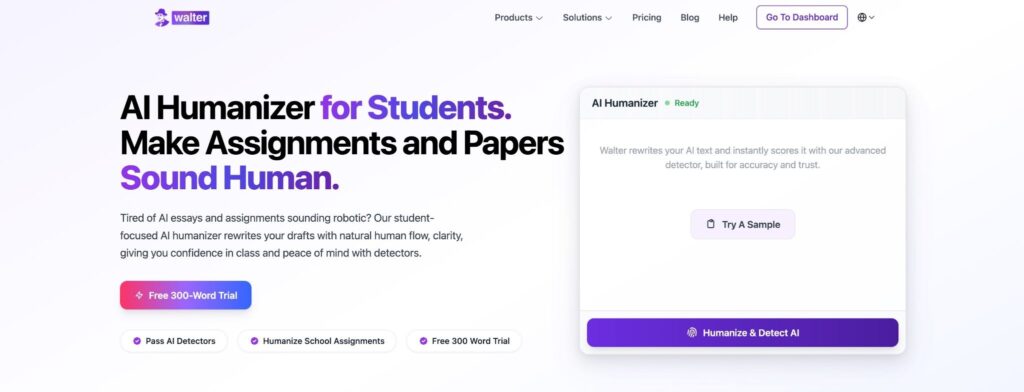
That last point matters most. When you are building upon previous work, you will always achieve better results if you write from scratch. Walter Writes AI humanizer for students can prove to be really helpful to you in reformulating previously used passages into new, refined writings, decreasing both similarity flag issues and integrity risk.
Also worth reading: Why AI misuse backfires for students?
Self-Plagiarism Checker: When It Helps and When It Does Not
Plagiarism checking tools will identify areas of duplicated text in your current document and other publicly accessible documents. But they do not have access to your college or university’s internal submissions database.
The smarter workflow:
- Collect your prior work before drafting
- Rewrite reused sections into new contributions
- Run a similarity check as a final sanity check
For tool options, see our Quetext plagiarism checker review and Plagium review for similarity checks.
Frequently Asked Questions
What Is Self-Plagiarism And Why Does It Matter?
Self-plagiarism is when you use your own previous work and fail to disclose. Institutions view this behavior as academic fraud and misrepresentation of the original work with respect to what they are receiving in submissions.
Is Self-Plagiarism A Real Academic Offence?
Yes. Most universities explicitly include it under academic dishonesty policies.
What Are Some Examples Of Self-Plagiarism?
Resubmitting an old paper, recycling paragraphs from a previous assignment, or reusing data in a new research publication without citation.
Can You Plagiarize Your Own Work In College?
Yes. Submitting prior work as new without disclosure violates most college academic integrity policies.
What Happens If You Self-Plagiarize?
Consequences range from a zero on the assignment to formal disciplinary action, depending on severity and intent.
Does Self-Plagiarism Violate Copyright?
Yes. This is especially true for researchers who may have assigned their publication rights to a journal.
How Do Teachers And Institutions Detect Self-Plagiarism?
They use software programs to identify plagiarism, and they also maintain internal databases on submissions, which will show them duplicate content.
Is It Okay To Reuse Your Own Writing If You Cite Yourself?
In many cases, yes, but always confirm with your instructor or publication guidelines first.
What Is The Difference Between Self-Plagiarism And Recycling Your Own Work?
Nothing, if undisclosed. Recycling becomes acceptable only when it is transparent and authorized.
Can You Self-Plagiarize In Professional Or Non-Academic Settings?
Yes, particularly in publishing and journalism, where duplicate submission is considered an ethical violation.
Final Note
Self-plagiarism is rarely malicious. Most instances of self-plagiarism are simply a matter of ignorance about the rules.
But a very easy solution exists. Just ask permission from the educators first and disclose that you have used an old version of the work. In most cases, if you do this, you will be required to rephrase at least some portion of the original work. If you want to make sure your rewritten draft is clean before submitting, Walter Writes AI humanizer can surely help.